Health Signals11 October 2026
Are Carnations Toxic to Dogs? What to Do Next
Are carnations toxic to dogs? Learn how to identify the flower, record a possible exposure, and call before trying a home remedy.
TextPetzette Editorial
Read4 Min
Evidence status
Source-backed editorial
- Evidence record
- 3 claim cards linked to 2 documented sources.
- Independent expert review
- Not commissioned. Petzette Editorial is responsible for the published wording.
- Source record checked
- 26 July 2026
- Scope
- General information, not an individual diagnosis or treatment plan.
Part of the plant safety checklist
Are carnations toxic to dogs? The ASPCA Animal Poison Control Center classifies Dianthus caryophyllus carnations as toxic to dogs and cats. Its carnation listing associates exposure with mild gastrointestinal signs and mild dermatitis, but “mild” is not a safe amount or a home-treatment plan. If your dog may have chewed or swallowed a carnation, keep the plant information and contact your veterinarian or an animal poison-control service before trying a remedy.
The useful decision is not to diagnose your dog from one sign. It is to identify the flower as well as you can, record what may have happened, and give a professional the facts that can shape the next step.
What “Carnation” Means in a Dog Exposure
The ASPCA entry names Dianthus caryophyllus and lists carnation, pinks, wild carnation, and Sweet William as common names. Those names are useful clues, not proof that every similar-looking flower is the same plant. A florist bouquet, garden bed, or potted gift may include more than one species.
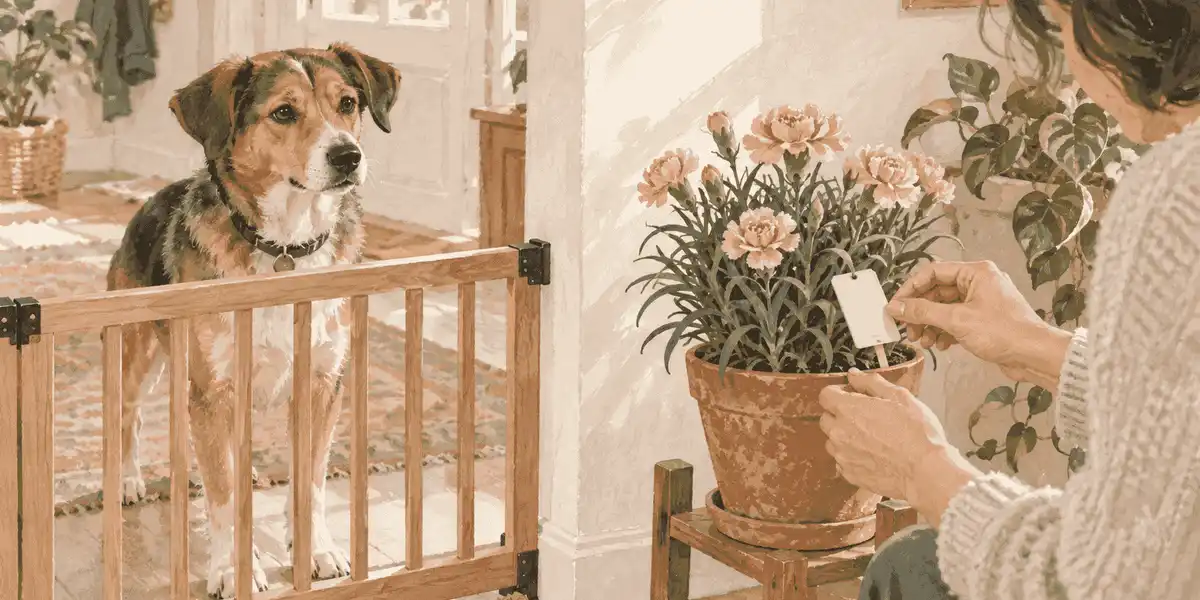
Look for a nursery tag, florist label, receipt, or botanical name. Keep a clear photo of the whole plant and its label if you have one, but do not treat a photo-app match as a final identification. If the name is missing or uncertain, say so when you call. Uncertainty is part of the exposure record; it is not a reason to borrow the answer for a different flower.
For a wider home scan, use the plants toxic to cats and dogs checklist. It explains why a plant’s common name, added products, and the pet’s species all belong in the same safety check.
Separate the Flower From the Whole Arrangement
Before interpreting the exposure, move your dog away from the plant without creating a chase. Then check what else could be involved:
- a flower, leaf, stem, or fallen piece;
- another flower mixed into a bouquet;
- fertilizer, pesticide, flower food, or potting material; and
- a thorn, decorative pick, or other physical object.
These are not interchangeable questions. The ASPCA classification applies to the named carnation entry. It does not identify an unknown companion flower or classify every product used around a plant. The dog dahlia exposure guide shows the same label-first principle with another named flower.
Make a Five-Part Dog Exposure Note
Before or during the call, write down:
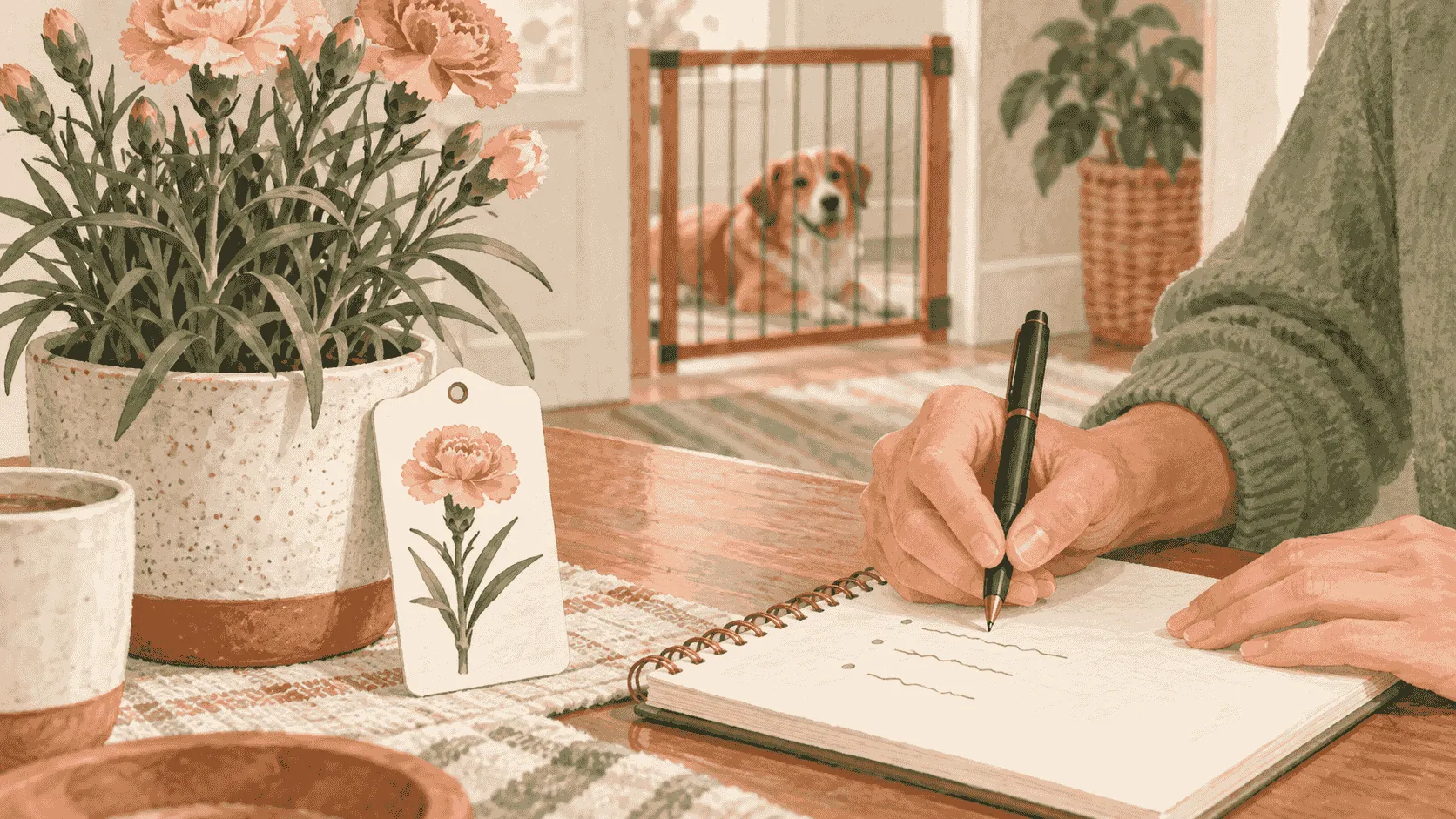
- Plant: the label, botanical name, or the fact that the identity is unknown.
- Contact route: whether your dog may have chewed, swallowed, or brushed against it.
- Part and possible amount: flower, leaf, stem, or an uncertain amount, without inventing precision.
- Time: when access may have happened and when you noticed it.
- Current changes: what is different now, including digestive or skin observations.
The ASPCA listing identifies an unknown irritant and describes gastrointestinal upset and skin irritation as possible sign categories. Those observations are not specific enough to confirm carnation exposure, and they do not predict what will happen to one dog. A short, honest record is more useful than trying to match one sign to an online list.
Call Before Trying a Home Remedy
The American Veterinary Medical Association’s pet first-aid guidance recommends keeping the product information available and not inducing vomiting or giving medication unless a veterinarian or poison-control professional directs it. Do not turn the word “mild” into permission to wait for signs, calculate a home-safe amount, or try an internet remedy.
Contact your veterinarian or an animal poison-control service after a possible ingestion, especially when the plant identity, amount, or timing is uncertain. Share your dog’s species, breed, age, weight, the substance, possible amount, time, current signs, and any label or photo you kept. If your dog has a sudden or concerning change, tell the professional plainly and follow the level of care they recommend.
Add a Carnation Check to a New-Dog Walk-Through
Before a new dog explores the home or garden, check reachable shelves, windowsills, patios, balconies, and dropped plant material. Keep pots, cut stems, and garden products beyond access. Save a photo of each plant label with your household pet-safety notes so a future call starts with an identity rather than a guess.
This is prevention, not a promise that a plant list can remove every risk. A mixed bouquet, fallen flower, or treated garden area can create a different question. The practical goal is to reduce access and make the professional call more informative if contact happens.
The ASPCA classification gives a precise starting point: Dianthus caryophyllus carnations are toxic to dogs and cats, but the listing does not set a safe amount or diagnose an individual exposure. Keep the label or photo, record the plant part, possible amount, time, contact route, and current changes, then call before trying a remedy.
Sources
Petzette's claim cards for this article point to the following scientific, veterinary, or animal-welfare sources.
- ASPCA Carnation Toxicity Guidance: Animal poison-control plant database and public poison-response guidance
- AVMA Pet First Aid: Poison Response Boundary: Veterinary-association first-aid brochure