Health Signals04 September 2026
Are Marigolds Toxic to Cats? Check the Exact Plant
Are marigolds toxic to cats? Match Garden Marigold to Calendula officinalis, separate plant from products, and know when to call a veterinarian.
TextPetzette Editorial
Read4 Min
Evidence status
Source-backed editorial
- Evidence record
- 3 claim cards linked to 3 documented sources.
- Independent expert review
- Not commissioned. Petzette Editorial is responsible for the published wording.
- Source record checked
- 04 September 2026
- Scope
- General information, not an individual diagnosis or treatment plan.
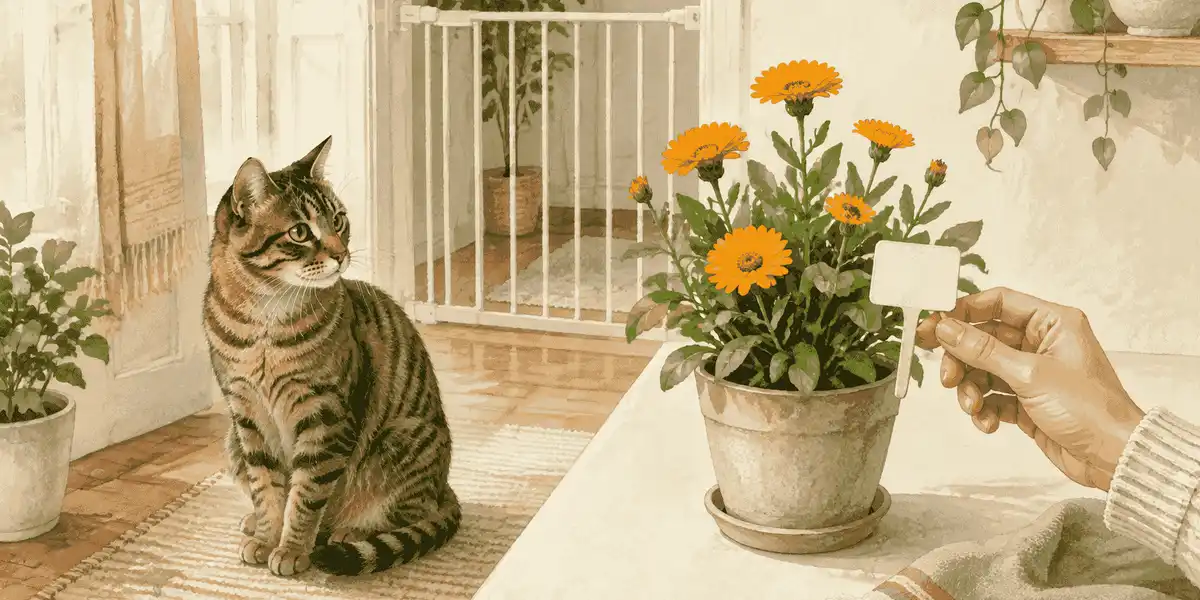
Are marigolds toxic to cats? If the plant can be matched to ASPCA’s Garden Marigold entry, Calendula officinalis, that named plant is listed as non-toxic to cats and dogs. The useful answer is narrower than a green light to chew or eat it: confirm the plant, keep it separate from added products, and let a veterinarian or animal poison-control service guide the next step if the identity, exposure, or cat is uncertain.
This page handles one named-plant question. For an unknown plant, mixed bouquet, or wider home scan, use the plants toxic to cats and dogs owner’s checklist. It leaves food, oils, fertilizers, and other products carrying “marigold” in their names outside the plant classification.
Marigold Is a Common Name, Not a Complete Answer
ASPCA’s entry is headed “Garden Marigold.” It identifies the scientific name Calendula officinalis and lists Marigold, Mary Bud, Gold bloom, and Pot marigold as additional common names. Those details matter because a label that says only “marigold” may not tell you enough about the plant in front of your cat.
Start with the nursery tag, pot label, florist sleeve, receipt, or another reliable record. A photo of the flower can help a professional understand what you found, but it does not confirm the botanical identity on its own. A mixed arrangement also needs its own record: one stem’s name cannot classify a second flower, flower food, or a garden product nearby. The daisy safety guide shows why a familiar flower name can lead to different plant entries.
If the label is missing, photograph the whole plant, pot, and packaging, and say that the identity is uncertain when you call. “Unknown marigold” is more useful than a confident name borrowed from a similar-looking bloom.
Read the Calendula Listing as a Boundary
For the confirmed Calendula officinalis entry, ASPCA records Garden Marigold as non-toxic to cats and dogs. That is a poison-control classification for a named plant. It does not supply a safe amount, a feeding recommendation, a waiting period, or a treatment plan for an individual cat.
The distinction matters after a possible chew. ASPCA’s broader plant guidance notes that eating plant material may still be associated with vomiting or gastrointestinal upset, even when the named plant is in a non-toxic category. A non-toxic listing therefore cannot dismiss a cat that is unwell, and it cannot answer for an unknown plant or an added substance.
Do not turn the listing into a snack plan or use it to decide that a product is harmless because the word “marigold” appears on its label. A prepared food, extract, oil, supplement, fertilizer, pesticide, or potting product is a different exposure question.
Separate the Flower From the Pot and Product
After a cat reaches a marigold, make the scene smaller and more specific before you interpret it:
- Named plant: Is there a label or record that says Calendula officinalis?
- Other material: Was fertilizer, pesticide, soil treatment, flower food, or another plant within reach?
- What happened: Did the cat chew, swallow, knock over, or merely approach the plant? Which part may be missing?
- Current picture: Is the cat acting as usual, or have you noticed a change in appetite, comfort, behavior, or digestion?

The point is not to create a perfect home investigation. It is to keep the named-plant classification attached to the material that was actually involved. If another product or an uncertain plant may be part of the exposure, keep its container or label available too.
Make a Marigold Exposure Note Before You Call
If your cat may have chewed or swallowed plant material, record four facts without delaying professional advice:
- The exact name on the label, or the fact that the plant is unknown.
- The part involved and the possible route, such as chewing or swallowing.
- The possible amount and time, using “unknown” instead of inventing precision.
- Your cat’s age, approximate weight, relevant health information, and changes you can see now.
Contact your veterinarian or an animal poison-control service when the identity, material, amount, or cat’s condition leaves doubt. American Veterinary Medical Association first-aid guidance says not to induce vomiting or give medication unless a veterinarian or poison-control professional directs it. Do not wait for a particular sign or try a household remedy to test the classification.
Add the Exact Name to a New-Cat Home Plan
Before a new cat arrives, walk through window ledges, counters, balconies, and garden access points. Photograph plant labels while they are easy to read, store garden products in their original closed containers, and keep reachable pots away from climbing and pulling routes. Save your veterinary and local poison-control contact details where the household can find them.
That routine is about speed and clarity, not about making a plant list do the work of an examination. The practical answer to “are marigolds toxic to cats?” is precise: ASPCA lists confirmed Garden Marigold, Calendula officinalis, as non-toxic to cats and dogs. If the name, material, or cat does not fit that narrow record, keep the details and let a professional decide what happens next.
Sources
Petzette's claim cards for this article point to the following scientific, veterinary, or animal-welfare sources.
- ASPCA Garden Marigold Plant Classification: Animal poison-control plant database and public exposure classification
- Spider Plant Poison-Control Classification And Name Check: Animal poison-control databases and veterinary manual guidance
- AVMA Pet First Aid: Poison Response Boundary: Veterinary-association first-aid brochure