Health Signals05 September 2026
Are Philodendrons Toxic to Cats? Check the Exact Plant
Are philodendrons toxic to cats? Match the plant name, record a possible chew, and know when a veterinarian should guide the next step.
TextPetzette Editorial
Read4 Min

Evidence status
Source-backed editorial
- Evidence record
- 2 claim cards linked to 2 documented sources.
- Independent expert review
- Not commissioned. Petzette Editorial is responsible for the published wording.
- Source record checked
- 05 September 2026
- Scope
- General information, not an individual diagnosis or treatment plan.
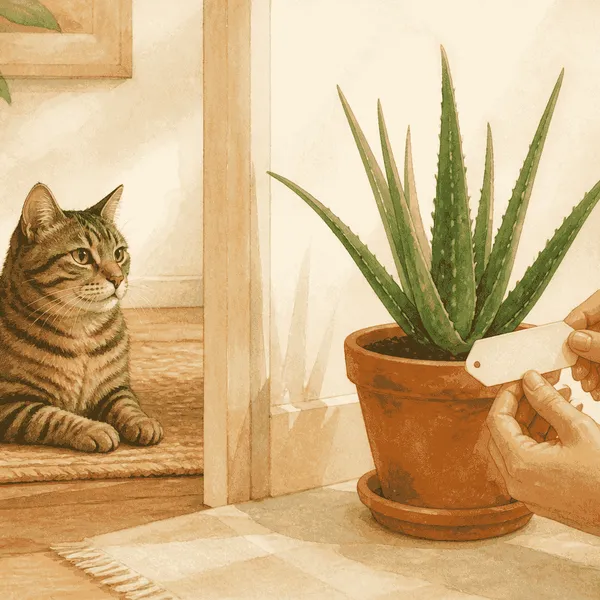
Are philodendrons toxic to cats? ASPCA lists several named philodendron entries as toxic to cats and dogs. That is an important safety answer, but it is not a complete plant-identification rule: “philodendron” can refer to different named plants. If your cat may have chewed one, move the plant out of reach, keep its label or a clear photo, and call a veterinarian or animal poison-control service before trying a home remedy.
This page focuses on a possible cat exposure. For a wider home scan or an unknown plant, use the plants toxic to cats and dogs owner’s checklist. It does not set a safe amount or diagnose what happened to an individual cat.
“Philodendron” Is Not a Complete Plant ID
The ASPCA Animal Poison Control Center has separate named entries for Tree Philodendron, Split Leaf Philodendron, and Heartleaf Philodendron. Their scientific names are Philodendron selloum, Philodendron bipennifolium, and Philodendron hederaceum. The named entries classify those plants as toxic to cats and dogs and identify calcium oxalate crystals or insoluble calcium oxalates as the toxic principle.
That naming detail matters when a cat reaches a houseplant. Common names can overlap, a label may be incomplete, and a photo can be difficult to match confidently. Keep the nursery tag, receipt, or plant packaging if you have it. If you are not sure which plant is involved, tell the veterinary team that the identity is uncertain rather than borrowing the answer from a similar-looking leaf.
This is the same exact-name boundary used across our plant safety series: a database classification belongs to the named entry, not automatically to every plant sold under a similar word.
What the Listing Does—and Does Not—Tell You
The named ASPCA entries list possible signs including mouth irritation or burning, excessive drooling, vomiting, and difficulty swallowing. Those observations explain why a possible chew deserves a prompt professional question. They do not tell you that philodendron caused a sign, how much was involved, how severe an individual exposure will be, or what treatment is appropriate.
Do not turn the sign list into a home severity chart. A cat without an obvious sign has not supplied a safe-amount calculation, and a cat with drooling or vomiting has not supplied a diagnosis. The plant identity, part involved, possible amount, timing, other products in the pot, and the cat’s current condition all belong in the professional assessment.

If Your Cat May Have Chewed It, Make the Call Useful
Start with a calm, factual record. Keep the plant and any loose material away from your cat, then note:
- the exact plant name on the label, or that the identity is unknown;
- whether a leaf, stem, or another part may be missing;
- when you noticed the possible access and whether the amount is unknown;
- any fertilizer, pesticide, potting product, or second plant nearby; and
- your cat’s current changes, such as mouth irritation, drooling, vomiting, or difficulty swallowing.
The American Veterinary Medical Association’s pet first-aid guidance says to keep product information available and not to induce vomiting or give medication unless a veterinarian or poison-control professional directs it. An exposure note is useful because it carries uncertainty honestly; it is not a substitute for the call.
If your cat has difficulty swallowing, is vomiting, or seems suddenly unwell after possible access, tell the clinic or poison-control professional promptly. Do not wait for a particular sign to appear, and do not offer milk or another household remedy to test the plant classification.
Separate the Plant From the Other Materials
A named philodendron entry does not classify everything around the pot. Fertilizer, pesticide, soil treatment, decorative material, a mixed planter, or a prepared product with “philodendron” in its name can create a different exposure question. Keep those labels or containers available too.
Before a new cat arrives, walk through reachable shelves, windowsills, counters, balconies, and floor-level plant stands. Save botanical names with the plant photos and move loose leaves, pots, and garden products out of access. This is a prevention routine, not a promise that a plant list can replace professional advice after a real exposure.
The Practical Answer
So, are philodendrons toxic to cats? ASPCA lists several named philodendron entries as toxic to cats and dogs. The safer next step is precise rather than dramatic:
- Match the plant to its label or say that the identity is uncertain.
- Record the part, possible amount, time, nearby products, and current changes.
- Contact your veterinarian or an animal poison-control service before trying a home treatment.
The label helps identify the question. It cannot set a safe amount, predict an outcome, or choose treatment for your cat.
Sources
Petzette's claim cards for this article point to the following scientific, veterinary, or animal-welfare sources.
- ASPCA Named Philodendron Plant Classifications: Animal poison-control plant-database records and public exposure guidance
ASPCA Animal Poison Control Center. *Toxic and Non-toxic Plants*: Tree Philodendron (*Philodendron selloum*), Split Leaf Philodendron (*Philodendron bipennifolium*), and Heartleaf Philodendron (*Philodendron hederaceum*). Accessed 2026-09-05.
- AVMA Pet First Aid: Poison Response Boundary: Veterinary-association first-aid brochure