Nutrition24 July 2026
Can Adult Dogs Eat Puppy Food? Build a Separate Feeding Plan
Can adult dogs eat puppy food? A stolen bite differs from a shared diet. Match each dog's life stage and separate feeding stations.
TextPetzette Editorial
Read4 Min

Evidence status
Source-backed editorial
- Evidence record
- 5 claim cards linked to 3 documented sources.
- Independent expert review
- Not commissioned. Petzette Editorial is responsible for the published wording.
- Source record checked
- 11 July 2026
- Scope
- General information, not an individual diagnosis or treatment plan.
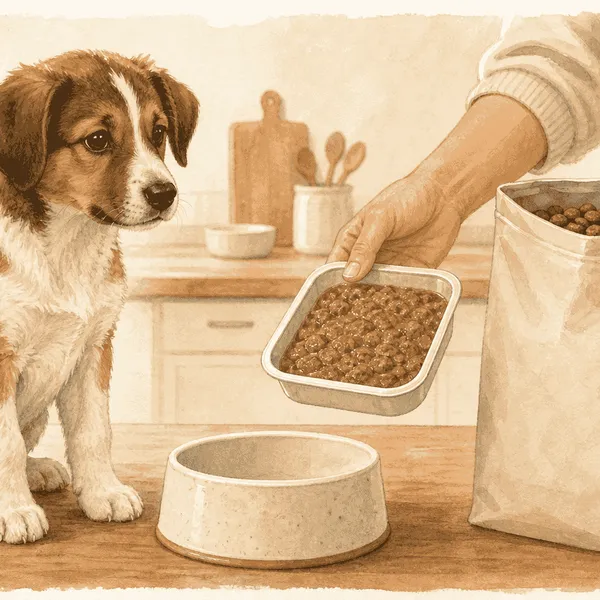
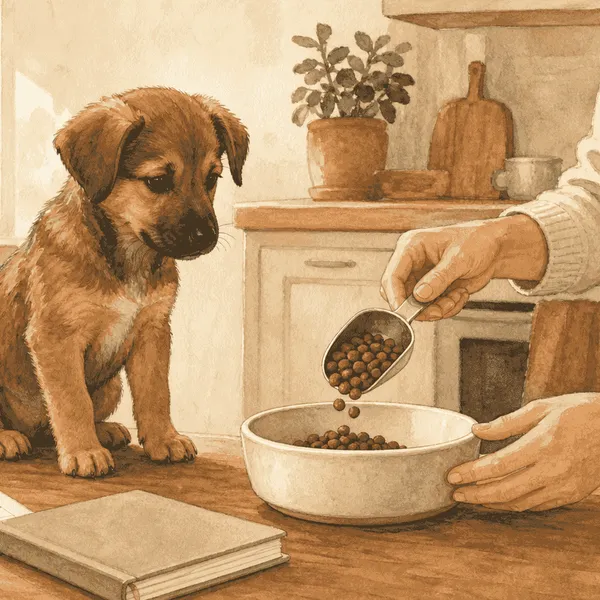
Can adult dogs eat puppy food? A few stolen pieces and a shared daily diet are different decisions. Puppy food is not poison to an adult dog, and one brief visit to the puppy’s bowl does not establish harm. Regular access, however, deserves a plan: match each dog’s main food to life stage and condition, account for what each dog actually eats, and stop one bowl from quietly becoming two dogs’ diet.
A Stolen Bite Is Different From a Shared Diet
Start by replacing the vague word “ate” with an amount and a pattern. Did the adult dog pick up three pieces once, finish half a bowl, or clean up the puppy’s leftovers every day? Note when it happened, which food was involved, and whether appetite, digestion, weight, or behavior around meals has changed.
AAFCO consumer guidance says to select food for the pet’s species, life stage, and condition. It distinguishes growth food for puppies from maintenance food for mature dogs and notes that calorie-rich food made for young animals may contribute to obesity in a less active adult animal. That does not turn one mouthful into a diagnosis. It does explain why repeated access belongs in the adult dog’s full feeding record.
Match Each Bowl to a Life Stage
The puppy’s main food should be complete and balanced for dogs in the growth life stage. Growth is the puppy’s job, and the food needs to support that stage. If you are still choosing the younger dog’s diet, use the puppy food label checklist before solving the shared-bowl problem.
The adult dog’s regular food should fit that dog’s adult life stage, body condition, activity, and health. “Adult” does not produce one universal bag or portion. Foods labeled for all life stages, pregnancy or nursing, working dogs, low body condition, and therapeutic use need individual interpretation. Do not change a prescribed diet or use puppy food to address weight or appetite without veterinary guidance.
Package feeding directions are only a starting point. The 2021 AAHA nutrition and weight-management guideline recommends an individual assessment that considers the full diet history, weight, body condition, muscle condition, life stage, activity, and health. In a two-dog home, “full diet history” includes food borrowed from the other bowl.
Build a Two-Dog Feeding Map
Use one page in a notebook for three days. Give each dog a column and record:
- Assigned food: photograph the nutritional adequacy statement and feeding directions.
- Amount offered: use the measure that belongs to that exact food.
- Amount left: record leftovers before another dog reaches them.
- Extras: include treats, toppers, table food, chews, and stolen puppy food.
- What changed: note appetite, digestion, weight trend, and any veterinary instructions.
This is not a calorie prescription. It is a way to discover whether the adult dog’s “occasional taste” is actually a regular second meal, and whether the puppy is losing part of the food intended for growth. If the puppy’s portion also needs review, the measure-and-recheck puppy feeding plan explains how to start with the label without treating it as a final answer.
Separate Feeding Stations Without Guesswork
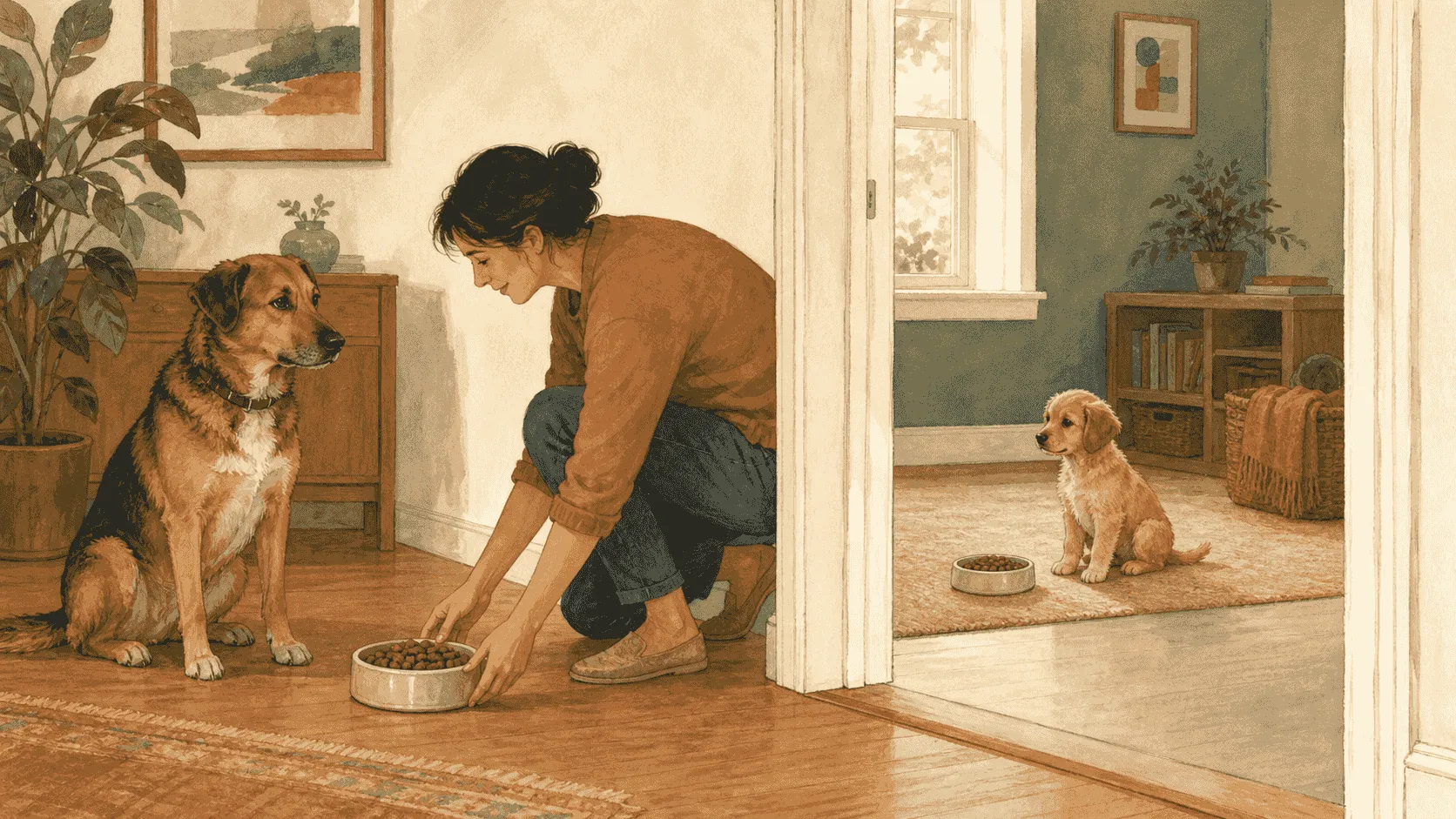
Give each dog a clearly assigned station. Separate rooms, a closed doorway, or a suitable barrier can make the portions observable. Set down both measured meals, supervise the routine, and remove leftovers before the dogs change places. Water should remain available; the goal is to control food access, not access to essentials.
Choose the setup you can repeat on an ordinary workday. A complicated system that collapses at breakfast will not produce a useful record. If several people feed the dogs, keep the same notebook beside the food and have each person mark the meal and extras immediately.
Body condition is a shape assessment, not a judgment, and weight alone is not the whole picture. Ask your veterinary team to show you how they assess the adult dog and the growing puppy rather than cutting portions from appearance or a generic chart.
When to Ask Your Veterinarian
Contact your veterinarian if the adult dog’s weight, appetite, digestion, or health is changing; if the puppy’s growth or intake is uncertain; or if either dog has a prescribed or therapeutic feeding plan. A dog with a specific health condition may need a boundary that a general article cannot set.
Your useful next step is concrete: photograph both food labels, create the three-day feeding map, and establish two observable stations at the next meal. A stolen bite can remain a note. A shared pattern should become a separate plan.
Sources
Petzette's claim cards for this article point to the following scientific, veterinary, or animal-welfare sources.
- AAHA Nutrition And Weight Management Guidelines 2021: Peer-reviewed veterinary clinical guideline
Cline MG, Burns KM, Coe JB, et al. 2021 AAHA Nutrition and Weight Management Guidelines for Dogs and Cats. Journal of the American Animal Hospital Association. 2021;57:153-178.
- AAFCO Pet Food Labels And Nutritional Adequacy: US feed-control association consumer and regulatory guidance
- WSAVA Body Condition Score Tools: Veterinary association nutrition toolkit