Nutrition06 October 2026
Can Cats Eat Dog Treats? Check the Species Label First
Can cats eat dog treats? Check the species and life-stage label, ingredients, and your cat's whole feeding plan before sharing.
TextPetzette Editorial
Read6 Min
Evidence status
Source-backed editorial
- Evidence record
- 7 claim cards linked to 5 documented sources.
- Independent expert review
- Not commissioned. Petzette Editorial is responsible for the published wording.
- Source record checked
- 20 July 2026
- Scope
- General information, not an individual diagnosis or treatment plan.
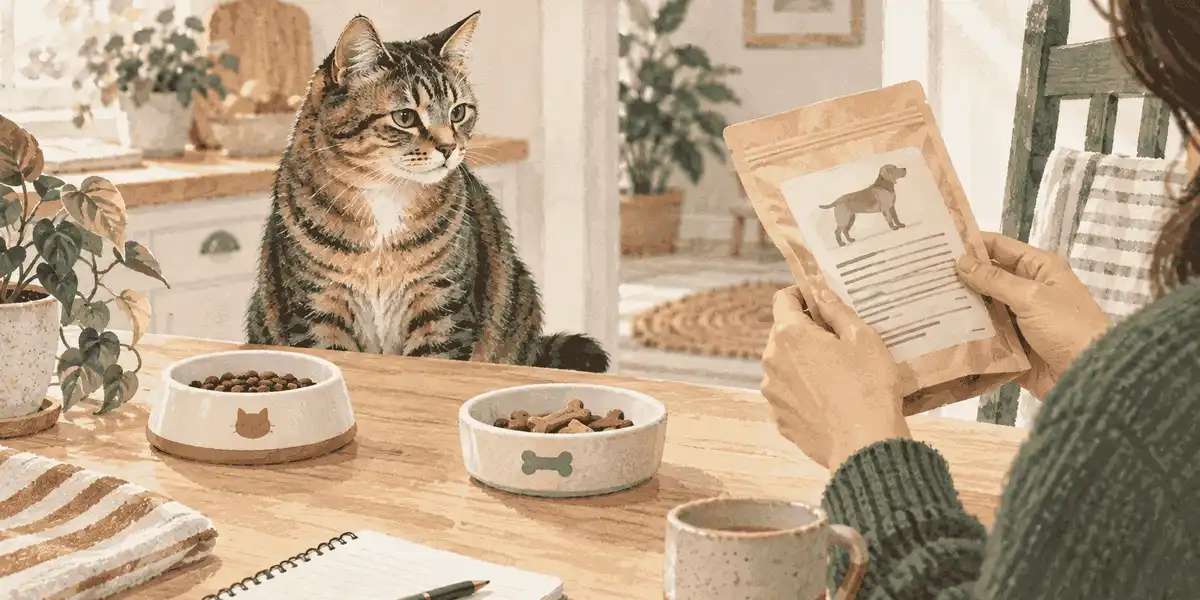
Can cats eat dog treats? Do not treat the two labels as interchangeable. Before sharing, identify the exact product, read its intended species and use, check the ingredients, and place any possible extra inside the cat’s existing feeding plan. If the cat is growing, has a therapeutic diet, or has health or appetite changes, ask your veterinarian before introducing it.
A single product question is easier to answer when you separate two situations: a dog treat you are considering as a routine extra, and a cat that has already eaten an unknown product or amount. The first needs a label-and-fit check. The second may need a prompt professional call.
Start With the Species and Intended Use
On a U.S. pet-food label, the nutritional adequacy statement helps identify the species and life stage for which a complete-and-balanced claim is substantiated. AAFCO’s consumer guidance also distinguishes treats and foods labeled for intermittent or supplemental feeding from the food that carries the nutritional foundation of a diet. Label rules can vary by jurisdiction, but the principle is useful wherever you live: start with the quiet label information, not the photograph or flavor name.
Look for four pieces of information:
- Intended species: Does the label describe the product for cats, dogs, or both?
- Intended use: Is it a treat or supplemental food, rather than a complete diet?
- Life stage: Does the wording fit an adult cat, a growing kitten, or neither?
- Full ingredients: Can you identify what is actually in the product, including flavorings or added ingredients?
If the product is labeled only for dogs, that is enough reason not to make it a routine cat treat without individual veterinary guidance. It does not tell you that one bite will cause a particular outcome; it tells you that the label has not answered the cat-specific fit question.
AAFCO does not approve, certify, test, or endorse individual pet-food brands. Its model standards and label terminology help explain what a statement means, while state or other regulatory authorities handle product regulation. Treat a label statement as a screening tool, not a product endorsement.
Keep the Dog Treat in the Extras Lane
The 2021 American Animal Hospital Association nutrition and weight-management guideline recommends that complete and balanced food provide at least 90 percent of total calories for generally healthy dogs and cats, with treats and other extras at 10 percent or less. That framework is useful for a cat receiving a dog treat because it keeps the decision in proportion: a treat is an extra, not a second diet.
The 10 percent figure is a ceiling, not a promise that a particular product suits a particular cat. Count treats, toppers, table food, and rewards together. A cat with a therapeutic diet, weight-management plan, frequent food rewards, or changing appetite may need a different arrangement set with a veterinarian.
Do not use a dog treat to replace a cat’s complete food. If the cat is still growing, the main diet should be complete and balanced for the correct species and growth life stage. A supplemental dog treat cannot take the place of growth food, and a package feeding suggestion cannot decide what a kitten needs.
For the cat’s everyday extras, the cat-treat guide keeps labels, rewards, and the whole feeding plan in one lane. The question here is narrower: whether a dog-labeled extra belongs in that plan at all.
Read the Ingredients Without Turning One Line Into a Verdict
The World Small Animal Veterinary Association’s food-selection toolkit says an ingredient list alone does not reveal ingredient quality, digestibility, bioavailability, nutrient balance, or the finished food’s overall performance. That does not make the list irrelevant. It means you should use it for specific questions without treating the first ingredient or a marketing phrase as a complete nutritional assessment.
Read the full panel rather than relying on the front of the package. If an ingredient is unfamiliar, the preparation is unclear, or the product does not give enough information to identify what the cat would receive, skip the experiment. Do not make a dog treat look cat-appropriate by breaking it into a smaller piece; portion size and species fit are separate questions.
The same caution applies to words such as “natural,” “premium,” or “grain-free.” Those words do not establish that a treat is suitable for this cat. The useful check is the exact product, its intended use, the cat’s life stage, and the rest of the diet.
Let the Cat’s Individual Plan Decide
Package directions are starting points that may need reassessment with weight, body condition, activity, growth, and health. They are not a reason to add a second feeding routine on top of the cat’s existing plan. If the cat is gaining or losing weight, eating less, growing poorly, vomiting, having diarrhea, or eating a prescribed diet, ask your veterinarian before adding a new treat.
Keep the routine easy to trace in a multi-pet home. Store dog treats with the dog’s supplies, offer them separately, and make a quick note if someone shares one with the cat. Separate dishes and a closed packet make it easier to know what each animal received. The dog-side decision has its own label-and-sharing check; neither species’ article turns one animal’s label into the other’s food plan.
If a treat is being used as a reward, the cat’s response still matters. A cat may choose food in one moment and distance, play, or rest in another. You do not need to make a dog treat work as a training tool when the cat is not interested or is showing discomfort.
If Your Cat Already Ate a Dog Treat
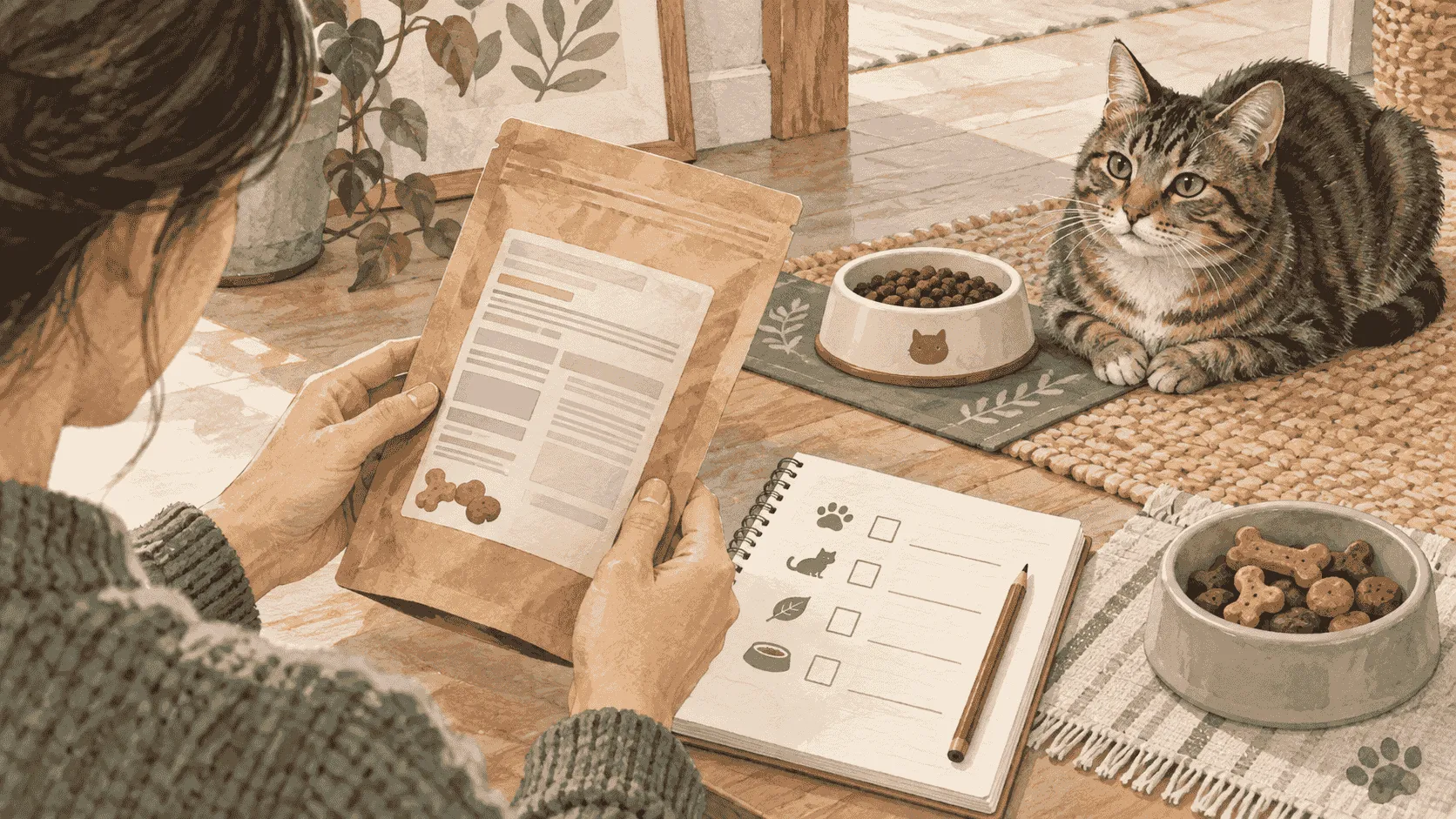
If you know the exact product and the cat is well, keep the packet and write down what was offered, how much may be missing, and when it happened. Do not turn a normal-looking moment into a guarantee about the next exposure, and do not keep offering the treat just because the first moment did not look dramatic.
If the product or amount is unknown, the ingredient panel raises concern, or the cat shows a marked change, contact your veterinarian or an animal poison-control center. Keep the package or a clear label photograph beside you and share the cat’s age, weight if known, the substance, possible amount, time, and signs. The American Veterinary Medical Association advises against inducing vomiting or giving medication unless a veterinarian or poison-control professional directs you to do so.
Do not wait for a perfect online answer before calling about a possible poisoning. A professional can decide which details matter for that individual cat and whether any action is needed.
A Quick Share-or-Skip Check
Before offering a dog treat to a cat, ask:
- Does the label identify the intended species and use?
- Is the cat’s life stage and main diet already clear?
- Can I read and understand the full ingredient panel?
- Will this remain a small extra rather than displacing complete cat food?
- Is there a health, appetite, growth, or therapeutic-diet reason to ask a veterinarian first?
If the first four answers are not clear, skip sharing. If the cat has already eaten an uncertain product, keep the label and call rather than trying to make the situation fit a generic treat rule. Dog treats are not automatically cat treats, but the decision can stay calm and practical: check the species label, keep extras small, and let the individual cat’s plan set the boundary.
Sources
Petzette's claim cards for this article point to the following scientific, veterinary, or animal-welfare sources.
- AAHA Nutrition And Weight Management Guidelines 2021: Peer-reviewed veterinary clinical guideline
Cline MG, Burns KM, Coe JB, et al. 2021 AAHA Nutrition and Weight Management Guidelines for Dogs and Cats. Journal of the American Animal Hospital Association. 2021;57:153-178.
- AAFCO Pet Food Labels And Nutritional Adequacy: US feed-control association consumer and regulatory guidance
- WSAVA Selecting Pet Food Toolkit 2021: Global veterinary nutrition toolkit / food-selection guidance
- Cat Stimulus Preference Assessment: Peer-reviewed feline behaviour experiment
Vitale Shreve KR, Mehrkam LR, Udell MAR. Social interaction, food, scent or toys? A formal assessment of domestic pet and shelter cat (Felis silvestris catus) preferences. Behavioural Processes. 2017;141(Pt 3):322-328.
- AVMA Pet First Aid: Poison Response Boundary: Veterinary-association first-aid brochure