Health Signals10 August 2026
Cat Christmas Tree Safety: A Safer Setup, Not a Perfect One
A calm cat Christmas tree plan: secure the tree, block stand water, skip tinsel, and know when to call your veterinarian.
TextPetzette Editorial
Read4 Min
Evidence status
Source-backed editorial
- Evidence record
- 4 claim cards linked to 2 documented sources.
- Independent expert review
- Not commissioned. Petzette Editorial is responsible for the published wording.
- Source record checked
- 10 August 2026
- Scope
- General information, not an individual diagnosis or treatment plan.
Setting up a cat Christmas tree is less about persuading a cat to ignore a striking new object and more about making the room safer if it investigates. The useful decision is whether the tree, its water, and its decorations leave accessible hazards. A few thoughtful choices can reduce that risk; none makes a home perfectly “cat-proof.”
This guide is for a first holiday with a cat, including a kitten who may be especially interested in things that swing, shine, or rustle. It does not diagnose an exposure. If your cat may have swallowed a string-like decoration, sampled tree-stand water, or becomes unwell, contact your veterinarian for individual advice.
Start With the Cat Christmas Tree Question, Not a “Cat-Proof” Promise
“Are Christmas trees toxic to cats?” is understandable, but the practical risk is broader than one yes-or-no label. The stand water, low ornaments, hanging string, lights, and the tree’s stability can each create a separate decision. The RSPCA’s holiday guidance focuses on those ordinary setup details: anchor the tree, avoid fragile or edible decorations within reach, keep tinsel out of the room, and give the cat another useful activity.
That is a more helpful goal than trying to win a contest against curiosity. Watch how your cat approaches the new setup. One cat may inspect from the floor and move on; another may bat a low ornament, try to climb, or revisit the water stand. Adjust the environment around the pattern you actually see without punishing the cat for being interested.
Make the Tree Stable Before You Decorate
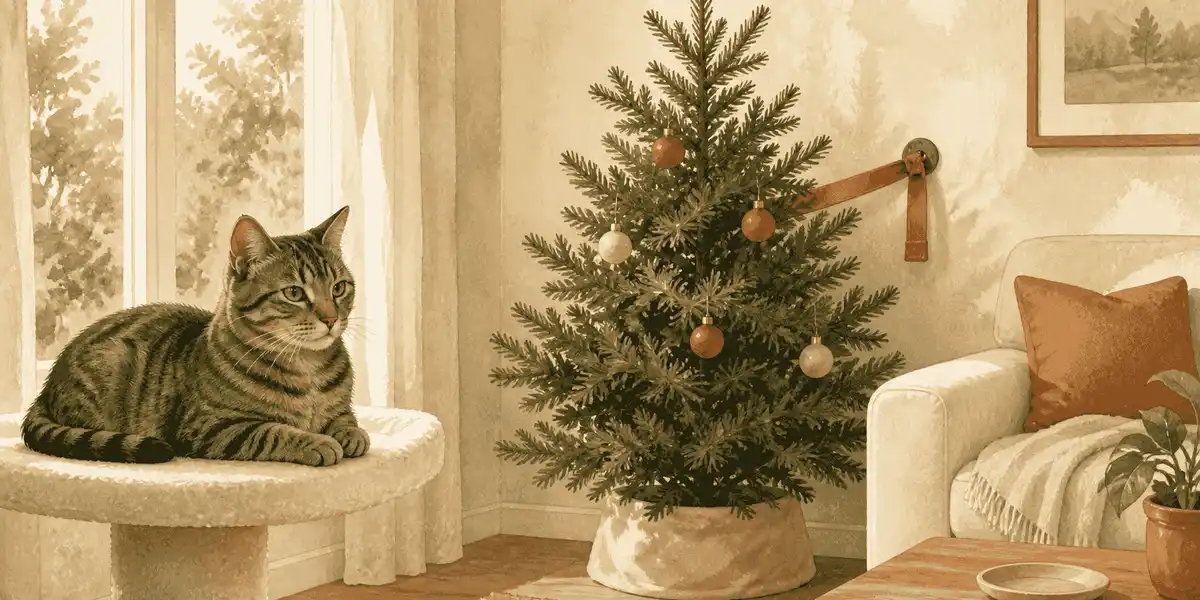
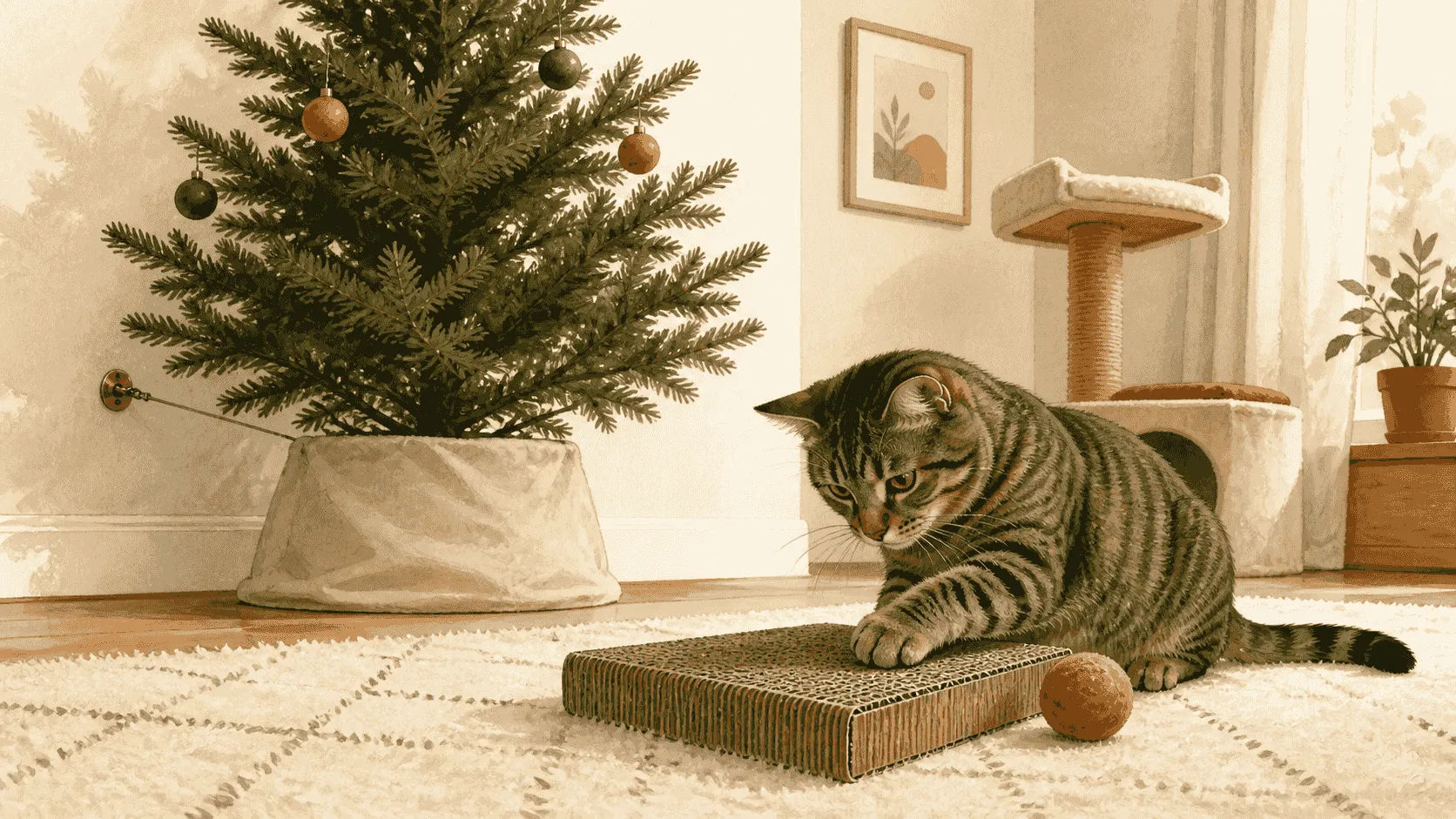
Secure the tree so it cannot easily tip if your cat leans on it or begins to climb. Do that first, before lights and ornaments make the job harder. Then keep breakable and edible decorations off the lowest branches, where a paw or tail can knock them down. Skip tinsel altogether rather than trying to supervise every shiny strand.
The RSPCA also suggests alternative cat enrichment. This is not a guarantee that your cat will ignore the tree. It simply gives the room another choice: a familiar resting spot, a scratcher, or a suitable play activity in a separate, calm area. A stable cat-tree setup can be useful for that purpose when it suits the individual cat and does not compete with the tree’s footprint.
Treat Stand Water and Low Branches as Separate Checks
The water beneath a live tree is not a second water bowl. RSPCA and VCA guidance note that tree-stand water can become contaminated or contain added products, including fertilizers or pine oils. Block access to the stand while the tree is up, and keep a label or photo of any water additive available. Your cat should still have its normal fresh water in its usual place.
If you think your cat drank from the stand, do not try to judge safety from a guessed amount or from how the water looks. Call your veterinarian or an animal poison-control service for advice, and share the tree and additive details you have. The same calm, information-first approach helps with festive plants: our plant-safety checklist for cats and dogs can help you separate a named plant from a vague “holiday greenery” label.
Skip Tinsel and Make an Exposure Plan
Tinsel, ribbon, and string can look like play to a cat, but VCA’s cat holiday guidance warns that swallowed string-like material can become entangled in the intestinal tract. The prevention step is simple: leave tinsel out of the decoration plan and clear loose ribbon and wrapping fragments as they appear.
If your cat may have swallowed tinsel, ribbon, or string—or you see material at the mouth or anus—call a veterinarian promptly. Do not pull the material free and do not use a home remedy. Save the package or take a clear photo if that does not delay the call. Your veterinarian can decide what information and next step matter for your cat.
Keep an Easier Place to Be
The 2013 AAFP/ISFM feline environmental-needs guidelines describe safe places, separated key resources, play opportunities, and cat-led interaction as parts of a usable home. The holiday setup does not need to become the center of everything. Keep food, water, litter, resting choices, and scratching options in their familiar sensible places, and leave a quiet retreat available if visitors, noise, or decorations make the room feel busier.
Avoid reading one behavior as a complete answer. A cat resting elsewhere may simply prefer a quieter spot; a sudden change in appetite, toileting, movement, or comfort deserves a veterinarian conversation rather than an assumption that the tree is the only explanation.
A Five-Minute Cat Christmas Tree Check
Before you turn on the lights, pause for five practical checks:
- Is the tree anchored so it is less likely to tip?
- Is the stand water blocked from the cat?
- Are low decorations nonbreakable, nonedible, and free of tinsel or loose string?
- Is there a familiar perch, retreat, or play option elsewhere in the room?
- Do you know where the tree-water additive package is and how to contact your veterinarian?
A safer cat Christmas tree is a small home plan, not a promise of perfect control. Make the hazards harder to reach, keep normal cat choices available, and get professional advice promptly after a possible exposure or a concerning change.
Sources
Petzette's claim cards for this article point to the following scientific, veterinary, or animal-welfare sources.
- RSPCA And VCA Cat Christmas Tree Safety: Established animal-welfare and veterinary-hospital guidance
RSPCA, “Pets at Christmas”; Anne Dagner, DVM, Krista Williams, BSc, DVM, and Ernest Ward, DVM, “Holiday Safety Tips for Cat Owners,” VCA Animal Hospitals.
- AAFP/ISFM Feline Environmental Needs Guidelines 2013: Peer-reviewed veterinary guidelines plus client-facing practice resource