Behavior10 July 2026
Why Do Cats Purr? Context Matters More Than One Meaning
Why do cats purr? One study found a distinct food-soliciting purr, showing why sound, body language, and the situation belong together.
TextPetzette Editorial
Read3 Min

Evidence status
Source-backed editorial
- Evidence record
- 1 claim card linked to 1 documented source.
- Independent expert review
- Not commissioned. Petzette Editorial is responsible for the published wording.
- Source record checked
- 04 July 2026
- Scope
- General guidance. Individual animals and circumstances can differ.
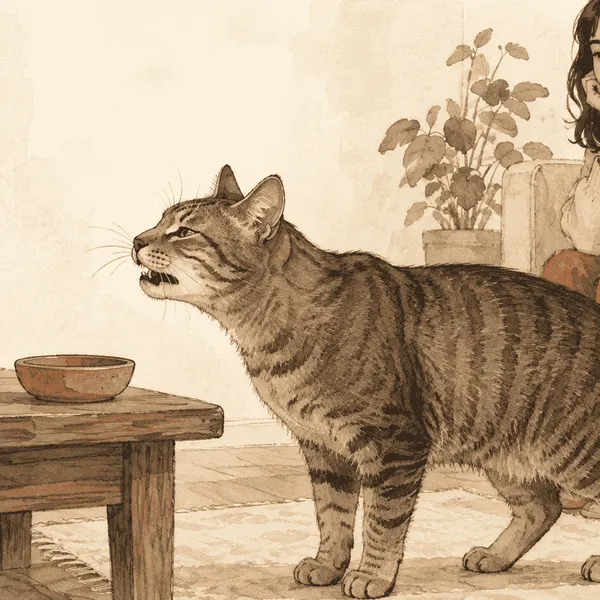
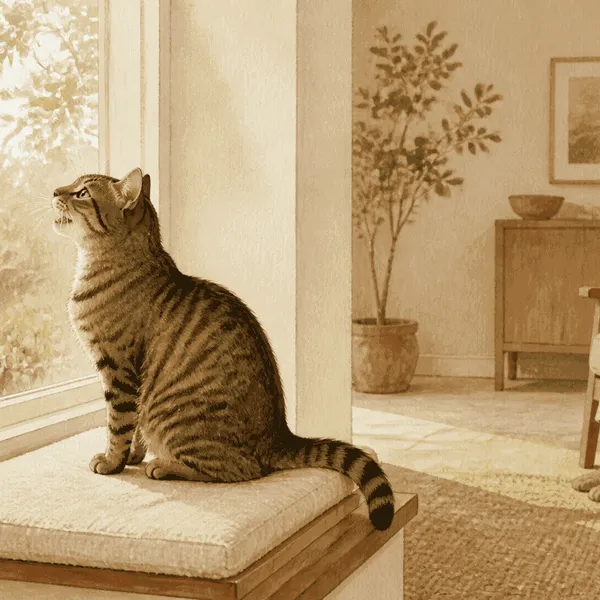
Why do cats purr? The familiar vibration can accompany a quiet moment on the sofa, but “happy” is not a complete translation. Research on cat purring has identified at least one acoustically distinct context: some cats use a more urgent-sounding purr when asking a person for food.
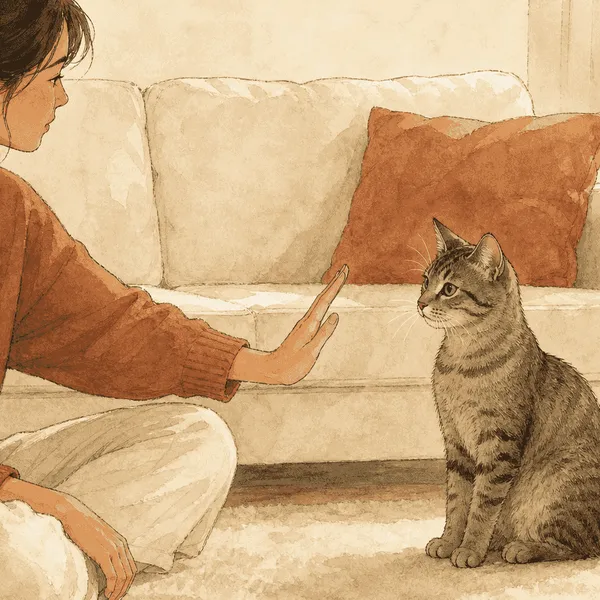
That does not turn purring into a code with one answer for each sound. It makes the situation more important. The useful question is not simply, “Is my cat purring?” but, “What is happening while this cat purrs?”
Not Every Cat Purr Says the Same Thing
A 2009 study in Current Biology, titled “The cry embedded within the purr,” compared purrs made in food-soliciting and non-soliciting situations. The researchers found that some domestic cats could embed a cry-like acoustic component in a purr when soliciting food from their human companions.
Human listeners rated those solicitation purrs as more urgent and less pleasant than the non-solicitation purrs. In other words, the breakfast purr may contain a feature that makes it especially difficult to ignore.
The result is specific. It supports a difference between the tested purr contexts; it does not show that each cat uses this sound, that people can identify a cat’s exact motive from audio alone, or that a purr reliably diagnoses hunger.
Why Do Cats Purr at Breakfast?
Picture two ordinary scenes. In one, a cat is settled across a person’s lap while the room is quiet. In the other, the person has entered the kitchen, the bowl is visible, and the cat approaches with a purr that sounds unusually insistent.
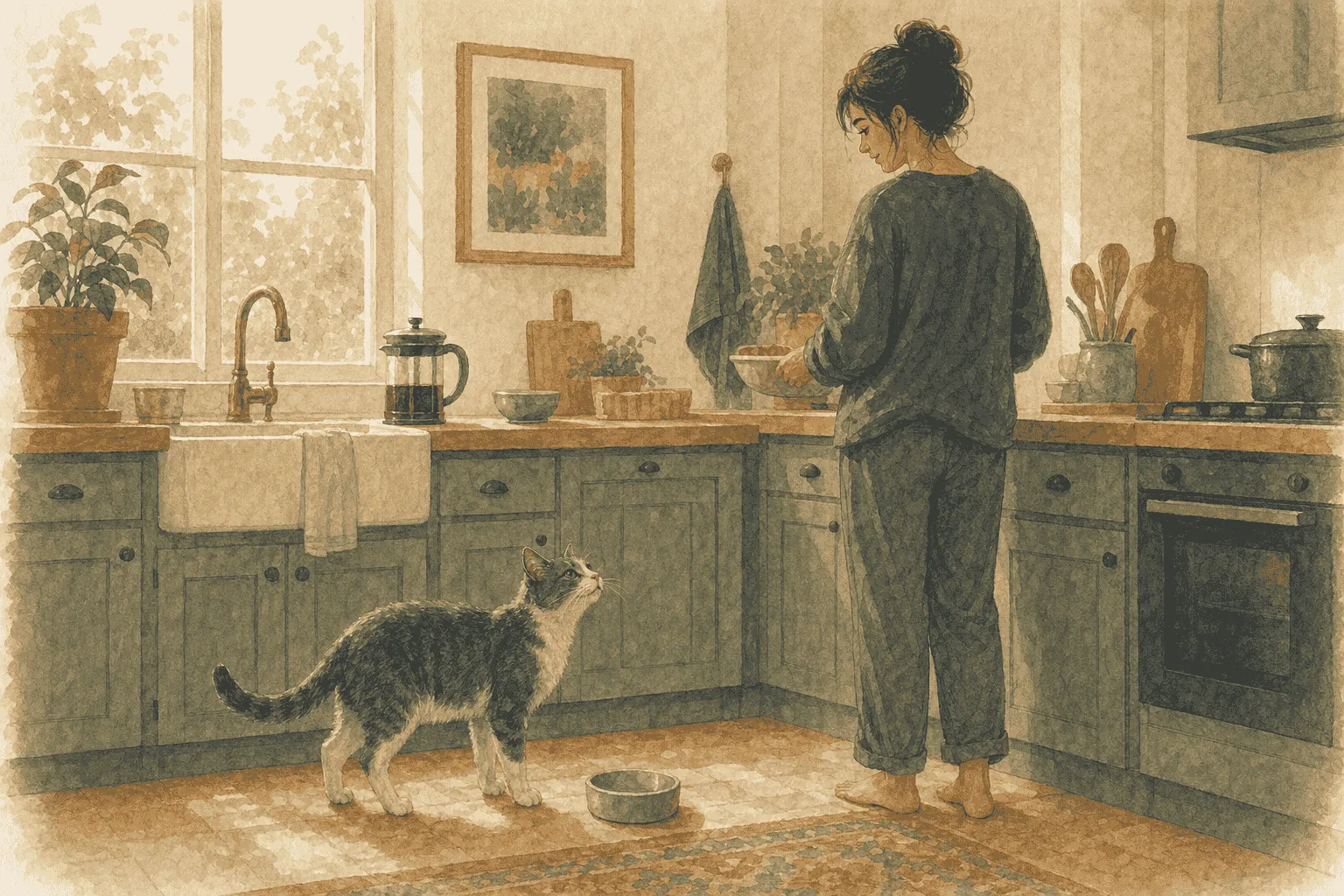
The 2009 finding gives us a careful way to describe the second scene: some cats may add a cry-like component while soliciting food. It does not prove that the lap purr means contentment or that the kitchen purr has only one purpose. The observation becomes useful because the sound is paired with a recognizable situation.
That same caution belongs in conversations about why cats knead. A familiar behavior may feel easy to name, but context protects us from turning a plausible interpretation into certainty.
How to Read Cat Purring in Context
Instead of decoding the vibration in isolation, take a short mental snapshot:
- Notice the setup. Did the purr begin during quiet contact, when food preparation started, or after something in the room changed?
- Watch what happens next. Does the cat settle, approach the bowl, move away, or change position?
- Read the rest of the cat. Posture, movement, distance, and other vocal sounds add information that the purr cannot supply alone.
- Compare with that individual. A familiar breakfast pattern is more informative than a generic internet claim about all cats.
You can keep a simple note when a purr seems different: time, place, what happened immediately beforehand, and what followed. The goal is not to assign an emotion. It is to see whether a repeatable context emerges.
A Purr Is Not a Health Test
Purring alone cannot diagnose pain, hunger, stress, or comfort. The safest reading stays modest: a purr is one part of the scene, and its meaning may change with context.
If purring appears alongside a sudden or severe change in your cat’s usual behavior, do not use the sound as reassurance or as a diagnosis. Look at the broader change and ask a veterinarian for guidance. Similarly, a cat’s hiding behavior needs its wider context; one behavior should not erase other information in front of you.
The Takeaway
So, why do cats purr? There is no evidence-backed one-word answer. A Current Biology study showed that some cats can make a food-soliciting purr with a cry-like component that people hear as more urgent. That is a fascinating specific finding, not a universal purr dictionary.
Listen to the sound, then widen the frame. The room, the routine, the cat’s other behavior, and changes from that individual’s normal pattern all belong in the interpretation.
Sources
Petzette's claim cards for this article point to the following scientific, veterinary, or animal-welfare sources.
- The Cry Embedded Within The Purr: Peer-reviewed paper