Behavior05 October 2026
Why Do Dogs Get Stuck Together? Stay Calm and Call
Why do dogs get stuck together after mating? Learn why a tie happens, what not to do, and when an accidental mating needs a veterinarian.
TextPetzette Editorial
Read5 Min
Evidence status
Source-backed editorial
- Evidence record
- 3 claim cards linked to 2 documented sources.
- Independent expert review
- Not commissioned. Petzette Editorial is responsible for the published wording.
- Source record checked
- 05 October 2026
- Scope
- General guidance. Individual animals and circumstances can differ.
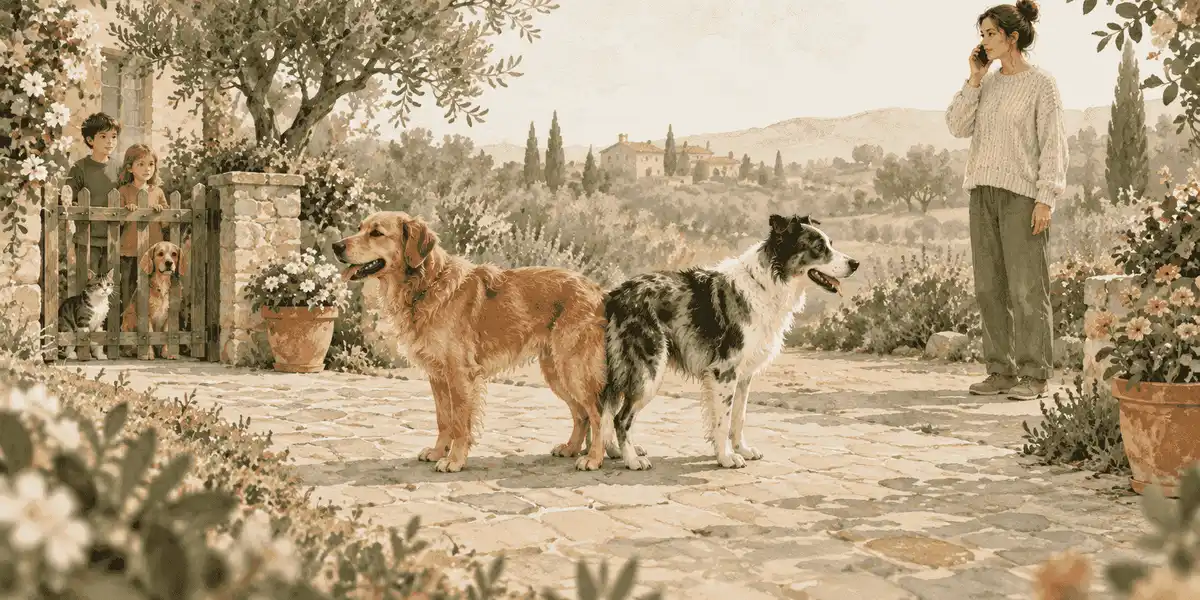
Why do dogs get stuck together? Usually, the phrase describes a canine mating tie. During mating, part of the male dog’s penis, the bulbus glandis, can swell while the female dog’s vaginal muscles contract around it. The dogs may be unable to withdraw immediately and may turn back to back.
It can look alarming, especially if you have just brought home a young dog and have not seen it before. The most important decision is simple: do not try to pull the dogs apart. Forced separation can seriously injure the female. Keep the scene calm and contact a veterinarian promptly if the mating was unwanted or accidental.
What “Stuck Together” Means
The tie is a physical part of canine mating, not proof that one dog is attacking the other or that a person has done something wrong. VCA Animal Hospitals describes the swelling and muscle contraction that can temporarily prevent withdrawal. The dogs may remain joined while the anatomy returns to its usual state.
That explanation has a useful limit. It does not tell you whether pregnancy will occur, whether either dog is injured, or what an individual dog needs next. Pregnancy can occur without a tie, too, so the presence or absence of a locked-together moment is not a pregnancy test.
This is also a different question from ordinary mounting. A dog can mount a person, another dog, or an object in several contexts, including sexual behavior, high-arousal play, or a response to excitement or stress. If the dogs are not physically joined, the safer response is to create space and redirect without punishment. The guide to why female dogs hump covers that separate behavior decision.
If the Dogs Are Tied, Keep Your Hands Off
When two dogs are locked together, resist the urge to make the moment end faster. Do not:
- pull either dog away;
- push, lift, or twist one dog to separate them;
- pour cold water on them or make loud noises; or
- ask children, other pets, or a crowd to come closer.
VCA’s guidance says these interruptions do not reliably speed separation and that forced separation can cause serious injury to the female. A dramatic response can also upset both dogs, add movement to an already vulnerable position, and make it harder to keep people safe.
Instead, reduce the traffic around them without handling the tie. Ask people to step back, move other pets away if you can do that without approaching the joined dogs, and keep voices low. Do not put your hands near either dog’s mouth, collar, or hindquarters. This is a hands-off safety boundary, not a training exercise.
If either dog appears injured, distressed, or otherwise unwell, contact an appropriate veterinary service promptly and explain that the dogs are or were tied. Do not wait for a general article to tell you whether an individual injury is serious. The safest route depends on what happened, how the dogs look now, and the professional advice available where you live.

Do Not Use the Tie to Guess About Pregnancy
If the mating was not intended, call your veterinarian as soon as possible after the dogs separate. VCA notes that the options after a mismating need to be reviewed with a veterinarian, and that pregnancy can happen without a tie. That makes the call worthwhile even when the dogs did not appear to lock together.
Have the basic facts ready:
- which dogs were involved and whether either is known to be intact;
- when the mating may have happened;
- whether the dogs were tied and, if so, whether they have separated;
- any possible injury or change you can observe; and
- any relevant medical or reproductive history your veterinarian already has.
Do not choose a medication, dose, reproductive treatment, or home remedy from a search result. Do not assume that a small dog, a brief interaction, the absence of a tie, or a currently calm appearance settles the pregnancy or injury question. Those are individual veterinary decisions.
What to Do After an Accidental Mating
Once the dogs are apart and you have spoken with a veterinarian, write down what you were told and keep the dogs from repeating the interaction while you arrange the next step. If the dogs live together, use calm separation and predictable routes rather than punishment or a chase. If another dog was involved, share the factual timeline with that dog’s caregiver.
The point of the record is not to calculate the outcome at home. It is to prevent a stressful moment from becoming a series of guesses. Keep the time, the dogs’ identities, what you observed, and the veterinary practice’s advice together. If the dogs may have been injured during an attempted separation, say that clearly.
For future interactions, ask your veterinarian about reproductive prevention and safe management for the individual dogs. A general article cannot select the right plan for age, health, reproductive status, or household arrangement. It can give you one boundary that remains useful: if dogs are tied, do not create a second emergency by pulling them apart.
When Mounting Is Not a Tie
Sometimes “stuck” means that a dog keeps mounting or will not disengage, not that the dogs are physically joined. Create space before another dog has to defend its route or the interaction becomes unsafe. Calmly guide your dog away if you can, then offer a familiar alternative such as moving with you or settling in a separate area.
Repeated, sudden, excessive, inappropriate, or difficult-to-manage mounting deserves veterinary guidance and may need behavior support. Note what happened immediately before the behavior, who was involved, how easy it was to interrupt, and what happened afterward. A mounting episode does not establish dominance, anxiety, pain, or one exact motive.
The practical answer is therefore narrow but important: dogs can look stuck because a normal mating tie temporarily prevents withdrawal. Do not pull, splash, shout, or improvise a separation. Keep the scene calm, let the dogs separate without force, and call a veterinarian promptly after an unwanted mating or any concern about injury.
Sources
Petzette's claim cards for this article point to the following scientific, veterinary, or animal-welfare sources.
- VCA Guidance on Canine Mating Ties: Current veterinary-hospital reproduction guidance
- VCA Guidance on Dog Mounting and Humping in Context: Current veterinary-hospital behavior guidance