Health Signals20 August 2026
Why Do Dogs Sneeze? A Context and Health Check
Why do dogs sneeze? Use a calm whole-pattern check, protect other dogs when illness is possible, and know when to call a veterinarian.
TextPetzette Editorial
Read3 Min
Evidence status
Source-backed editorial
- Evidence record
- 4 claim cards linked to 1 documented source.
- Independent expert review
- Not commissioned. Petzette Editorial is responsible for the published wording.
- Source record checked
- 20 August 2026
- Scope
- General information, not an individual diagnosis or treatment plan.
Why do dogs sneeze? The useful first question is not which cause to name from one sound. Notice whether the sneeze is isolated or keeps happening, record what changes around it, and use the whole pattern to decide when your veterinarian needs to hear from you. For a dog in its first months at home, that approach is steadier than turning a walk, a play session, or one normal meal into reassurance.
Start With the Pattern, Not a Guess
A 2026 peer-reviewed Merck Veterinary Manual review describes a normal sneeze as an outward protective reflex through the nasal passages. It can occur with many different underlying conditions, so the sound alone cannot tell you why it happened.
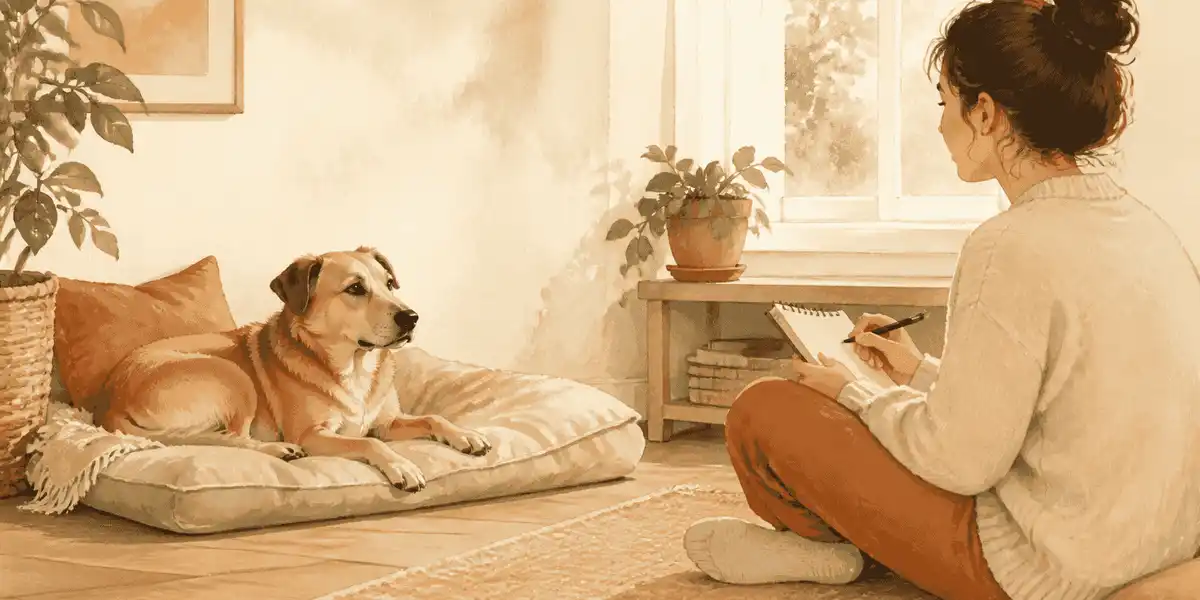
Make a short, factual record instead:
- when the sneezing started and whether it repeats;
- what was happening immediately beforehand;
- any cough, nose or eye discharge, or change in appetite or energy; and
- whether breathing looks comfortable or noticeably different.
This is not a home diagnostic test. It is a clearer history for the clinic. A sneeze during a walk, after play, or in a familiar room is useful context, but it does not settle the cause.
A Sneeze During Play Is Still Just Context
The setting can feel persuasive. A dog who sneezes while playing may still look engaged and ready to continue, but that moment does not prove that play explains a repeated pattern. Write it down with the rest of the observation rather than using it as an all-clear.
It also helps to describe what you actually saw. A normal sneeze sends air outward. A reverse sneeze is a different visible pattern of repeated, forceful, rapid inhalations. That distinction can help the veterinarian understand your description, but it still cannot identify the cause at home. This article covers an outward sneeze and its wider context; a reverse-sneezing episode needs its own veterinary history.
Call on a Wider or Ongoing Pattern
VCA urgent-care guidance advises veterinary assessment for an ongoing sneeze, repeated cough, or continuously runny nose. Cornell University College of Veterinary Medicine also lists sneezing alongside cough, nose or eye discharge, lethargy, reduced appetite, and labored breathing as respiratory signs worth reporting.
Call your veterinarian if sneezing keeps happening or comes with those changes. Tell them the pattern you recorded rather than selecting a treatment or trying to decide whether it is an infection, irritation, allergy, or something else. There is no fixed waiting period that safely fits every dog.
If this is also your new puppy’s first appointment, the separate new puppy first-vet-visit guide can help you organize the wider visit. It does not replace a call about a concerning change today.
Pause Dog-to-Dog Activities While You Call
Not every sneeze is contagious. But if sneezing is part of a wider respiratory pattern, Cornell guidance supports avoiding unnecessary dog-to-dog contact while veterinary advice is pending. Postpone the dog park, daycare, classes, or close playdates, and keep bowls, toys, and chews separate from other dogs in the home.
That is a lower-exposure step, not a diagnosis or a universal isolation rule. Keep normal essentials such as food, water, toileting, and veterinary care going. Your veterinarian can advise what is appropriate for this dog’s signs and household.
Breathing Changes the Decision
Trouble breathing, shortness of breath, open-mouth breathing, or visibly hard work to breathe is an emergency-care boundary. Seek emergency veterinary care rather than waiting for another sneeze or trying to inspect the mouth or nose yourself.
Those signs do not identify one condition from home. They do tell you that the situation needs professional assessment without delay.
A Five-Point Dog Sneezing Check
- Note the time, setting, and whether the sneeze repeats.
- Check for cough, discharge, appetite or energy changes, and altered breathing.
- Contact your veterinarian for an ongoing or wider pattern.
- Reduce contact with other dogs while advice is pending when respiratory signs are present.
- Seek emergency veterinary care for breathing trouble.
The goal is neither to panic over one sound nor to dismiss a pattern because the dog still has a playful moment. Read the whole dog, save the useful details, and let your veterinarian decide what needs investigation.
Sources
Petzette's claim cards for this article point to the following scientific, veterinary, or animal-welfare sources.
- Canine Sneezing: Merck, VCA, And Cornell Guidance: Peer-reviewed veterinary manual, veterinary-hospital urgent-care guidance, and university veterinary-school owner guidance on canine respiratory signs and escalation.
Tonozzi CC. "Clinical Signs of Respiratory Disease in Animals." *Merck Veterinary Manual*, full review April 2026; Kuehn NF. "Rhinitis and Sinusitis in Dogs." *Merck Veterinary Manual* Pet Owner Version, last updated September 2024; VCA Animal Hospitals Urgent Care, "Runny Nose, Coughing or Sneezing"; Cornell University College of Veterinary Medicine, "Canine respiratory disease outbreaks," last updated October 21, 2025.