Health Signals02 September 2026
Are Alstroemeria Toxic to Cats? Check the Label First
Are alstroemeria toxic to cats? Check the Peruvian Lily label, separate it from true lilies, and know when a veterinarian should guide the next step.
TextPetzette Editorial
Read4 Min
Evidence status
Source-backed editorial
- Evidence record
- 4 claim cards linked to 5 documented sources.
- Independent expert review
- Not commissioned. Petzette Editorial is responsible for the published wording.
- Source record checked
- 02 September 2026
- Scope
- General information, not an individual diagnosis or treatment plan.
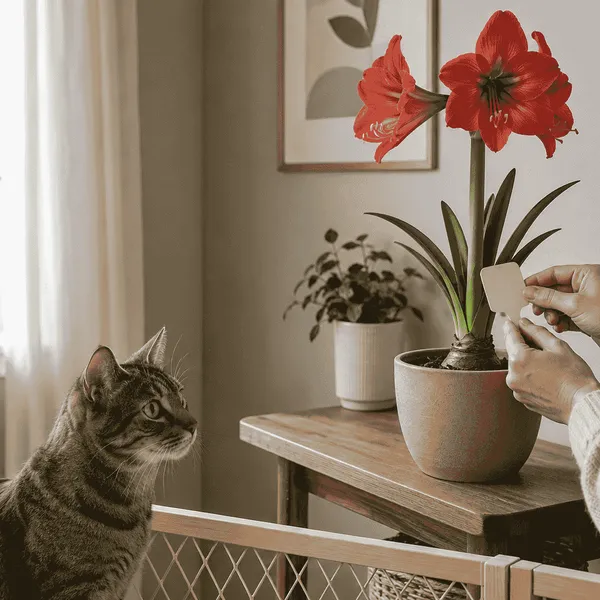
Are alstroemeria toxic to cats? If the flower is confirmed as Peruvian Lily (Alstroemeria), the ASPCA lists that named plant entry as non-toxic to cats and dogs. The useful first-year decision is still narrower than a simple yes or no: check the plant label before applying the answer. “Lily” by itself does not identify an unknown flower, mixed bouquet, added product, or vase water.
If your cat may have contacted a true lily or daylily, treat that as a prompt call to your veterinarian or an animal poison-control service. This guide is about the named Peruvian Lily entry and the limits of that classification, not about making a home exposure diagnosis.
The Plant Name Has to Match
The ASPCA entry headed “Peruvian Lily” gives Alstroemeria as the scientific name and lists Lily of the Incas, Princess Lily, and Alstromeria as additional common names. That is the plant identity behind the database classification. A familiar-looking flower or the word “lily” on its own is not enough to transfer the answer.
The U.S. Food and Drug Administration separates true lilies and daylilies from plants that merely contain “lily” in a common name. The distinction matters especially in a cat home, because true-lily and daylily exposure can involve more than chewing a bloom. If a label says a different botanical name, the true-lily safety guide is the better place to start. If the plant is unidentified, keep that uncertainty in the call rather than borrowing reassurance from the closest match.
Non-Toxic Is a Classification, Not a Snack Plan
“Non-toxic” describes the poison-control listing for the named plant. It does not provide a safe amount, a feeding recommendation, a waiting period, a diagnosis, or a home-treatment plan for an individual cat. The ASPCA plant-database overview also notes that its list is not all-inclusive, that plant appearance can vary, and that any plant material may cause vomiting or gastrointestinal upset.
That boundary is important after a cat nibbles a flower. A non-toxic listing does not promise that eating plant material will cause no stomach upset. It also does not classify fertilizer, pesticide, flower food, essential oil, or another product used around the arrangement. If the bouquet is mixed or the label is missing, the named Peruvian Lily entry cannot settle every exposure in front of you.
If Your Cat Chewed It, Preserve the Facts
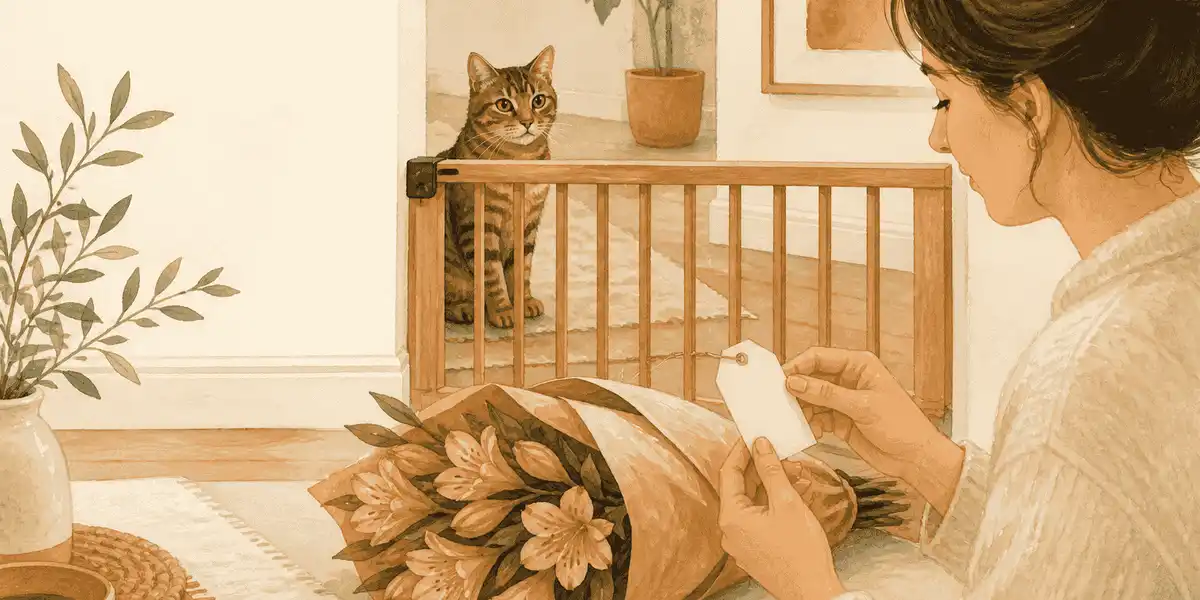
Move the plant and any related products out of reach while keeping the label, sleeve, receipt, or a clear photo available. Then make a short exposure record instead of trying to calculate a perfect answer:
- the exact plant name, scientific name, or label wording;
- whether your cat chewed, swallowed, brushed against, or licked something;
- the plant part involved and the possible amount, using “unknown” when needed;
- the possible time of contact and any change you notice in your cat.
Share your cat’s age, approximate weight, relevant health information, and the full arrangement or product details with the professional you contact. A photo of the whole plant may help with identification, but it cannot create a safe amount or a treatment plan at home.
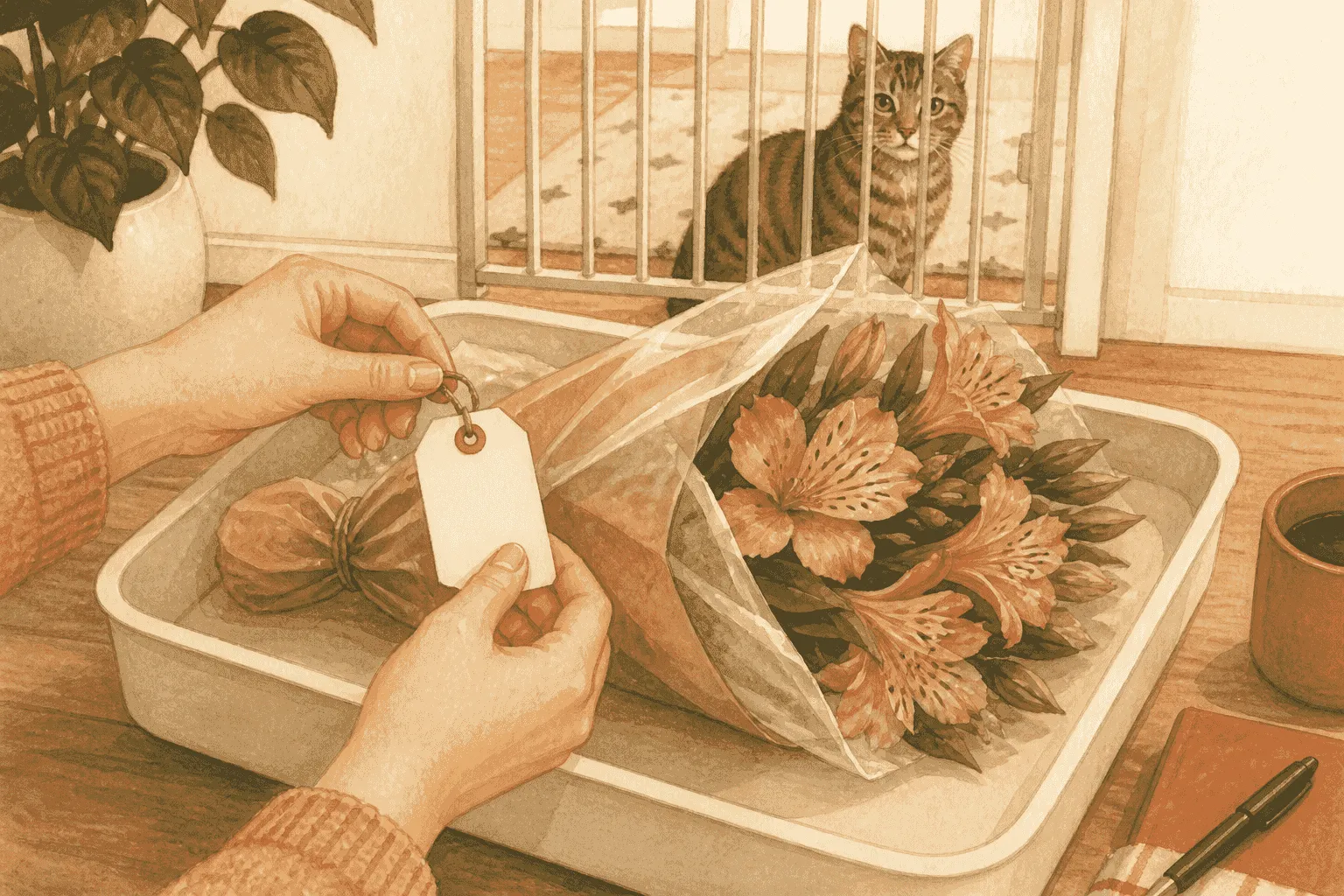
If a cat may have swallowed a toxin or the plant identity is uncertain, contact a veterinarian or animal poison-control service promptly. Do not try to make your cat vomit, give medication, or use a household remedy unless a professional specifically directs it.
Know When the Label Is Not Enough
Call your veterinarian when your cat is unwell, when vomiting or other gastrointestinal upset follows plant contact, or when you cannot establish exactly what was involved. Ask promptly rather than waiting for a particular sign if the arrangement could include a true lily or daylily, pollen on fur, vase water, or an added product. The cat vomiting guide explains why the appearance of vomit cannot identify a cause by itself.
The professional-help boundary is about the individual cat in front of you. A database entry can classify a named plant; it cannot decide whether a current sign came from plant material, a mixed arrangement, another exposure, or an unrelated problem. Do not treat a “non-toxic” result as an all-clear when the identity or condition remains uncertain.
Make Plant Labels Part of New-Cat Setup
Before bringing flowers into a new cat’s space, record the botanical name and photograph the label. Keep unfamiliar plants, bouquets, vase water, and garden or floral products beyond the cat’s reach until you know what they are. Avoid true lilies and daylilies in cat-accessible areas, including places a climbing cat could reach.
For a mixed arrangement or an unfamiliar plant, use the broader plant-exposure owner checklist: identify the plant, record the route and timing, preserve the packaging, and call before treating at home. The simple rule is not “every lily has the same answer.” Match the label to the exact entry, keep the classification narrow, and contact your veterinarian when the exposure or your cat leaves doubt.
Sources
Petzette's claim cards for this article point to the following scientific, veterinary, or animal-welfare sources.
- ASPCA Peruvian Lily Plant Classification: Animal poison-control plant database and public exposure classification
- Spider Plant Poison-Control Classification And Name Check: Animal poison-control databases and veterinary manual guidance
- Cats Protection Lily Safety: UK animal-welfare organization guidance
- FDA Lilies And Cats: Government veterinary safety guidance
- Cornell Feline Vomiting And Household Hazards: Veterinary-school clinical and poison-safety guidance