Health Signals09 October 2026
Are Bromeliads Toxic to Cats? Check the Plant Label
Are bromeliads toxic to cats? Match the named plant, record a possible exposure, and know when a non-toxic listing still needs care.
TextPetzette Editorial
Read3 Min
Evidence status
Source-backed editorial
- Evidence record
- 3 claim cards linked to 3 documented sources.
- Independent expert review
- Not commissioned. Petzette Editorial is responsible for the published wording.
- Source record checked
- 09 October 2026
- Scope
- General information, not an individual diagnosis or treatment plan.
Part of the plant safety checklist
Are bromeliads toxic to cats? The ASPCA Animal Poison Control Center lists its named Blushing Bromeliad entry as non-toxic to cats and dogs. That is a useful classification, but it is not a universal answer for every plant sold as a bromeliad, every mixed container, or every cat who chews plant material.
For a new-cat home, the practical decision is narrower: match the label as closely as you can, move the plant away from chewing access, and record what may have happened. If the plant is unknown or your cat is unwell, let a veterinarian or animal poison-control service assess the situation instead of treating a database listing as clearance.
Match “Bromeliad” to the Named Entry
The ASPCA entry is titled Blushing Bromeliad. It lists several additional common names, including Crimson cup, Marbled fingernail, Ossifragi Vase, Miniature Marble plant, and Aregelia. The page displays the scientific name as Neoregalia spp. and places the entry in the Bromiliaceae family.
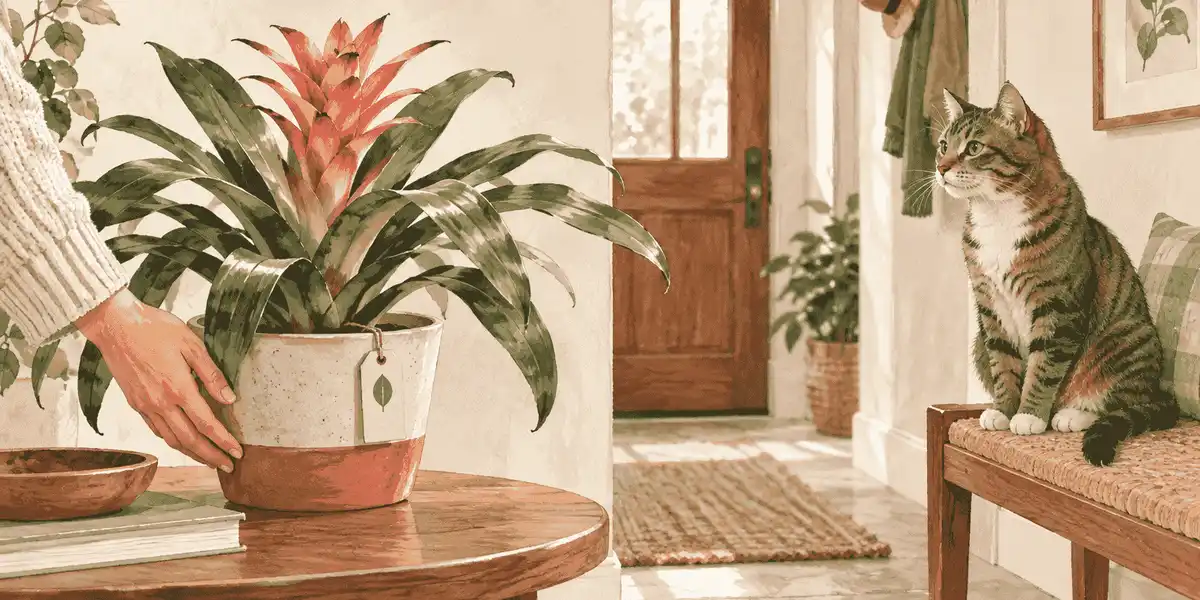
That detail matters because bromeliad is a broad plant label. A nursery tag, receipt, plant-listing record, or botanical name attached to the actual pot is more useful than a leaf-shape match or a phone image. The ASPCA plant database itself notes that individual plants can differ from the photos used in its listings and advises checking the plant name.
If your tag says only “bromeliad,” the plant is in a mixed container, or the label is missing, keep that uncertainty visible. Do not silently apply the Blushing Bromeliad entry to an unknown cultivar, another species, fertilizer, pesticide, potting mix, or decorative product. The broader plants toxic to cats and dogs owner checklist can help you organize those separate questions.
Read “Non-Toxic” as a Classification
“Non-toxic” is a poison-control category, not a snack label. The ASPCA lists the named Blushing Bromeliad entry as non-toxic to cats, but that wording does not provide a safe amount, recommend feeding the plant, predict how an individual cat will respond, or diagnose a sign after chewing.
The ASPCA’s plant-list overview also cautions that eating any plant material may cause vomiting or gastrointestinal upset in dogs and cats. So a non-toxic listing does not mean that a cat should be allowed to nibble the leaves, and it does not dismiss a new change in appetite, digestion, comfort, or behavior.
If your cat has vomited after being near a plant, do not use the plant name to decide what caused it. The cat vomiting guide explains why the whole pattern and the cat’s condition matter more than one visual clue.

Record the Exposure Without Guessing
If you see chewing or think access may have occurred, move the pot out of reach without turning the moment into a chase. Then make a short record:
- Identity: the exact common and botanical name, or that the plant is unknown.
- Contact: whether your cat sniffed, licked, chewed, swallowed, or may only have brushed against a leaf.
- Plant part and amount: leaf, stem, flower, soil, or an uncertain mixture; use “unknown” rather than inventing precision.
- Timing and condition: when access may have happened and anything different from your cat’s usual appetite, digestion, energy, or comfort.
Keep the label, packaging, and any product information available. If another plant, fertilizer, pesticide, or potting material could be involved, include that in the record. A precise-sounding guess is less useful than an honest unknown.
Know When the Question Becomes a Call
Contact your veterinarian or an animal-poison-control service promptly if your cat may have swallowed an unknown plant or product, is showing concerning changes, or you cannot identify what happened. Give the professional the plant name if known, the part and possible amount, the time, and what you can observe now.
Do not induce vomiting, give medication, or try a household remedy unless a veterinarian or poison-control professional specifically directs it. The Calathea label guide uses the same distinction for another named plant: a classification can narrow an identity question, but it cannot provide an individual treatment plan.
The useful answer is therefore limited but actionable: ASPCA lists its named Blushing Bromeliad entry as non-toxic to cats, while the label and the cat in front of you still matter. Keep the plant out of reach, preserve the exposure details, and ask a veterinarian when the identity or your cat’s condition leaves doubt.
Sources
Petzette's claim cards for this article point to the following scientific, veterinary, or animal-welfare sources.
- ASPCA Blushing Bromeliad Plant Classification: Animal poison-control plant database entry
- Spider Plant Poison-Control Classification And Name Check: Animal poison-control databases and veterinary manual guidance
- AVMA Pet First Aid: Poison Response Boundary: Veterinary-association first-aid brochure