Nutrition09 October 2026
Are Blueberries Toxic to Dogs? A Plain-Treat Check
Are blueberries toxic to dogs? Check the plain berry, keep extras small, check mixed products, and ask your veterinarian if the dog needs a different plan.
TextPetzette Editorial
Read5 Min

Evidence status
Source-backed editorial
- Evidence record
- 5 claim cards linked to 5 documented sources.
- Independent expert review
- Not commissioned. Petzette Editorial is responsible for the published wording.
- Source record checked
- 09 October 2026
- Scope
- General information, not an individual diagnosis or treatment plan.
Are blueberries toxic to dogs? Plain blueberries are listed as a possible fruit treat for many dogs in guidance from the ASPCA Animal Poison Control Center and VCA Animal Hospitals. That is a narrower answer than “anything with blueberry in the name is safe.” The exact ingredient, the dog’s wider diet, and the dog’s individual health still matter.
This guide is for a treat decision, not a diagnosis or a universal serving chart. If your dog has a medical condition, a therapeutic diet, or an active digestive concern, your veterinarian’s plan outranks a general food list.
Start With the Plain Berry in Front of You
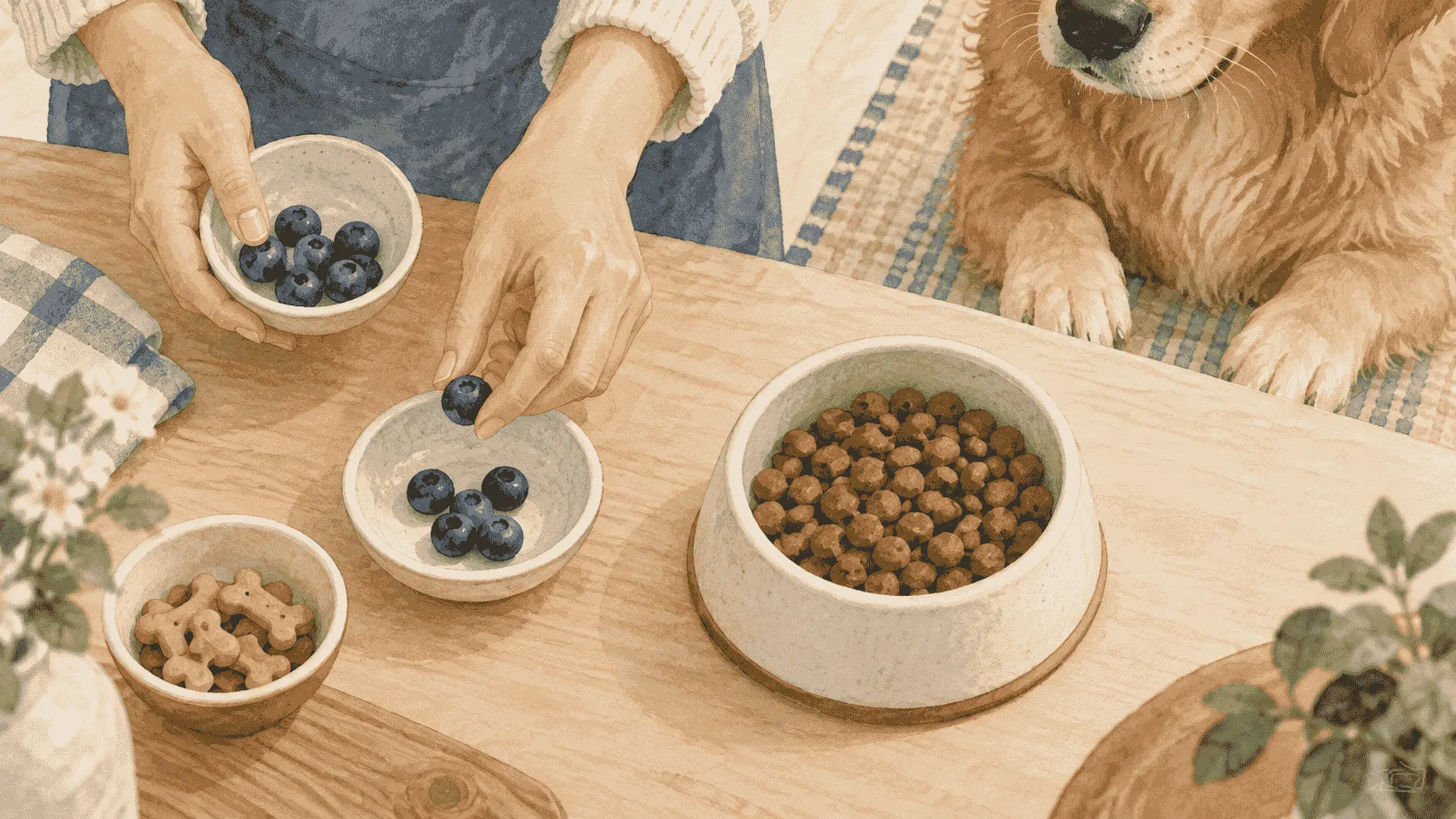
The ASPCA’s public food guidance lists blueberries among fruit snack examples for pets and advises keeping snack portions small. VCA’s veterinary nutrition guidance also lists blueberries among fruit and vegetable ingredients that may be offered as dog treats without added salt. Both sources describe general options, not a guarantee for every dog.
So begin by naming what you actually have. A plain blueberry is one ingredient. It is different from a food that is blueberry-flavored, sweetened, seasoned, mixed into a recipe, or sold as a supplement. If you cannot tell what is in the item, the word blueberry on the front of a package does not answer the whole question.
Keep “Blueberry” Separate From the Rest of the Recipe
A muffin, preserve, syrup, sweetened dried-fruit mix, smoothie, granola, or flavored chew brings other ingredients and a different decision. The dog fruit treat checklist uses named, plain options for exactly this reason: a broad food category is not a safety label for every preparation.
Read the ingredient list on a packaged food. Check whether the product is plain and unseasoned, and keep the label if the dog has already eaten it. Do not turn a general blueberry answer into clearance for a mixed human food or a new commercial treat. A food can contain the named fruit and still need a separate ingredient check.
This is also why “toxic” is not the only useful word in the question. The decision is not simply whether the berry appears on a list. It is whether the item in front of you matches the plain treat example and fits this dog’s routine.
Treats Stay on the Side of the Diet
The complete-food foundation matters more than the novelty of a fruit. The AAHA nutrition and weight-management guideline and veterinary nutrition guidance used in the vault keep complete and balanced food as the main calorie source, with treats and other extras limited to a small part of the day. For generally healthy pets, the common framework is at least 90 percent from complete food and no more than 10 percent from extras.
That 10 percent is a ceiling, not a target or a promise that every treat suits every dog. Training rewards, toppers, table food, and fruit all share the same extras space. The everyday dog-treat guide can help you count the whole routine instead of treating each snack as if it were separate.
For a puppy or newly adopted dog, keep the first try easy to read: do not introduce several new foods at once. Note the exact preparation, how it was offered, and whether it fit the dog’s ordinary feeding pattern. You do not need to build a fruit menu. You need one deliberate, plain treat decision.
Use a Four-Question Blueberry Check
Before you offer the treat, ask:
- Is it a plain berry? If the label includes a recipe, flavoring, seasoning, or several other ingredients, pause and assess the whole item.
- Is this dog on an ordinary feeding plan? A therapeutic diet or known health concern needs an individual answer from your veterinarian.
- Will it stay inside the extras budget? Count it with treats, toppers, training rewards, and table food rather than adding it on top of everything else.
- Has the dog already eaten an unknown product? Keep the packaging and switch to the professional-call route instead of using this routine treat checklist.
If the answer is clear for the first three questions, keep the introduction modest and readable. If any answer is unknown, the safest next step is to pause and identify the ingredient or ask your veterinarian.
Let the Individual Dog Change the Answer
VCA’s guidance notes that some treats may not suit a dog with a diagnosed condition and recommends discussing specific treats with a veterinarian. The same caution applies when a dog has a therapeutic diet, a history of food reactions, an ongoing digestive problem, or another health concern that changes what belongs in the bowl.
Do not use blueberries to test an allergy, settle an upset stomach, improve a health condition, or replace a diet your veterinarian has prescribed. A plain-food list cannot assess the individual dog. If you are unsure whether a new treat fits, ask your veterinarian before making it part of the routine.
If the Dog Already Ate a Mixed Product
If the dog may have eaten a food with an unknown ingredient list, keep the packaging, note what may have been eaten and when, and contact your veterinarian or an animal poison-control service for direction. The American Veterinary Medical Association’s first-aid guidance says not to induce vomiting or give medication unless a professional specifically directs it.
Stop using this treat guide if the question has become a possible poisoning or if the dog is unwell. Do not wait for a general “blueberry” answer to settle an exposure involving a mixed product. The label and the professional call are more useful than a guess based on the fruit name.
The practical answer is simple: a plain blueberry may fit the small treat part of a generally healthy dog’s routine, but it is not a universal food clearance. Keep the ingredient plain, keep the extra small, keep the complete diet central, and let your veterinarian decide when the individual dog needs a different plan.
Sources
Petzette's claim cards for this article point to the following scientific, veterinary, or animal-welfare sources.
- ASPCA And VCA Blueberries As Dog Treats: Animal-poison-control and veterinary-hospital nutrition guidance
- UC Davis Treat Guidelines For Dogs: Veterinary-school nutrition-service guidance
- AAHA Nutrition And Weight Management Guidelines 2021: Peer-reviewed veterinary clinical guideline
Cline MG, Burns KM, Coe JB, et al. 2021 AAHA Nutrition and Weight Management Guidelines for Dogs and Cats. Journal of the American Animal Hospital Association. 2021;57:153-178.
- AAFCO Pet Food Labels And Nutritional Adequacy: US feed-control association consumer and regulatory guidance
- AVMA Pet First Aid: Poison Response Boundary: Veterinary-association first-aid brochure