Behavior09 September 2026
Cat in Heat Behavior: Read the Pattern, Then Plan Safely
Cat in heat behavior can look sudden and loud. Learn what to observe, how to prevent unintended mating, and when your veterinarian should lead.
TextPetzette Editorial
Read5 Min

Evidence status
Source-backed editorial
- Evidence record
- 4 claim cards linked to 1 documented source.
- Independent expert review
- Not commissioned. Petzette Editorial is responsible for the published wording.
- Source record checked
- 09 September 2026
- Scope
- General guidance. Individual animals and circumstances can differ.
Cat in heat behavior can look sudden, loud, and unlike the cat you thought you knew. An intact female may vocalize more, rub against people or furniture, roll, crouch, present her rear, or tread with her hind legs. Those changes can fit estrus, the receptive stage of the feline reproductive cycle, but one sound or posture does not settle the whole story.
The useful first-year decision is two-part: observe the pattern without trying to diagnose it, and prevent access to intact cats while you make an individual reproductive plan with your veterinarian. Heat timing varies, pregnancy can happen during heat, and an online calendar cannot tell you what this cat needs.
What Cat in Heat Behavior Can Look Like
Merck Veterinary Manual describes estrous behavior in cats as including restlessness, vocalization, crouching or lordosis, hind-leg treading, and tail deviation. Cats Protection also describes calling or wailing, squirming, rubbing, and presenting the rear. Some cats may urinate more frequently or spray on vertical surfaces during heat.
That list is useful because it gives you observable details. It is not a scorecard. A vocal cat is not automatically in heat, and a cat who rubs against you has not supplied a complete explanation of the behavior. Read movement, posture, appetite, energy, access to other cats, and what happened before and after the episode.
If you are unsure how to describe the rest of the scene, the whole-cat body-language check can help you compare face, posture, distance, movement, and choice before you respond. Keep the response low-pressure. Do not restrain the cat to recreate a posture or stroke along the back to see whether the rear lifts again.
Use the Scene Before You Use the Calendar
The heat-cycle calendar is less precise than many quick answers suggest. Merck describes cats as seasonal breeders whose cycling is linked with daylight, while geography, indoor lighting, season, and the individual cat can change the pattern. A heat episode can last for a variable number of days and may return after a variable interval during the breeding season.
That uncertainty matters for a new kitten or a newly adopted adult cat. Do not use a birthday, a month of the year, or a quiet interval to decide that pregnancy is impossible or that a behavior change has been explained. Indoor life can change the light environment, and a cat’s pattern can differ from another cat’s pattern in the same home.
Make a short record instead of trying to forecast the next cycle:
- when the behavior began and whether it settles or returns;
- what you saw, such as vocalizing, rubbing, rolling, crouching, treading, tail position, urination, or spraying;
- what the cat was doing just before the change and how she moved afterward;
- whether appetite, energy, comfort, or other routines also changed; and
- whether you can confirm that she is intact from reliable veterinary or adoption records.
A record helps your veterinarian discuss reproductive status and next steps. It cannot confirm heat, pregnancy, or the cause of a behavior change from home.
Prevent Unintended Mating While You Plan
An intact female cat can become pregnant while in heat. Treat the behavior as a practical access question, not only as a noisy-house problem. Check doors, windows, screens, cat flaps, and routes to outdoor space. Keep her indoors and separate from intact cats until your veterinarian has helped you make an individual reproductive plan.
Separation needs to be real rather than visual. A closed interior door may matter when another intact cat is in the home; a screened window may still need checking if outside cats can reach it. Give each cat ordinary access to food, water, litter, rest, and a way to move away from pressure. Do not create a stressful handling test to prove that the barrier works.
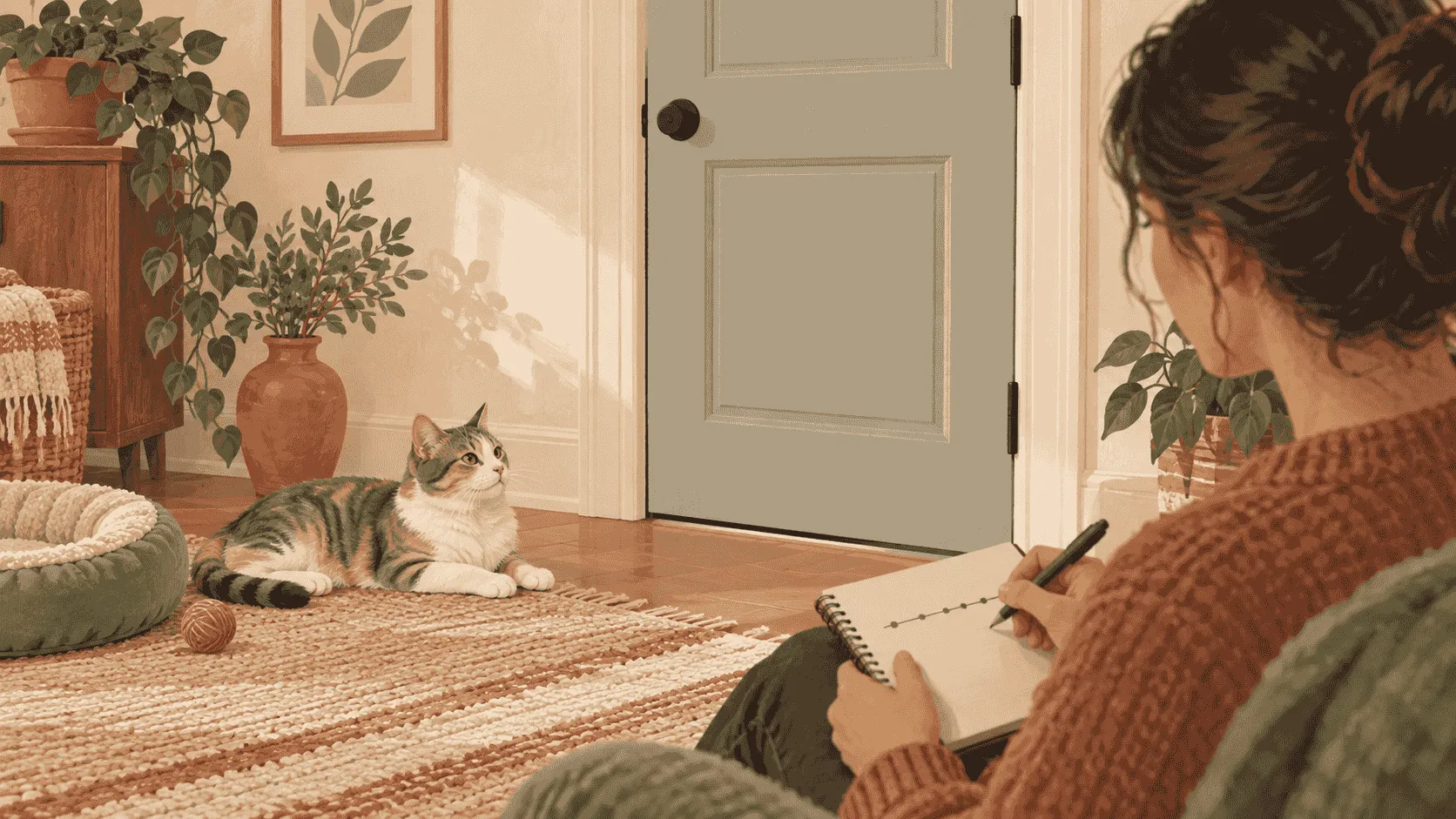
Ask your veterinarian about reproductive planning before you need to make a rushed decision. The right discussion can depend on the cat’s age, health, history, household, local practice, and whether pregnancy prevention is the goal. This guide does not choose a spay age, procedure, medication, or breeding plan. There is also no need to treat one heat or one litter as a required milestone.
If mating may already have occurred, contact your veterinarian for case-specific direction. Secure separation reduces further opportunity; it does not establish that pregnancy has not occurred.
When Heat-Like Behavior Needs a Veterinarian
Heat behavior can overlap with other behavior and health changes. Ask your veterinarian to assess a pattern that seems continuously prolonged, becomes unusually severe, or arrives with pain, weakness, appetite change, discharge, or another marked illness sign. Do not wait for a calendar prediction to make that call.
The same boundary applies when you cannot establish whether a cat has been spayed. Behavior may prompt a question, but it cannot confirm reproductive status. Bring adoption paperwork, prior records, a neutral timeline, and a short video only if you can capture it without disturbing the cat or delaying care. Describe what you saw rather than attaching a diagnosis.
Do not use hormones, medication, supplements, or a household remedy to stop the behavior. The veterinary team needs to decide whether the pattern fits reproductive cycling, another behavior concern, or a health problem, and what assessment or plan is appropriate. If the cat appears significantly unwell, contact the practice promptly and follow its route for urgent care.
A Five-Part Cat Heat Behavior Check
Use this sequence today:
- Name the observations. Write the sounds, movements, posture, urination or spraying, and timeline without calling them proof of heat.
- Read the whole cat. Note appetite, energy, comfort, movement, and any other change from her usual pattern.
- Secure access. Keep an intact female indoors and separate from intact cats while you arrange veterinary advice.
- Bring the records. Check adoption or veterinary paperwork, and mark reproductive status as unknown if the record is incomplete.
- Choose the handoff. Ask your veterinarian about planning, and call promptly for a prolonged, severe, painful, or illness-linked pattern or after a possible mating.
The practical answer to “what does a cat in heat look like?” is not one dramatic sign. It is a variable pattern of reproductive behavior plus a prevention decision. Observe without forcing the scene, keep access controlled, and let your veterinarian help interpret what comes next for this cat.
Sources
Petzette's claim cards for this article point to the following scientific, veterinary, or animal-welfare sources.
- Feline Heat Cycle And Intact Cat Behavior: Veterinary reference and animal-welfare guidance