Behavior12 September 2026
Cat Scratching Ears: What to Notice Before Ear Drops
Cat scratching ears can be a changed health signal. Learn what to record, why one sign cannot name the cause, and when to call your veterinarian.
TextPetzette Editorial
Read4 Min
Evidence status
Source-backed editorial
- Evidence record
- 1 claim card linked to 2 documented sources.
- Independent expert review
- Not commissioned. Petzette Editorial is responsible for the published wording.
- Source record checked
- 12 September 2026
- Scope
- General guidance. Individual animals and circumstances can differ.
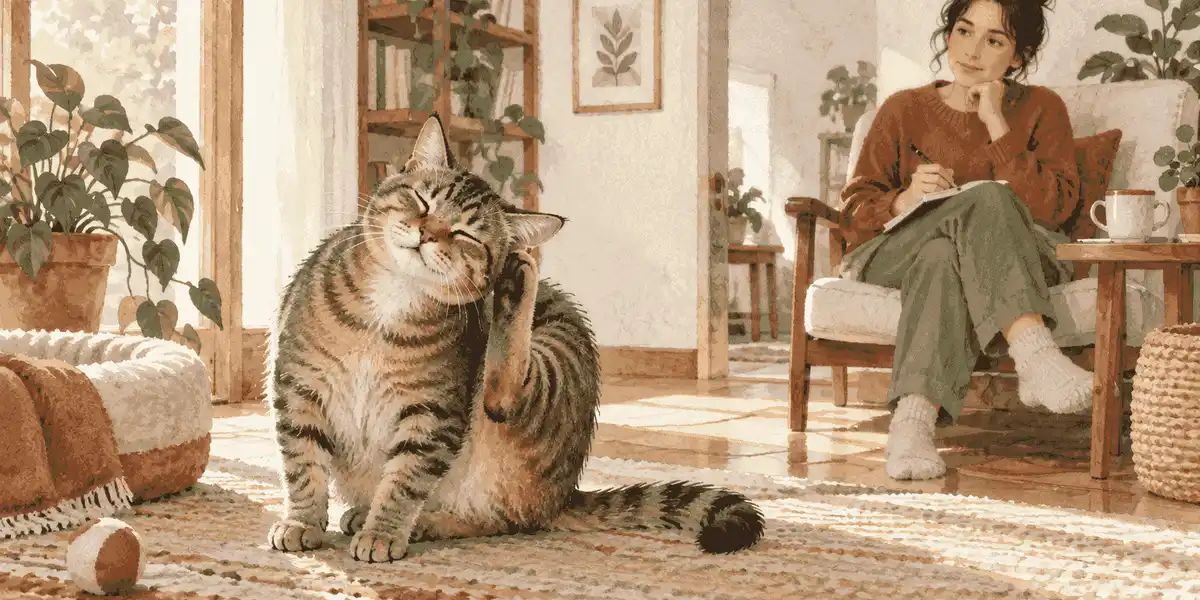
Cat scratching ears is a pattern to observe, not a diagnosis to solve from one glance. A brief scratch can happen in an ordinary grooming moment. Repeated scratching, head shaking, or a changed-looking ear is a different first-year decision: record what you can see without probing, then ask your veterinarian to assess the cause.
Start With the Pattern, Not the Label
Before searching for ear mites, infection, allergy, or another explanation, compare the behavior with this cat’s usual routine. The useful question is not “What does this one scratch mean?” It is “What changed, and what else arrived with it?”
Write down:
- which ear seems involved, if you can tell without handling the cat;
- when the scratching or head shaking happens and what came just before it;
- whether it repeats, lasts longer, or looks more forceful than the familiar pattern;
- whether the cat is eating, resting, moving, and interacting as usual; and
- any visible change around the ear, face, coat, or posture.
That note is a timeline, not a home examination. A cat may hide discomfort, and a quiet interval does not explain a pattern that keeps returning. Do not hold the cat still to create a closer look if the cat is trying to leave.
What a Changed Ear Pattern Can Include
The MSD Veterinary Manual’s cat-owner guidance lists scratching and head shaking alongside odor, redness, swelling, increased discharge, and scaly skin among signs that can accompany external-ear discomfort. It also describes several possible contributors, including parasites, foreign objects, allergies, bacterial or yeast involvement, and middle-ear problems. That list explains why a sign list cannot identify the cause in your home.
The same scratching behavior can sit beside different underlying situations. A dark mark, a smell, or one photograph is not a reliable decoder. Even the side involved does not finish the story. Treat the observation as information to bring to a veterinary examination rather than as permission to choose a product.
The cat body-language context guide can help you widen the snapshot: posture, movement, distance, touch tolerance, and what happens next may be more useful than the ear movement alone. Keep that guide in its lane too. Whole-cat observation improves the history; it does not identify an ear condition.
Look From the Outside; Do Not Test Inside
Cornell University’s Feline Health Center recommends consulting a veterinarian when a cat persistently scratches its ears and specifically advises against probing into them to find the cause. Its caregiver-facing observations include swelling, discharge, discoloration, dirt, and debris. Those are details to report, not an invitation to scrape or clean deeper.
Keep fingers, cotton swabs, tools, oil, human ear products, leftover veterinary medicine, and household remedies out of the ear unless a veterinarian who knows this cat directs otherwise. A forced inspection can add pain or make the next examination harder. Vigorous scratching or head shaking can also injure the ear flap, so repeated handling is a poor test even when you are trying to help.
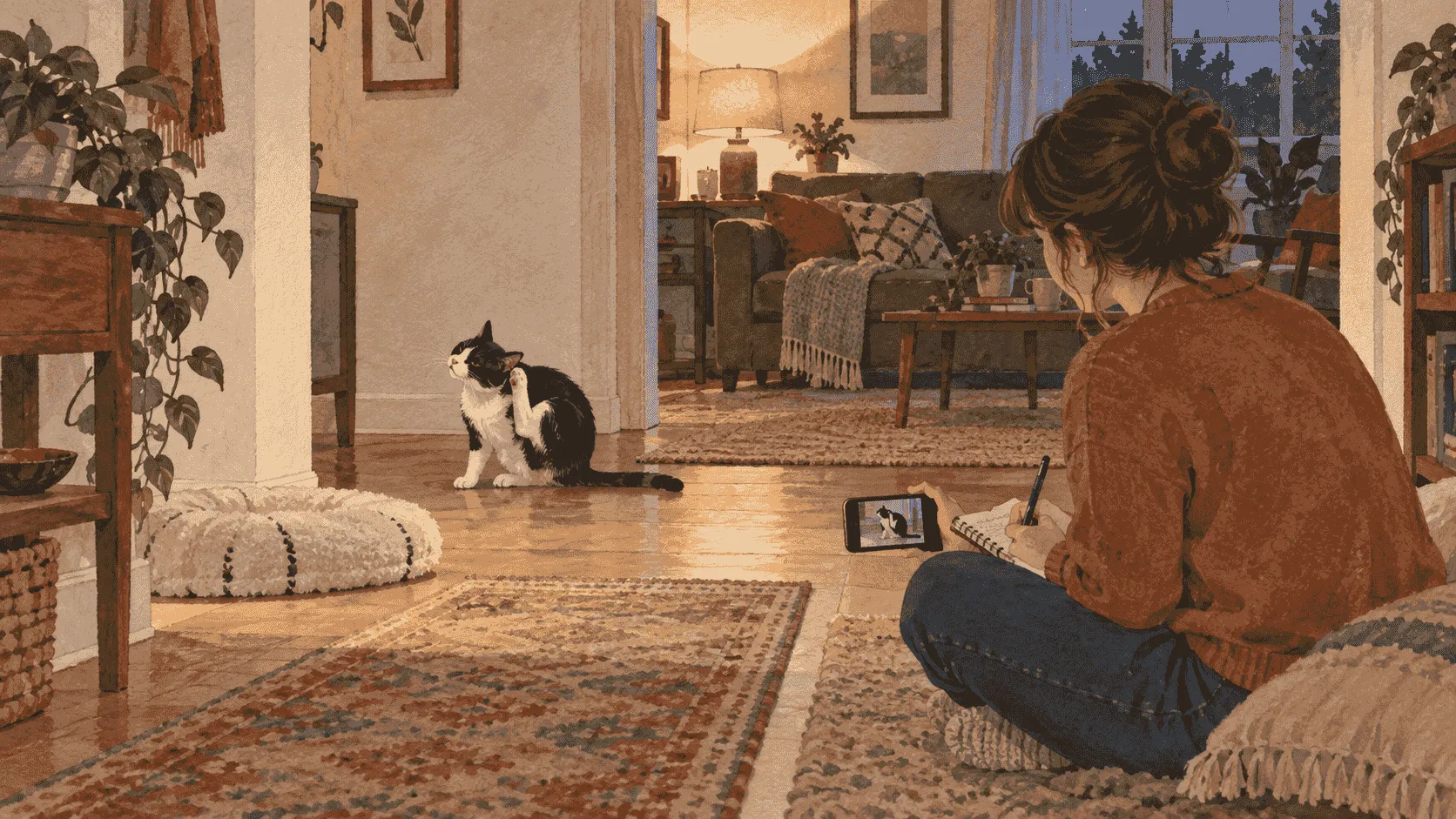
If the cat allows a calm look from a distance, note what is visible without pulling the ear open. If the cat resists, stop there. A clear description of the behavior and a short video of the movement can be more useful than a stressful close-up.
When to Move the Question to Your Veterinarian
Ask your veterinarian to assess the pattern when scratching is persistent, intense, or repeatedly returns, especially if it comes with head shaking, pain, odor, redness, swelling, discharge, scaly skin, discoloration, a balance change, or another change in behavior. You do not need to settle on a cause before making the call.
Contact a veterinarian promptly if the cat seems severely painful, suddenly unwell, or is losing balance. Use plain observations: “My cat has been shaking the left side of its head since yesterday,” or “There is repeated ear scratching with discharge.” That is more useful than leading with a guessed diagnosis.
Do not let a normal-looking appetite, a short quiet spell, or an indoor-only lifestyle act as clearance. The MSD Veterinary Manual notes that several different factors can contribute to overlapping ear signs. Cornell’s guidance makes the safer boundary equally clear: persistent scratching belongs with a veterinarian, not an at-home probe.
Make the Appointment Note Useful
A short record can answer the questions a clinic is likely to ask. Include:
- Timing: when you first saw the scratching, shaking, odor, discharge, or other change.
- Pattern: which side seems involved, how often it happens, and whether it is getting more intense.
- Setting: what the cat was doing immediately before it started and whether anything in the room or routine changed.
- Whole-cat details: eating, drinking, resting, movement, balance, hiding, touch tolerance, and social behavior.
- Visible details: swelling, redness, discoloration, scaly skin, discharge, or a changed ear flap—only what you can see without forcing an examination.
If you can safely capture a brief video, keep the frame on the whole cat and the movement. A clip can show context and frequency. It cannot show what is inside the ear or diagnose the cause.
Keep the Next Step Small
While arranging advice, keep the room predictable and avoid repeatedly calling the cat over for another inspection. Leave a quiet route to rest, pause handling if the cat withdraws, and keep your note current. Do not start several new products or routines at once; that can add irritation and make the timeline harder to read.
The decision is simple even when the cause is not: compare the pattern with the cat you know, observe from the outside, and pass a persistent or changed ear pattern to your veterinarian. The scratch is a clue. It is not the answer.
Sources
Petzette's claim cards for this article point to the following scientific, veterinary, or animal-welfare sources.
- Merck Cat Ear Scratching And External-Ear Signs: Current veterinary-manual cat-owner guidance on ear discomfort and assessment
- Cornell Feline Ear Disorders: Veterinary-school feline health guidance on persistent ear scratching and safe observation