Health Signals18 October 2026
Cat Vomiting After Vaccination: What to Record and When to Call
Cat vomiting after vaccination needs a prompt veterinary call. Learn what to record, which signs are urgent, and why timing cannot diagnose a reaction.
TextPetzette Editorial
Read5 Min

Evidence status
Source-backed editorial
- Evidence record
- 4 claim cards linked to 5 documented sources.
- Independent expert review
- Not commissioned. Petzette Editorial is responsible for the published wording.
- Source record checked
- 18 October 2026
- Scope
- General information, not an individual diagnosis or treatment plan.
Cat vomiting after vaccination is not something to diagnose from timing alone. A cat may be quieter, eat less, have a fever, or show local inflammation for a short time after a vaccine. But vomiting, diarrhea, breathing difficulty, hives or facial swelling, marked itching, collapse, or a worsening pattern needs immediate veterinary attention. The useful first step is to record what happened and contact the veterinary team, not to choose a home treatment.
Start With the Timing, Not a Diagnosis
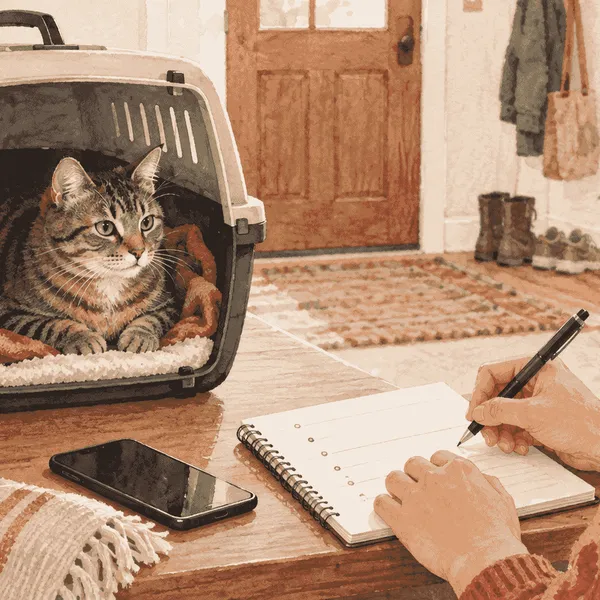
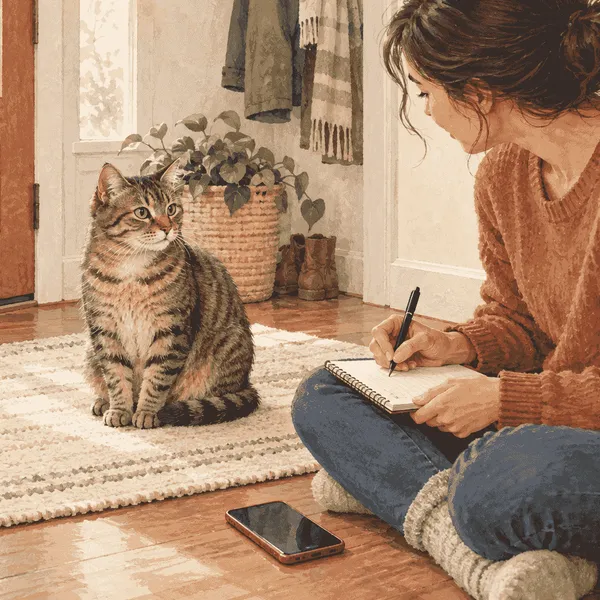
Write down when the vaccination happened and when you first noticed vomiting or another change. If the paperwork is available, keep the vaccine name, manufacturer, serial or lot number, expiration date, clinic, administrator, injection site, and route with your note. You do not need to identify every detail before calling, and you should never delay urgent care to complete the list.
The American Animal Hospital Association and American Association of Feline Practitioners’ 2020 feline vaccination guidance says that vaccination details and suspected adverse events should be recorded clearly in the cat’s medical record. That makes the timeline useful to the people who can assess the cat. It does not prove that the vaccine caused the vomiting.
Include the whole pattern:
- the number of vomiting episodes and when they happened;
- whether the cat was retching or whether material returned more passively;
- appetite, energy, movement, breathing, drinking, and litter-box changes;
- diarrhea, blood, facial swelling, hives, marked itching, or collapse; and
- whether the pattern is improving, unchanged, or worsening.
If the vomiting repeats, or arrives with weakness, lethargy, reduced appetite, diarrhea, pain, dehydration concerns, fever, weight loss, or blood, prompt veterinary assessment matters regardless of what you think caused it. Kittens, cats with an existing condition, and cats that may have reached a toxin or swallowed an object may need faster direction.
The general cat-vomiting guide explains how to distinguish an observation from a diagnosis. Keep that broader guide in its lane: a vaccination visit adds timing and reaction information, but it does not make the cause obvious.
What Can Be Short-Lived After a Vaccine?
The AAHA/AAFP guidance describes lethargy, poor appetite, fever, and local inflammation as commonly reported short-lived postvaccination changes. VCA’s feline vaccination guidance gives a similar owner-facing distinction between a temporary activity or appetite change and more serious signs such as vomiting, diarrhea, or difficulty breathing.
That distinction can help you describe what you see without treating a change as automatically harmless. Compare the cat with their own ordinary pattern. Is the cat resting more but still responding normally, or are they becoming weak, repeatedly vomiting, struggling to breathe, or developing swelling? Is the injection site a detail to mention, or is the whole cat changing?
Do not turn this comparison into a fixed waiting rule. “Short-lived” is not a promise about one cat, and the article cannot assess the cat’s age, medical history, vaccine, examination, or severity. If you are worried, call the practice that vaccinated the cat or the veterinary service it directs you to use. Timing is useful context; it is not permission to wait.

When Vomiting Needs Immediate Veterinary Attention
AAHA/AAFP client guidance says to seek immediate veterinary attention if a cat begins vomiting or scratching, develops hives or facial swelling, or has difficulty breathing within a few hours of vaccination. The guideline’s adverse-reaction discussion also names diarrhea, respiratory distress, facial or generalized itching, facial swelling, and collapse among possible signs of a rare serious hypersensitivity reaction.
Do not wait for a second episode to make the call when a serious sign is already present. Do not try to make the cat vomit, give medication, offer a household remedy, or change the cat’s food plan because an online article suggests it. A professional needs to decide what the sign means and what, if anything, should happen next.
The opposite mistake is also risky: assuming every later vomiting episode is a vaccine reaction. A cat can vomit for many reasons, and a vaccine timeline cannot name the cause. If the cat is repeatedly vomiting or seems unwell, use the record to support prompt veterinary assessment rather than trying to sort causes at home.
Make the Call Easier for the Veterinary Team
Before calling, gather the adoption or medical record, the vaccination paperwork, and your short timeline. Use ordinary words:
- Visit: “The vaccination was today at approximately 2 p.m.”
- Onset: “Vomiting began at 5 p.m.”
- Pattern: “It happened twice,” or “The cat is retching but nothing is coming up.”
- Whole cat: “Appetite is lower, breathing seems normal, and there is no facial swelling,” if those are honest observations.
- Trend: “The cat is becoming quieter,” or “The pattern has stopped but I am still concerned.”
If you do not know the vaccine name or cannot tell whether the cat is breathing normally, say so. An incomplete record is better than a confident guess. If a serious sign is present, call first; the record can be completed with the veterinary team’s help.
For a new kitten, the first-visit checklist can help organize records and questions before a routine appointment. It does not replace urgent care for vomiting, breathing difficulty, marked weakness, pain, or a sudden severe change.
Keep the Next Vaccine Decision With Your Veterinarian
Do not cancel, repeat, split, or change a future vaccination plan based on this article. The kitten vaccine plan should use reliable records, the kitten’s health and life stage, local disease risk, lifestyle, local law, and the vaccines available. Ask the veterinary team to record what happened and explain what it means for this cat’s future care.
If appetite is also changing, the new-kitten not-eating guide is a reminder to share age, vaccination status, last intake, energy, vomiting, stool, drinking, urination, possible exposures, and other changes with the clinic. It is not a reason to delay the call.
The answer to “is my cat vomiting because of the vaccine?” has a careful shape: a short-lived change can occur, serious signs need immediate veterinary attention, and timing alone cannot establish causation. Record the facts, contact a veterinarian when the pattern is concerning, and leave diagnosis and treatment to the professional team.
Sources
Petzette's claim cards for this article point to the following scientific, veterinary, or animal-welfare sources.
- Feline Postvaccination Reactions: Observation And Veterinary Escalation: Feline vaccination guideline and veterinary client-education guidance
- American Animal Hospital Association and American Association of Feline Practitioners. *2020 AAHA/AAFP Feline Vaccination Guidelines*, sections “Adverse Postvaccination Reactions” and “Staff and Client Education.”
- Feline Vomiting Evidence Review 2013: Peer-reviewed evidence-based clinical literature review
Batchelor DJ, Devauchelle P, Elliott J, et al. Mechanisms, causes, investigation and management of vomiting disorders in cats: a literature review. Journal of Feline Medicine and Surgery. 2013;15(4):237-265.
- Cornell Feline Vomiting And Household Hazards: Veterinary-school clinical and poison-safety guidance
- 2021 AAHA AAFP Feline Life Stage Guidelines: Veterinary practice guideline / peer-reviewed consensus
Quimby J, Gowland S, Carney HC, DePorter T, Plummer P, Westropp J. 2021 AAHA/AAFP Feline Life Stage Guidelines. J Feline Med Surg. 2021;23(3):211-233. doi:10.1177/1098612X21993657. PMID:33627003.
- 2024 WSAVA Guidelines For The Vaccination Of Dogs And Cats: Global veterinary consensus guideline / peer-reviewed practice guideline
Squires RA, Marcondes M, et al. 2024 guidelines for the vaccination of dogs and cats – compiled by the Vaccination Guidelines Group of the World Small Animal Veterinary Association. J Small Anim Pract. 2024. doi:10.1111/jsap.13718.