Health Signals15 September 2026
Cat Vomiting Blood: What to Record Before You Call
Cat vomiting blood needs a calm record and a prompt veterinary call. Learn what to note, why a normal moment is not clearance, and what not to try at home.
TextPetzette Editorial
Read4 Min

Evidence status
Source-backed editorial
- Evidence record
- 4 claim cards linked to 2 documented sources.
- Independent expert review
- Not commissioned. Petzette Editorial is responsible for the published wording.
- Source record checked
- 11 July 2026
- Scope
- General information, not an individual diagnosis or treatment plan.
Cat vomiting blood is a reason to move from color-guessing to a prompt veterinary conversation. Blood in the material does not identify the cause, and a cat that looks settled for a moment has not supplied an all-clear. The useful decision is what to record, how to keep the cat comfortable while you call, and what not to try at home.
Treat Blood as a Call Signal, Not a Diagnosis
Cornell University College of Veterinary Medicine lists vomiting with blood among the patterns that warrant prompt veterinary evaluation. That boundary is about getting the right assessment; it is not a way to name a disease from the material on the floor. A 2013 review in the Journal of Feline Medicine and Surgery describes feline vomiting as a clinical sign with possible gastrointestinal and non-gastrointestinal explanations. History, examination, and sometimes staged testing are what help a veterinarian narrow the question.
Do not use the shade, amount, foam, bile, or food appearance to decide that the episode is harmless or to predict what caused it. The same visible feature can sit inside more than one situation. Avoid turning the phrase “vomiting blood” into a home diagnosis, even when the cat is still walking around or asking for attention.
Make a Useful Record Without Creating a Test
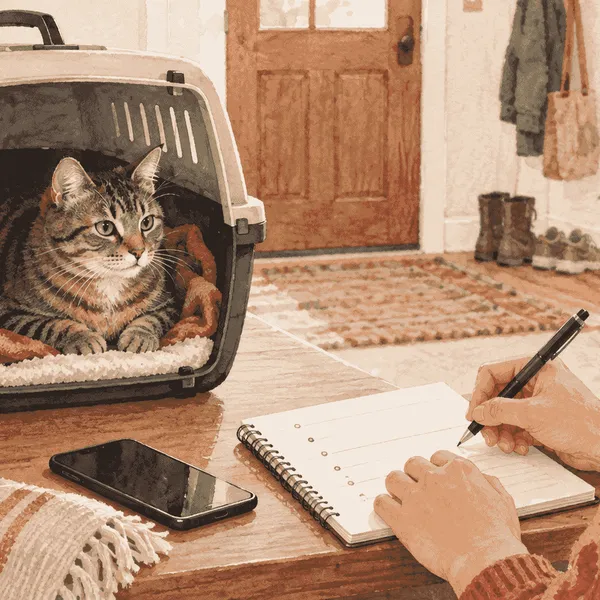
Write down what happened naturally while it is fresh. If it is safe and does not disturb the cat, a short video can help the veterinary team distinguish active vomiting—with nausea, retching, or abdominal effort—from a more passive return of material. That distinction is useful history, not a diagnosis or a reason to delay the call.
Record:
- when the event happened and whether it has repeated;
- what came up, described plainly rather than interpreted;
- whether you saw retching, abdominal effort, coughing, gagging, or a more passive return;
- appetite, energy, comfort, behavior, stool, thirst, urination, and any weight change; and
- possible access to a plant, chemical, medication, string, toy piece, or other object.
Keep handling gentle. Do not pry open the mouth, squeeze the abdomen, or keep repeating an inspection to make the picture feel more certain. The goal is to give the clinic a timeline and the relevant context, not to reproduce the event or find a label at home.
A Normal Moment Does Not Clear the Cat
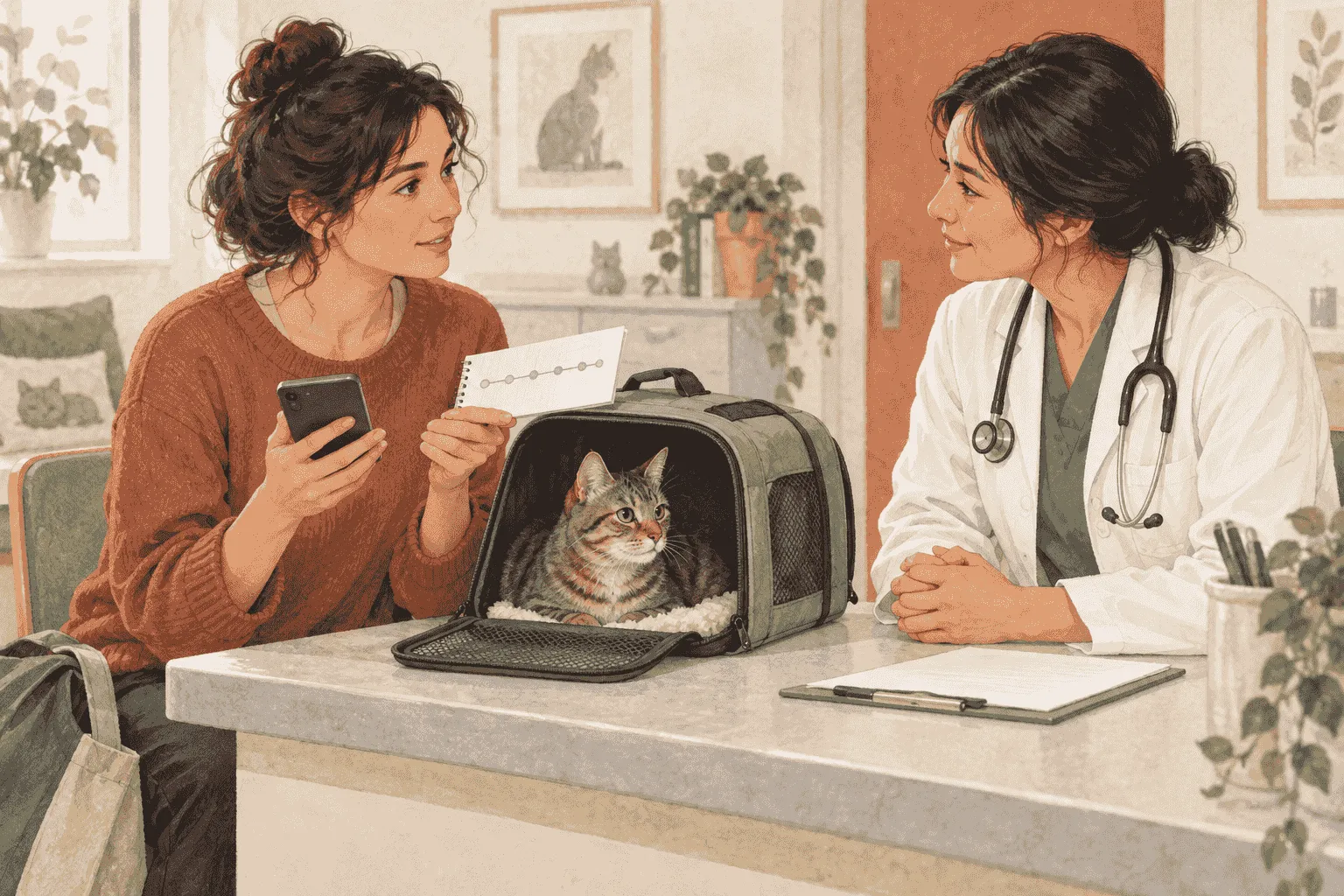
A cat may appear quieter or more comfortable between episodes, but that moment does not explain the blood or rule out a problem. Call promptly when vomiting repeats or when it appears with weakness, lethargy, reduced appetite, diarrhea, unusual thirst or urination, pain, dehydration concerns, fever, or weight loss. Tell the clinic the cat’s age and any existing condition, because kittens, older cats, and cats with chronic illness may need a faster assessment.
There is no universal waiting period that can be chosen from one calmer behavior or one episode count. If the cat cannot keep food or water down, seems markedly weak, has severe pain, or changes quickly, say that clearly when you contact the veterinary practice or emergency service. Do not wait for a more dramatic sign before asking how the situation should be assessed.
For the broader question of whether the event was vomiting or regurgitation, and for a fuller observation timeline, use the cat-vomiting guide alongside this blood-specific call decision.
Keep Possible Exposures in the Professional Lane
If the cat may have reached a toxin, medication, chemical, plant, string, or another foreign object, contact a veterinarian or animal poison-control service promptly. Keep the package, label, plant photo, or other identifying detail available if you can do so safely. The exposure history can change the professional response even when the cat looks normal right now.
Do not induce vomiting, give medication, offer a household emetic, or improvise a fasting or fluid plan unless a veterinarian or poison-control professional specifically directs it. The Cornell household-hazards guidance makes this boundary explicit: suspected poisoning needs professional advice rather than a home experiment.
Use a Five-Line Call Note
Before or during the call, organize the facts into five short lines:
- Event: when it happened, how many times, and whether it looked active or passive.
- Material: what you saw, including blood as an observation—not a guessed cause.
- Whole cat: appetite, energy, comfort, stool, thirst, urination, and weight change.
- Access: anything unusual the cat could have eaten, licked, chewed, or contacted.
- Background: age, existing conditions, current veterinary care, and recent changes.
Cat vomiting blood is not a color-chart problem to solve alone. Record the event, call promptly, and let the veterinary team decide what the pattern means and what assessment is appropriate.
Sources
Petzette's claim cards for this article point to the following scientific, veterinary, or animal-welfare sources.
- Feline Vomiting Evidence Review 2013: Peer-reviewed evidence-based clinical literature review
Batchelor DJ, Devauchelle P, Elliott J, et al. Mechanisms, causes, investigation and management of vomiting disorders in cats: a literature review. Journal of Feline Medicine and Surgery. 2013;15(4):237-265.
- Cornell Feline Vomiting And Household Hazards: Veterinary-school clinical and poison-safety guidance