Health Signals05 September 2026
Why Do Dogs Have Anal Glands? What to Notice Next
Why do dogs have anal glands? Learn what scooting or rear-end changes can show, what not to do at home, and when your veterinarian should help.
TextPetzette Editorial
Read5 Min
Evidence status
Source-backed editorial
- Evidence record
- 2 claim cards linked to 2 documented sources.
- Independent expert review
- Not commissioned. Petzette Editorial is responsible for the published wording.
- Source record checked
- 30 August 2026
- Scope
- General information, not an individual diagnosis or treatment plan.
Why do dogs have anal glands? The phrase is common, but the safer owner question is narrower: what is normal in this area, and which rear-end pattern deserves a professional look? Cornell University College of Veterinary Medicine’s canine health guidance describes anal-sac discharge as normally released when pressure occurs during defecation. It also lists scooting and anal-area licking or biting among signs to report when they occur with other changes. That gives you a useful boundary without giving you a home diagnosis.
For a first-year owner, the decision is not to inspect, squeeze, or choose treatment from an internet checklist. It is to notice the pattern, keep the dog comfortable, and contact a veterinarian when the signs cluster or the change is concerning.
“Anal Glands” Is Not a Home-Expression Project
Veterinary guidance often uses the term anal sacs, while many owners search for “anal glands.” This article uses both terms so the language stays clear. The important point is not which phrase you choose. It is that the normal defecation-linked process does not turn the area into a do-it-yourself maintenance task.
Do not squeeze or express the anal sacs, probe the area, or apply a topical product to test a theory. A diet change, medicine, supplement, or home remedy also cannot be chosen safely from a sign list. Those actions can make an uncomfortable dog harder to assess and can distract from the information a veterinary team needs.
What Scooting Can—and Cannot—Tell You
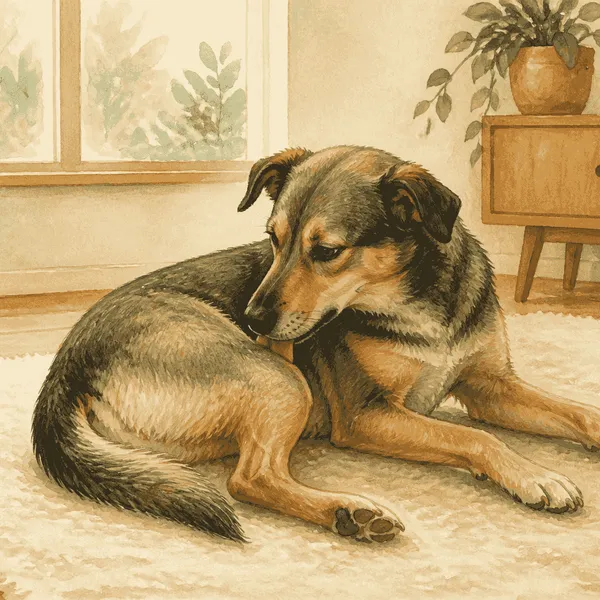
Scooting is one of the signs Cornell lists among frequent signs of an anal-sac problem. That is a reason to pay attention, not proof of one cause. The same source groups rear-end licking or biting with other observable changes, including:
- a strong or unusual odor;
- discharge;
- redness or swelling;
- a lowered tail;
- reluctance or straining during defecation; and
- sensitivity around the hind end.
One episode does not give an owner a safe explanation. A repeated or newly changed pattern, or scooting that arrives with any of the signs above, is a better reason to contact your veterinarian than trying to name the problem from the floor or carpet.
This is also why body area is not a diagnosis. A dog may focus on the rear because something needs assessment, but the location alone cannot tell you whether the issue is an anal-sac problem, a skin problem, pain, or something else. Keep the observation specific and leave the cause inside the professional examination. The broader whole-pattern guide to why dogs lick themselves explains the same boundary for self-licking in other parts of the body.
Make a Short Rear-End Observation Note
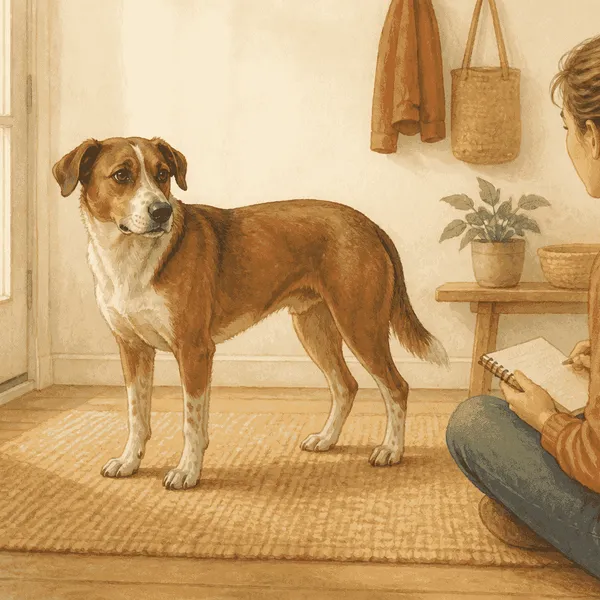
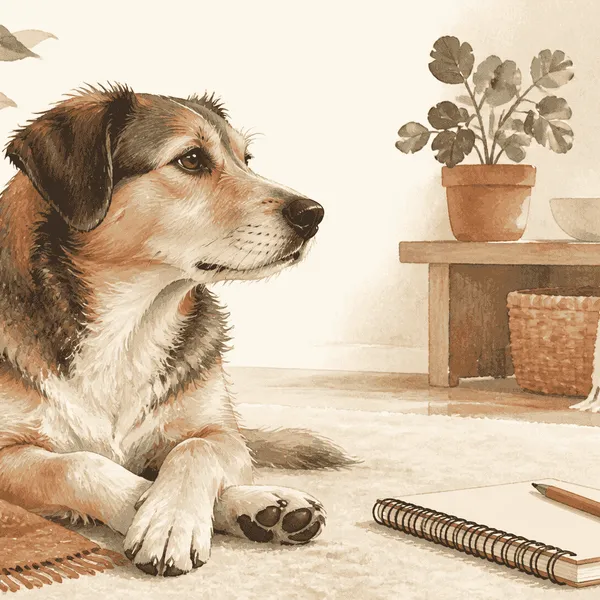
If your dog is calm and you can observe without handling the area, write down what you see. A useful note is factual rather than diagnostic:
- What happened: Did you see scooting, licking, biting, or more than one of these?
- When it happened: Note the time, whether it repeated, and what the dog was doing before and after.
- What else was visible: Record odor, discharge, redness, swelling, a lowered tail, or sensitivity without touching to confirm it.
- What toileting looked like: Note reluctance, straining, or another clear change around defecation.
- What changed overall: If rear-end licking becomes frequent or intense enough to interrupt eating or sleeping, or if the coat or skin changes, include that in the history.
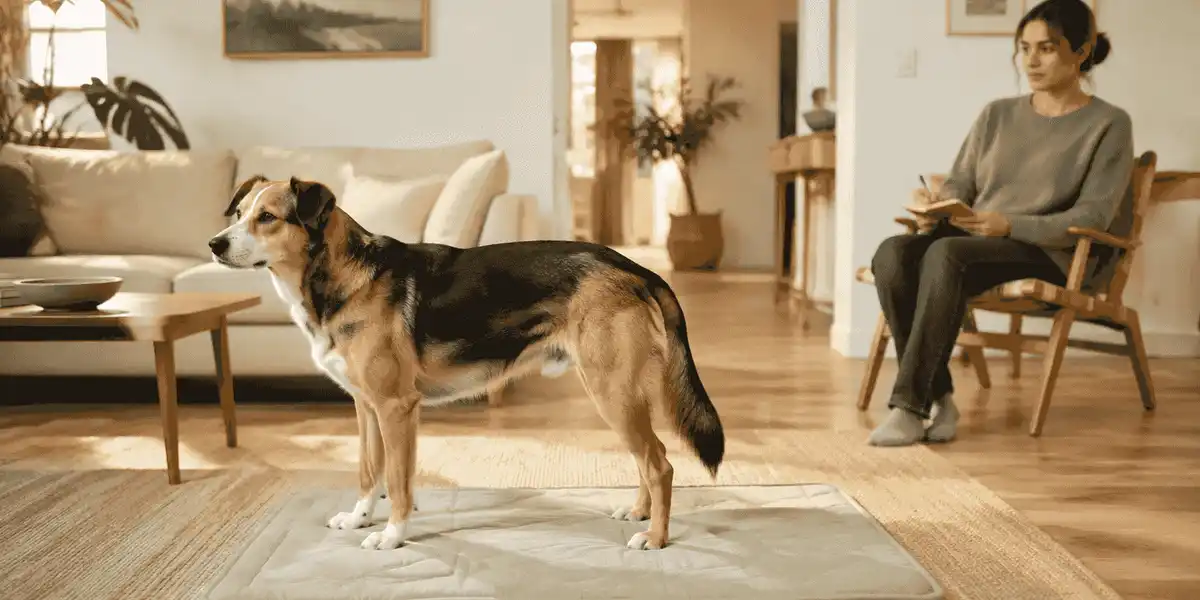
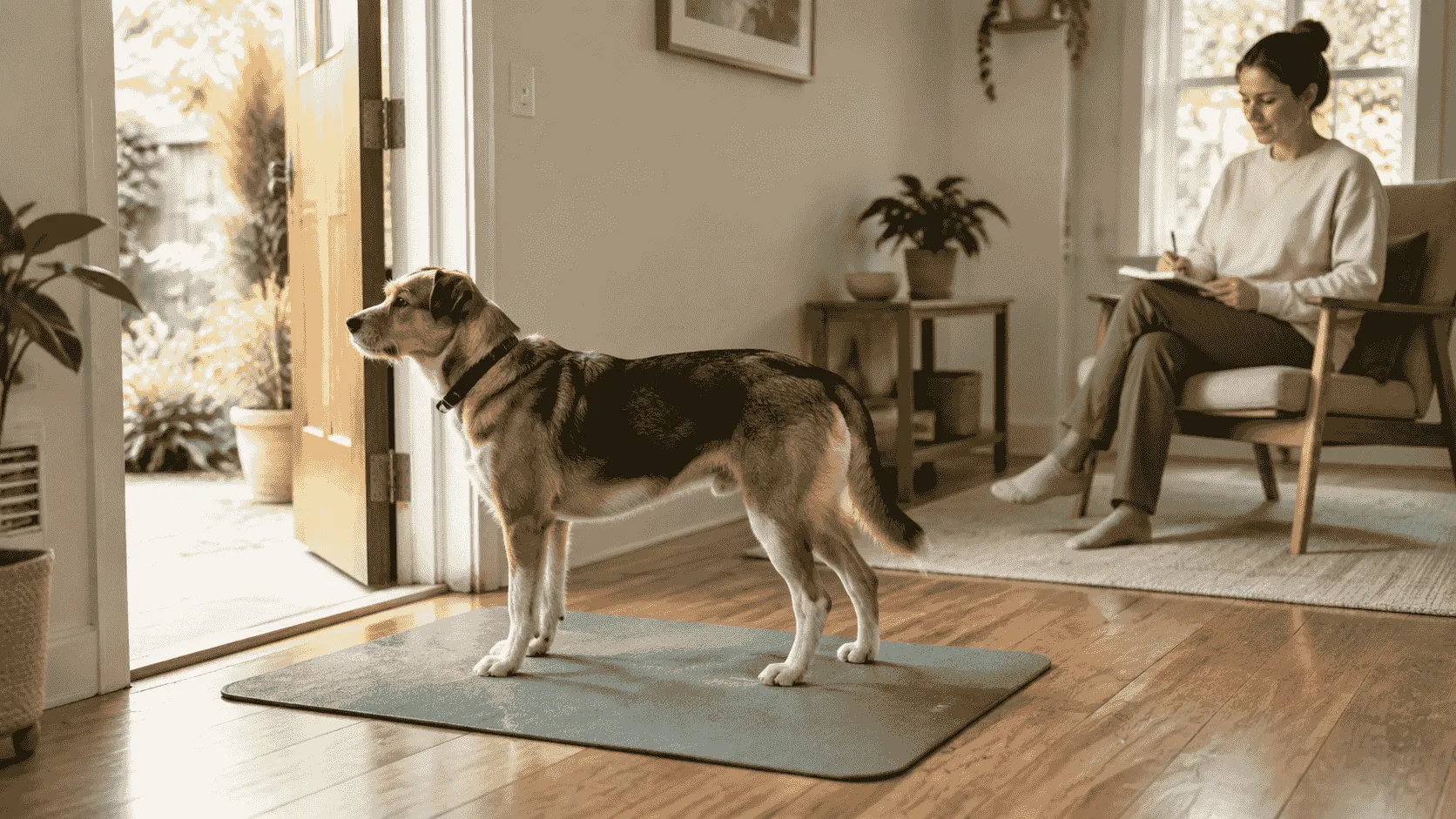
Do not turn the note into a home examination. Watch from a respectful distance, keep children and other dogs from crowding the dog, and stop if the dog becomes tense or tries to move away. A short timeline, a description of what was visible, and the fact that the dog was or was not comfortable can be more useful than repeated checking.
When Your Veterinarian Should Lead
Contact your veterinarian when scooting repeats, when rear-end licking or biting is increasing, or when the pattern includes unusual odor, discharge, redness, swelling, a lowered tail, defecation changes, or hind-end sensitivity. Ask promptly if the dog seems painful or the change is sudden and difficult to interrupt.
The signs do not identify the underlying problem at home. Cornell’s guidance places assessment with a veterinarian, so use the call to share the timeline rather than to request a particular procedure. Tell the clinic what you saw, when it began, whether it repeated, and which additional signs were present. If you have a safe video taken without restraining or provoking the dog, it may help show the pattern; do not delay care to make one.
The same professional boundary applies when the rear-end pattern is part of a wider change. Frequent or intense self-licking that affects ordinary activities such as eating or sleeping, or that comes with visible coat or skin changes, also deserves veterinary guidance. One familiar grooming moment is not a diagnosis, but it is not a reason to dismiss a new or disruptive pattern either.
Keep the Next Step Small
Use this four-part check when your dog scoots or focuses on the rear:
- Observe without handling. Note the action, time, repetition, and the dog’s comfort.
- Look for the cluster. Add odor, discharge, redness, swelling, tail position, defecation changes, or sensitivity to the record if present.
- Skip home treatment. Do not express, probe, medicate, change the diet, or apply a product as a test.
- Call when the pattern is concerning. Share the record and let your veterinarian decide what examination or next step this dog needs.
Why do dogs have anal glands? The evidence-backed answer is deliberately modest: Cornell describes a normal anal-sac discharge process linked with pressure during defecation, while scooting and rear-end changes can be signs worth reporting. The owner’s job is not to solve the anatomy from home. Notice the pattern, protect the dog’s space, and let a veterinarian lead when the signs cluster or change.
Sources
Petzette's claim cards for this article point to the following scientific, veterinary, or animal-welfare sources.
- Cornell University College of Veterinary Medicine: Anal Sac Diseases: Veterinary-school canine health topic
- UC Davis School of Veterinary Medicine: Scratching the Itch: Veterinary-school magazine / clinician-informed pet health guidance