Behavior16 October 2026
Dog Destructive Behavior: Read the Pattern Before You Correct
Dog destructive behavior can reflect chewing, context, or distress. Learn what to record, what to change at home, and when to call a veterinarian.
TextPetzette Editorial
Read6 Min
Evidence status
Source-backed editorial
- Evidence record
- 6 claim cards linked to 8 documented sources.
- Independent expert review
- Not commissioned. Petzette Editorial is responsible for the published wording.
- Source record checked
- 14 July 2026
- Scope
- General guidance. Individual animals and circumstances can differ.
Dog destructive behavior is a description of what happened, not an explanation of why. A chewed table leg, torn cushion, or shredded shoe can sit at the intersection of ordinary chewing, access to a tempting object, a missing safe outlet, a difficult alone-time routine, or a change that needs professional attention. The useful first decision is not how to punish the mess. It is whether the pattern changes what you do next.
Start with the whole-pattern dog behavior guide when the behavior is part of a wider concern. This article focuses on a narrower household question: what should a new owner record and change when a dog damages things?
Start With When and How It Happens
Before moving furniture or repeating a correction, write down the setting. Note what was damaged, where it was, when you found it, and what happened before the dog had access to it. If you were present, record whether the dog was chewing, carrying, tearing, pacing, or trying to settle. If you were away, note how long the dog was alone only as part of the timeline, not as a pass-or-fail test.
The object alone cannot tell you whether a dog was bored, frightened, teething, distressed, in pain, or simply chewing an available item. A 2025 review in Frontiers in Veterinary Science describes canine chewing as a behavior with several possible functions and cautions against assigning one motive to every damaged object. The RSPCA likewise frames chewing as an activity to plan for, with suitable objects and household hazard management.
Ask four plain questions:
- Access: Could the dog reach the object freely, or did the situation change?
- Timing: Does damage happen during ordinary supervised time, after a departure, overnight, or in one predictable context?
- Pattern: Is this one incident, a repeated route, or a marked change from the dog’s usual behavior?
- Safety: Is anything missing, broken into pieces, sharp, toxic, or likely to have been swallowed?
This record is useful because it keeps you from turning a memorable mess into a confident story. It also tells you which low-risk adjustment to try first.
If Chewing Happens While You Are Home
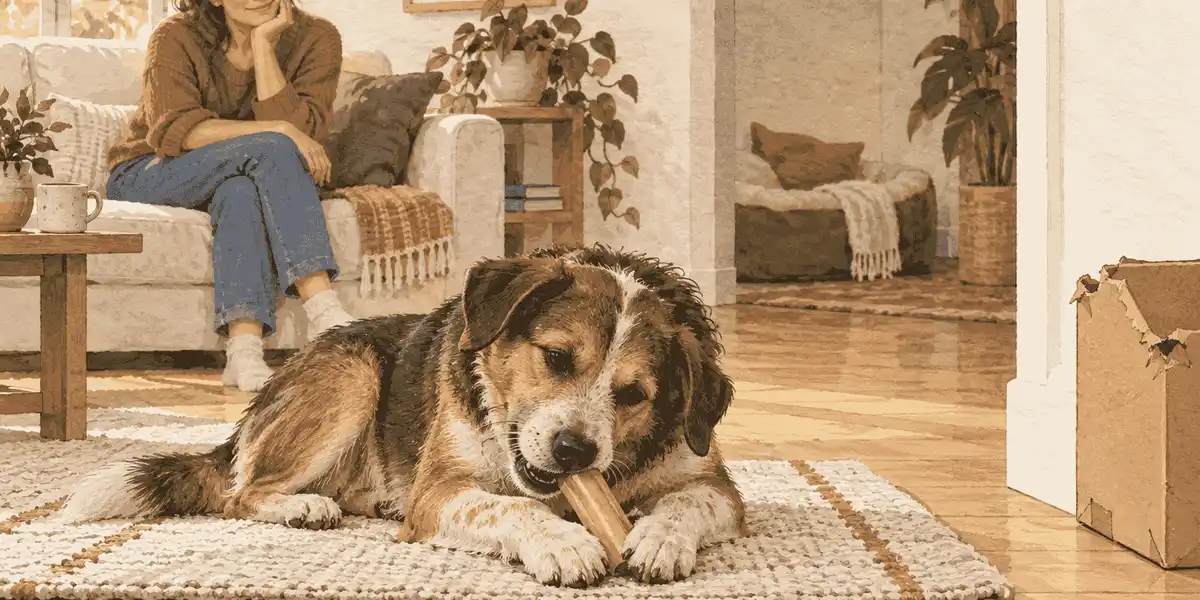
Make the safe choice easier before asking the dog to ignore a tempting household item. Put obvious hazards and fragile objects out of reach, then offer a dog-appropriate object that fits this dog’s size, chewing style, and supervision needs. No chew or toy is universally safe for every dog, and “hard” is not the same as safe.
Watch what the dog does with the object. A dog that calmly mouths and settles is giving you different information from one that tears off pieces or tries to swallow them. Remove an object when it is damaged, changes shape, or can no longer be supervised. If a piece is missing or ingestion may have happened, contact a veterinarian promptly rather than waiting for a sign to prove that something is wrong.
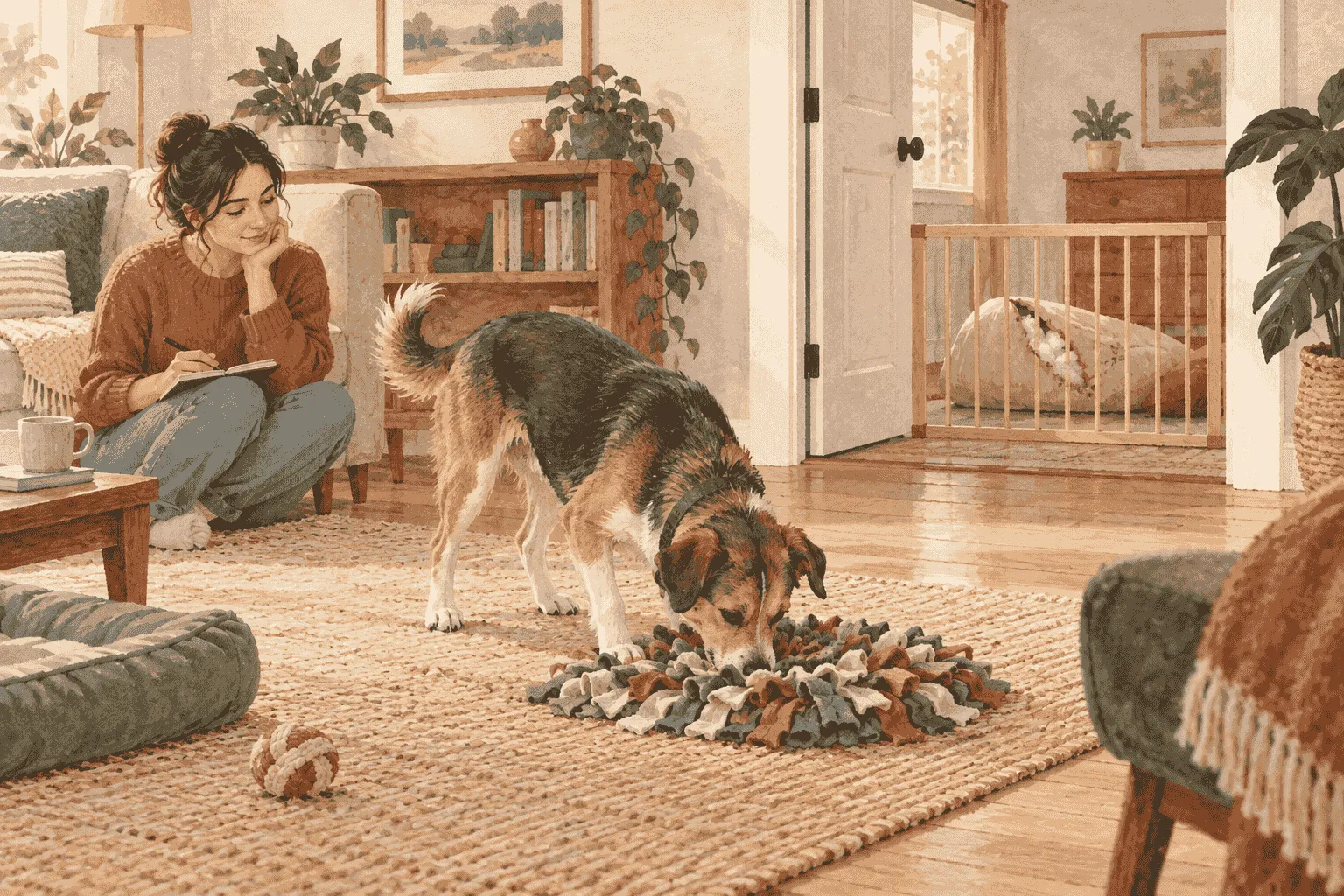
Enrichment can add a useful job for the nose, brain, or mouth. Blue Cross describes scent games, searching, food enrichment, and sniff-focused activities as ways to express natural behaviors, while also warning that enrichment should not replace exercise, training, veterinary care, or behavior support. Keep the first activity easy enough to succeed and change one feature at a time. The safer dog-toy guide covers condition checks, supervision, and matching an object to the dog in front of you.
When you catch the dog with an unsafe household item, create space and calmly guide the next choice toward an appropriate outlet. Reward the behavior you want repeated. The American Veterinary Society of Animal Behavior recommends reward-based training as a way to teach what to do without relying on fear, pain, intimidation, or discomfort. Shouting or punishing after the fact does not explain which object is safe, and it can make the next interaction harder to read.
If Damage Happens After You Leave
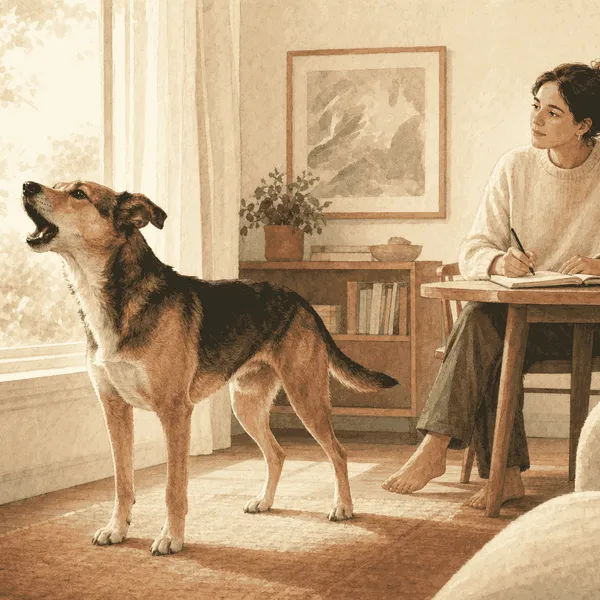
Destruction found after a departure deserves a separate check. The RSPCA lists destruction alongside barking, toileting, pacing, trembling, and whining as behavior that can occur when a dog is distressed while alone; it specifically warns against treating the mess as revenge. One incident does not diagnose separation anxiety, however.
If it is safe and practical, use a camera or phone recording to observe the first minutes of an ordinary, short absence. Look for what happens before the damage: does the dog settle, search, vocalize, pace, tremble, or try to escape? Do not extend the absence to collect more dramatic footage. A recording is material for a veterinary or behavior conversation, not an at-home diagnostic test.
If the dog becomes distressed, make the next step easier rather than waiting to see whether they will “get over it.” Arrange practical support for necessary absences while you seek guidance. The separation-related behavior plan explains how to keep alone-time practice below distress and why a crate or stuffed toy is not a treatment for separation-related problems.
Do Not Use a Crate as the Destruction Plan
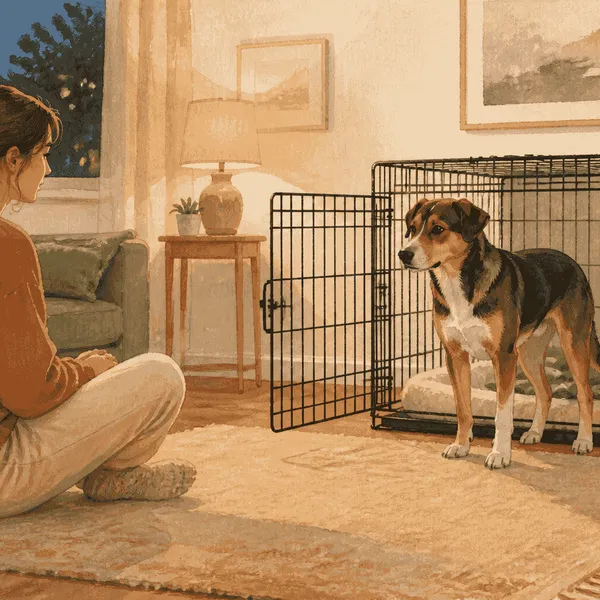
A crate may be an open resting option or a short, planned training tool for a dog who is already comfortable with it. It is not an all-day holding space, punishment, or substitute for exercise, toileting opportunities, social contact, veterinary care, or behavior support. RSPCA guidance describes building crate comfort through short, pleasant, voluntary steps and reducing the difficulty when panting, excessive barking, cowering, or aggression appears.
If the dog is panicking, trying to escape, or becoming more distressed behind a closed door, stop treating confinement as the answer. A crate does not treat destruction, fear, separation anxiety, or toileting problems by itself. The safer plan is to prevent access to hazards with appropriate household management while a professional helps assess the pattern.
When to Call a Veterinarian or Behavior Professional
Ask your veterinarian about destruction that is sudden, repeated, dangerous, or notably different from the dog’s usual behavior. Health changes can contribute to behavior changes, and a new pattern should not automatically be reduced to training. Call promptly if the dog may have swallowed a fragment, reached a hazardous substance, injured the mouth, or is showing signs of acute distress.
Seek veterinary and qualified behavior support for panic, escape attempts, injury risk, repeated alone-time distress, serious fear, aggression, bite risk, or behavior that seems compulsive. These boundaries are not a diagnosis; they are reasons to stop experimenting at home and give a professional a clear timeline. Do not force the dog to repeat a trigger so you can record a better reaction.
A Small First Response
Use this sequence over the next day:
- Write the time, location, object, access, and what happened before and after.
- Remove reachable hazards without turning the cleanup into a confrontation.
- Offer one safe, supervised outlet suited to the individual dog.
- If the pattern is linked to departure, observe only a short ordinary absence and stop if distress appears.
- Reward calm, useful choices and arrange professional help when the pattern is sudden, dangerous, persistent, or beyond a simple management change.
The mess is worth taking seriously, but it is not a character reference. Read the pattern, plan the safe “yes” before the next “no,” and let veterinary or behavior assessment handle what household observation cannot settle.
Sources
Petzette's claim cards for this article point to the following scientific, veterinary, or animal-welfare sources.
- Dog Chewing Function And Welfare Review 2025: Peer-reviewed narrative review
- RSPCA Dog Home And Chewing Outlets: Animal-welfare organization guidance
- AVSAB Humane Dog Training 2021: Veterinary behavior society position statement
- RSPCA Dog Left Alone Training: Animal welfare organization owner guidance
- Dog Nosework Positive Judgment Bias 2019: Peer-reviewed animal behaviour paper with Purdue Canine Welfare Science summary
- Blue Cross Dog Enrichment: Animal welfare charity guidance / dog enrichment advice
- RSPCA Playpen And Crate Training: Established animal-welfare guidance for low-risk home setup and training boundaries
- Dogs Trust Barking Causes Triggers And Support: Established animal-welfare guidance for low-risk behavior observation, management, and training boundaries