Gear Decisions13 July 2026
Dog Toys: A Safer Guide to Chewing, Play, and Enrichment
Choose dog toys by size, condition, play style, and purpose, with practical checks for safer chewing, searching, and shared games.
TextPetzette Editorial
Read4 Min

Evidence status
Source-backed editorial
- Evidence record
- 3 claim cards linked to 7 documented sources.
- Independent expert review
- Not commissioned. Petzette Editorial is responsible for the published wording.
- Source record checked
- 12 July 2026
- Scope
- General guidance. Individual animals and circumstances can differ.
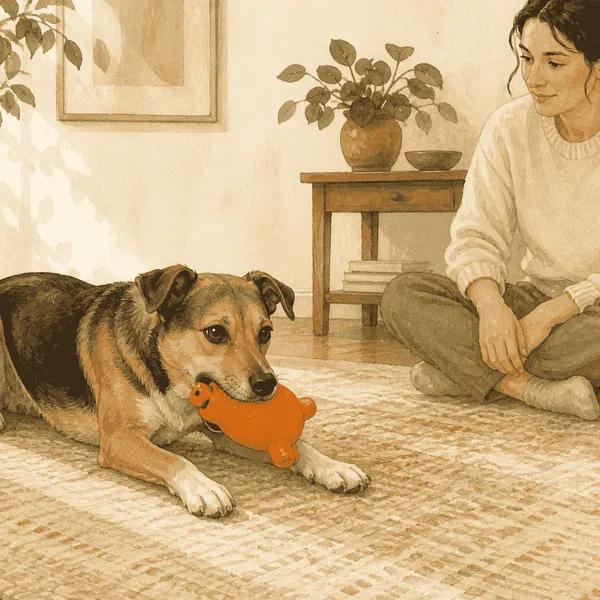
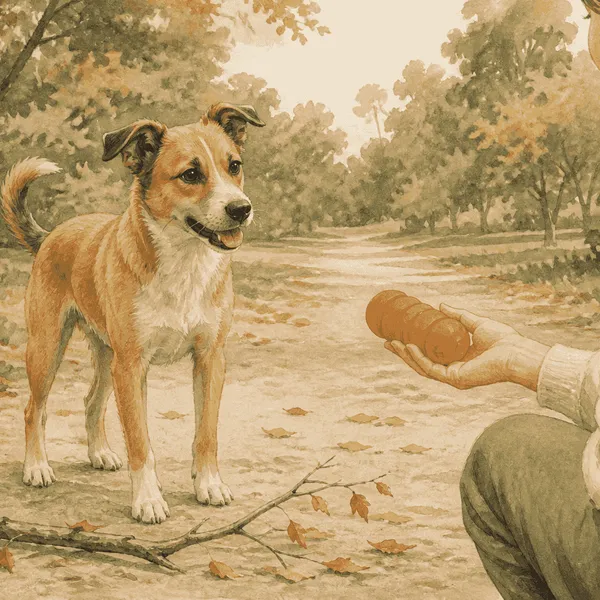
Dog toys are most useful when each one has a clear job. One can offer an appropriate place to chew, another can turn searching into a game, and another can make play with you easier. The important question is not which object looks toughest on a shelf. It is whether the toy fits this dog’s size, play style, and habits today.
Start With the Job, Not the Shelf
Think of a toy collection as a small menu of activities. A dog might use its mouth, follow a scent, solve an easy problem, chase, retrieve, or play a shared game. Blue Cross guidance describes enrichment in similar terms: safe opportunities to express natural behaviors such as searching, foraging, problem solving, and sniffing.
That does not make a toy a treatment for anxiety or a replacement for walks, training, veterinary care, or behavior support. It simply gives the dog another appropriate thing to do. Some days, a calm search may fit better than another fast lap. On others, a short shared game may be the appealing choice.
For more ways to make sniffing part of an ordinary outing, see our guide to matching the lead to the walk.
Match Dog Toys to the Dog in Front of You
Blue Cross play guidance recommends matching a toy to the individual dog’s preferred way of playing, whether that involves chasing, retrieving, tugging, or searching. Observe before you add difficulty. Does the dog carry the object gently, settle down to chew, pull at seams, or try to swallow pieces?
Those details matter more than a label such as “tough.” No material is universally indestructible, and the same object can be a relaxed retrieve toy for one dog and a rapid dismantling project for another. Size also needs to be judged against the dog using it: a fetch toy should be too large to swallow whole, while still being practical for the intended game.
Run a Ten-Second Safety Check
Before play, pause long enough to look and feel:
- Is the whole toy too large for this dog to swallow?
- Are any seams split or parts loose, cracked, or missing?
- Has the shape changed since the last game?
- Can you supervise if this dog may tear off or ingest pieces?
Remove the toy when damage appears. A 2022 multicenter study in Animals described toys, balls, and fragments among the objects recovered from 72 dogs treated for gastrointestinal foreign bodies. That clinical series does not tell us the odds that a particular toy will cause trouble; it does show why a missing piece belongs in the history you give your veterinarian.

Let Interactive Dog Toys Be Easy Enough
Interactive dog toys should invite a dog into the activity, not create an impossible test. Start with a simple search or problem, watch what the dog does, and make the next attempt a little harder only if the current version stays comfortable. Blue Cross notes that enrichment can frustrate a dog when the challenge is too easy or too difficult, so gradual changes matter.
Dog enrichment toys are only one way to provide a job for the nose, brain, or mouth. A sniff-focused walk, a simple search, reward-based training, and quiet choice can add variety without asking one object to solve every need. If food is part of the activity, our everyday dog-treat guide offers a practical way to think about those rewards.
Treat Chewing as Information, Not a Verdict
Chewing deserves an appropriate outlet, but it does not have one universal translation. A 2025 review in Frontiers in Veterinary Science, led by University of Sydney researchers, describes chewing as a common behavior with several possible functions. A damaged object does not by itself establish spite, boredom, separation distress, pain, or dental disease.
The practical response is modest: plan a suitable place to chew, keep hazards out of reach, and redirect calmly toward a dog-appropriate object. Then keep watching. Sudden, dangerous, or compulsive chewing needs a closer look rather than a bigger promise from a toy.
Know When the Game Is Over
End the session when the toy is damaged, the dog is trying to swallow pieces, or supervision is no longer possible. Store the object and choose a safer activity; retirement is part of toy care, not a failed purchase.
If a piece is missing or ingestion may have happened, contact a veterinarian promptly. Cornell University College of Veterinary Medicine lists vomiting, appetite loss, abdominal pain, diarrhea, dehydration, and lethargy among signs that can accompany a gastrointestinal foreign body. Do not wait for a missing fragment to “prove” it has caused an obstruction, and do not use a home remedy in place of veterinary direction.
A useful toy earns its place through fit, condition, and the quality of the activity it supports. Check it, watch the dog in front of you, and let the game change as that dog changes.
Sources
Petzette's claim cards for this article point to the following scientific, veterinary, or animal-welfare sources.
- Dog Chewing Function And Welfare Review 2025: Peer-reviewed narrative review
- RSPCA Dog Home And Chewing Outlets: Animal-welfare organization guidance
- Dog Nosework Positive Judgment Bias 2019: Peer-reviewed animal behaviour paper with Purdue Canine Welfare Science summary
- Blue Cross Dog Enrichment: Animal welfare charity guidance / dog enrichment advice
- Gastrointestinal Foreign Bodies In 72 Dogs: Peer-reviewed multicentre retrospective clinical study
Di Palma C, et al. *Animals*. 2022;12(11):1376. doi:10.3390/ani12111376.
- Blue Cross: How To Play With Your Dog: Animal-welfare and behavior guidance
- Cornell: Gastrointestinal Foreign-Body Obstruction In Dogs: Veterinary-school clinical education