Gear DecisionsUpdated 16 August 2026
Dog Leash Guide: Match the Lead to the Walk
A dog leash should match the setting and skill you are teaching. Learn when regular leads, long lines, and retractable leads offer manageable reach.
TextPetzette Editorial
Read5 Min
Evidence status
Source-backed editorial
- Evidence record
- 4 claim cards linked to 5 documented sources.
- Independent expert review
- Not commissioned. Petzette Editorial is responsible for the published wording.
- Source record checked
- 16 August 2026
- Scope
- General guidance. Individual animals and circumstances can differ.
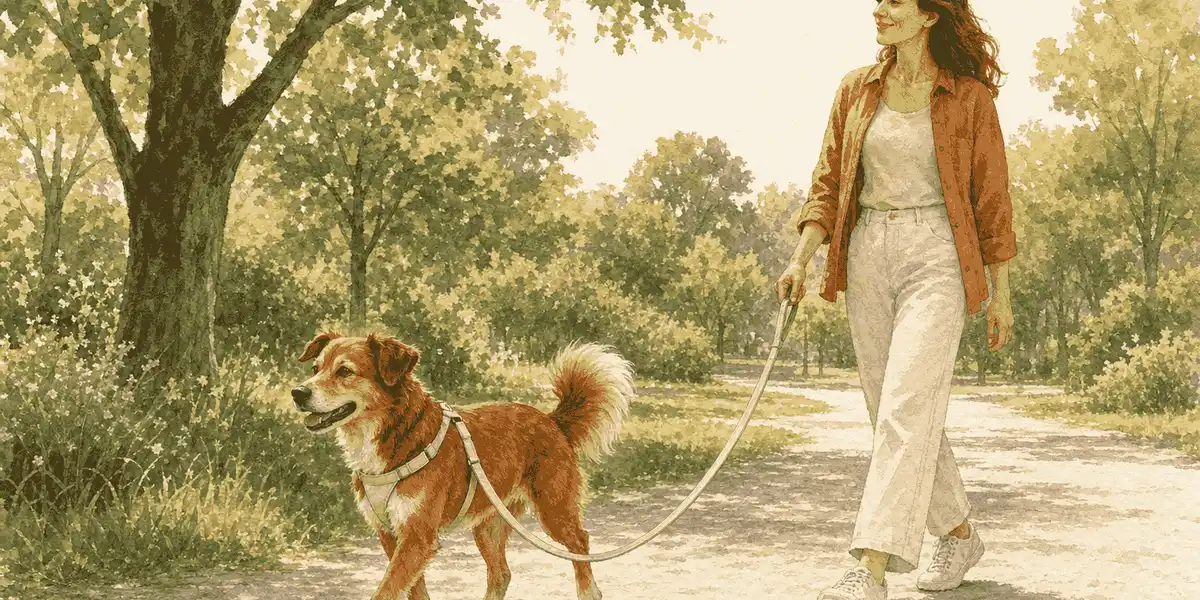
A dog leash connects dog, handler, and setting. The useful choice is not the trendiest material or the biggest promise. It is a setup that gives you manageable space for this setting, works with the attachment equipment, and supports the skill you are teaching.
That makes a practical dog leash guide a walk plan: start with the environment, choose manageable reach, then teach the dog what a loose line feels like.
The Best Dog Leash Starts With the Setting
There is no one best dog leash for a close neighborhood path, an open recall-practice field, and every situation between them. Ask a simpler question: how much supervised space does this walk safely allow?
Beside traffic, around crowds, or in an obstructed area, a long line can create more reach than the handler can safely manage. A regular lead keeps the working distance closer. In a suitable open space, a carefully handled long line can give a dog more room to explore while recall is still being taught.
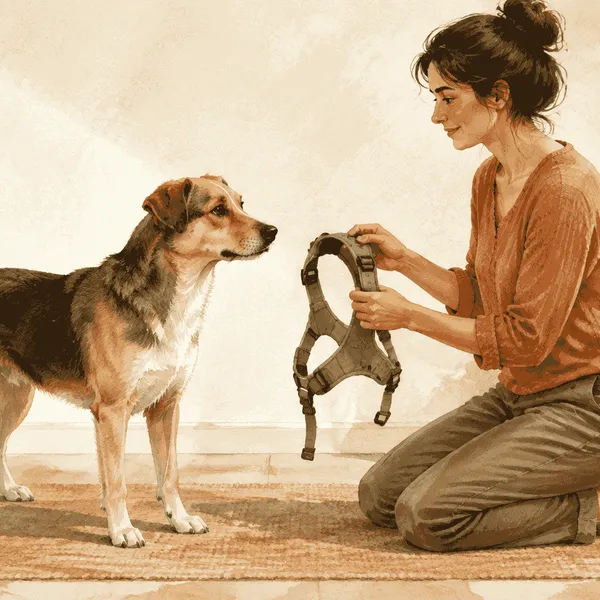
Think about the attachment system as well as the line. Dogs Trust guidance places a long line on a well-fitting harness rather than a neck collar or head collar. Our dog harness fit checklist explains how to check security, rubbing, movement, and comfort without treating one harness shape as a universal answer.
Loose-Leash Walking Is Taught, Not Installed
A leash does not teach a dog to keep it slack. Dogs Trust recommends beginning in a calm place, rewarding the dog for being near you, adding a few steps, and increasing distractions gradually. If the lead tightens, stop calmly and wait for slack rather than jerking the dog back.
Keep early practice small enough for success:
- Begin indoors, in a yard, or in another quiet place.
- Reward a moment of slack or a voluntary return toward you.
- Add movement in short stretches.
- Make the surroundings harder only when the current step is going well.
The American Veterinary Society of Animal Behavior’s 2021 position statement recommends reward-based methods for canine training and advises against training that relies on fear, pain, intimidation, or discomfort. Rewards can be food, play, access to a safe sniff, or another outcome the dog values. If food is useful for your dog, choose small everyday training rewards and account for them in the day’s food.
Use a Long Dog Leash as Supervised Space
A long line is not unlimited freedom and it does not guarantee recall. Dogs Trust describes it as a tool for supervised exploration or recall practice in an appropriate open setting. It also warns that a sudden stop at the end can injure a dog, which is why the line should attach to a well-fitting harness and be handled to prevent a full-speed impact.
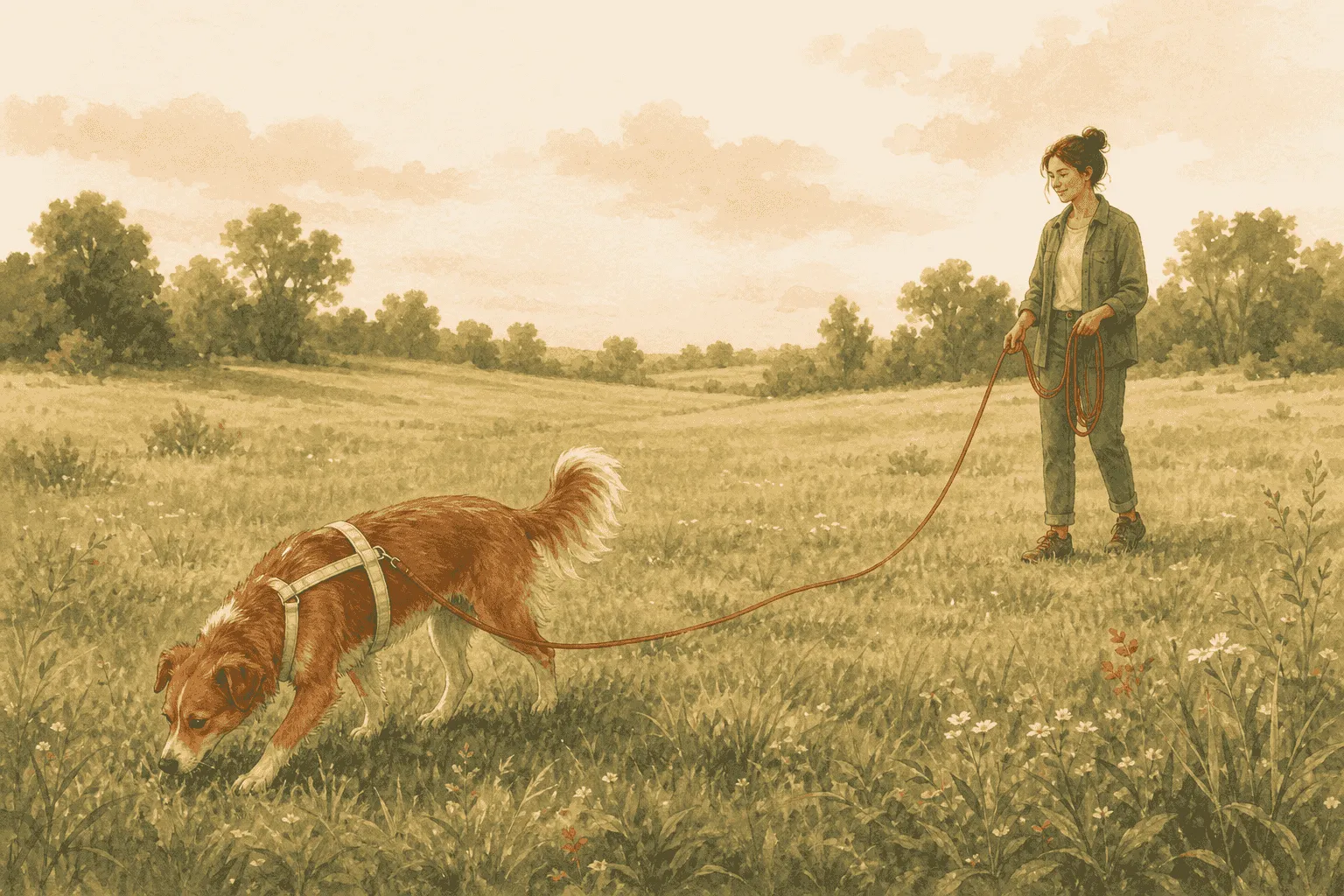
Before using one, check the whole scene:
- You are well away from roads and fast-moving traffic.
- The area is open enough to manage the line’s full reach.
- The harness is secure and comfortable on this dog.
- You can keep the line from wrapping around people, animals, or obstacles.
- The dog is not being allowed to sprint into the end of the line.
Exact length is not a safety score. Choose only as much reach as you can actively supervise in that place, and shorten the working distance when the environment changes.
When a Retractable Dog Leash Is a Setting Decision
RSPCA rescue-dog guidance says flexi or retractable leads may be useful when off-lead access is unsafe, but only where there is no safety risk to dog or handler, such as away from busy roads. Treat a retractable dog leash as a setting decision, not a default or a recommendation for a particular product.
Before adding that reach, pause for three questions:
- Is the area away from busy roads and calm enough for safe attention?
- Would people, animals, or obstacles mean you need close control? Choose a closer management plan.
- Can you supervise the dog and changing surroundings at this distance? If not, shorten it.
A retractable lead does not teach loose-leash walking or create recall. It does not replace supervision, local lead rules, or qualified support for a behavior concern.
A Dog on a Leash Still Needs a Walk
Close-position walking is useful in some moments, but an on-lead walk does not have to become continuous heelwork. Blue Cross guidance, reviewed in 2024 by an accredited clinical animal behaviourist, recommends safe opportunities for dogs to sniff and explore while the handler manages roads, unsafe objects, and other hazards.
A 2019 study in Applied Animal Behaviour Science compared a small group of companion dogs doing nosework with dogs doing heelwork. The nosework group later approached an ambiguous target more quickly, a result the researchers interpreted as a more positive judgment bias. That narrow study does not show that sniffing treats anxiety or that every walk should be dog-directed. It supports the gentler point that olfactory activity can be a meaningful form of enrichment.
Where the setting allows, pause at a safe scent patch, leave some slack, and let the dog investigate before moving on together. On a busier stretch, bring the working distance closer. The leash setup can change with the walk.
Know When Equipment Is Not the Whole Answer
Sudden pulling, reluctance to move, coughing, breathing difficulty, pain, or lameness should not be treated as a leash-shopping problem. Ask your veterinarian about new physical changes. Serious fear, aggression, or a handler at risk of falling also deserves qualified, reward-based behavior or training support and a safer management plan.
The best leash choice is the one you can use thoughtfully in the setting in front of you. Match the reach to the space, teach slack with rewards, protect the dog from a high-speed stop, and leave room for safe sniffing along the way.
Sources
Petzette's claim cards for this article point to the following scientific, veterinary, or animal-welfare sources.
- AVSAB Humane Dog Training 2021: Veterinary behavior society position statement
- Dogs Trust Leash Training And Long-Line Guidance: Animal welfare charity guidance / loose-leash walking and long-line recall advice
- Dog Nosework Positive Judgment Bias 2019: Peer-reviewed animal behaviour paper with Purdue Canine Welfare Science summary
- Blue Cross On-Lead Walks: Animal welfare charity guidance / on-lead walking enrichment and route planning
- RSPCA Retractable Lead Safety Boundaries: Animal welfare charity guidance / newly adopted dog preparation and lead selection