Health Signals14 October 2026
Is Sage Toxic to Dogs? Check the Plant Label
Is sage toxic to dogs? Match the plant label, separate sage from food or oil, and know when a veterinarian should guide the next step.
TextPetzette Editorial
Read4 Min
Evidence status
Source-backed editorial
- Evidence record
- 3 claim cards linked to 3 documented sources.
- Independent expert review
- Not commissioned. Petzette Editorial is responsible for the published wording.
- Source record checked
- 14 October 2026
- Scope
- General information, not an individual diagnosis or treatment plan.
Part of the plant safety checklist
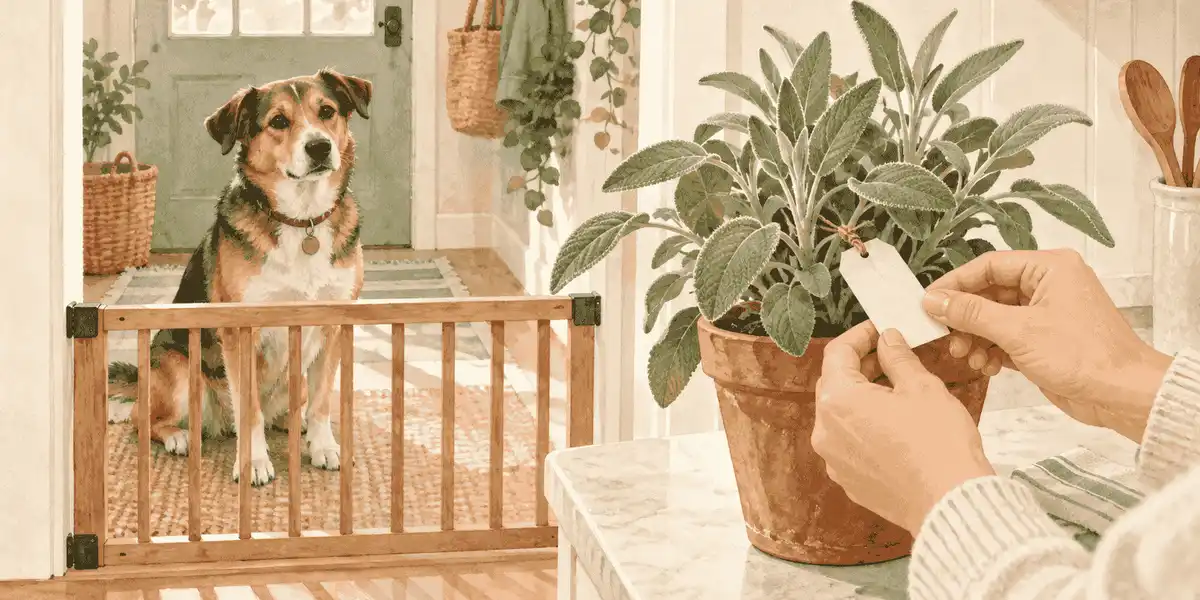
Is sage toxic to dogs? If the plant is confirmed as sage (Salvia officinalis), the ASPCA Animal Poison Control Center lists that named entry as non-toxic to dogs and cats. That is a plant classification, not permission to feed sage, a safe-amount rule, or an answer about every product that uses the word “sage.” Check what the dog could actually reach, keep the label, and contact a veterinarian when the identity, exposure, or your dog’s condition leaves doubt.
This guide owns the named-sage question. For a mixed planter, an unknown houseplant, or a wider room-by-room review, start with the plants toxic to cats and dogs owner checklist.
Start With Salvia officinalis, Not “Sage” Alone
The ASPCA entry headed “Sage” identifies the scientific name Salvia officinalis, lists Common Sage and Garden Sage as additional names, and places it in the Lamiaceae family. It records that named entry as non-toxic to dogs, cats, and horses.
That wording matters because “sage” and “salvia” can be used casually for more than one plant. Do not transfer the Salvia officinalis listing to an unlabeled plant simply because its leaves look similar, or to every species in the Salvia genus. Look for a nursery tag, pot label, seed packet, or another reliable record. A photograph may help a professional understand what you found, but it does not prove the botanical identity.
If you are preparing for a new dog, save the label with a photograph of the whole plant. If a container holds more than one species, write down each name you can verify instead of treating the arrangement as one plant.
What a Non-Toxic Entry Does—and Does Not—Cover
“Non-toxic” describes the poison-control classification for the named plant. It does not turn plant material into a treat or establish how much an individual dog can eat. The ASPCA’s plant-database overview also warns that consuming any plant material may be followed by vomiting or gastrointestinal upset in dogs and cats.
So keep three questions separate:
- Identity: Is the plant actually Salvia officinalis?
- Condition: Is the dog comfortable, or is there a new change that needs professional context?
- Material: Was the dog near a living plant, a prepared food, a seasoning blend, an oil, or another product?
The listing answers only a narrow part of the first question. It does not provide a dose, waiting period, diagnosis, or home-treatment plan.
Sort the Access Point Before You Interpret It
Write down what was within reach rather than relying on the shared word “sage.” A dog may have encountered:
- a potted or garden plant that might be matched to Salvia officinalis;
- a seasoning jar, recipe, sauce, or leftover food;
- an oil, extract, supplement, or manufactured product; or
- fertilizer, pesticide, potting material, or another garden product near the pot.
Those are different exposure questions. The ASPCA Sage entry classifies the named plant; it does not classify a prepared meal, concentrated product, or added garden chemical. The same boundary applies to other named plants: the rosemary plant-label guide explains why a plant name and a food or oil question should not be merged.

Make a Short Sage Exposure Record
If your dog may have chewed sage, record the facts before they blur. Use “unknown” when you cannot be more precise:
- the exact label, scientific name, or best available identification;
- whether the material was a leaf, stem, pot, prepared food, oil, or another product;
- whether the dog chewed, swallowed, touched, or may have reached it without anyone seeing;
- the possible time and amount, without inventing a precise number; and
- your dog’s age, approximate weight, current signs, and relevant health information.
This is a history for a veterinarian or animal poison-control professional, not a home test. Keep the label, package, ingredient panel, or product container available. Uncertainty is useful information; it is not a reason to fill the gap with a guess.
When a Sage Question Needs a Veterinarian
Contact your veterinarian or an animal poison-control service when the plant cannot be identified, another product may be involved, the amount or timing is unclear, or your dog is vomiting, unusually quiet, painful-looking, or otherwise unwell. Ask promptly when the situation is sudden or concerning rather than waiting for a specific sign.
Do not induce vomiting, give medication, or try a household remedy unless a veterinarian or poison-control professional specifically directs it. The professional can decide what details matter for the actual plant, product, route, and dog in front of you.
If the plant is confidently matched to Salvia officinalis, no other material is involved, and your dog remains comfortable, remove access and keep the label. That is a bounded use of the classification—not a promise that eating plant material cannot cause stomach upset.
Reset Sage Access for a New-Dog Home
Before a new dog arrives, check kitchen windowsills, counters, garden edges, and any low plant stands. Store seasoning jars, oils, supplements, and garden products in their original containers, and keep reachable pots away from chewing range. Add the botanical name and a photo to a household plant note so a future call starts with better information.
The practical answer to “is sage toxic to dogs?” is reassuring but narrow: ASPCA lists the named sage plant, Salvia officinalis, as non-toxic to dogs and cats. Let the label answer only that plant question. If the material, identity, or your dog’s condition leaves doubt, keep the evidence and let a veterinarian or poison-control professional make the next decision.
Sources
Petzette's claim cards for this article point to the following scientific, veterinary, or animal-welfare sources.
- ASPCA Sage Poison-Control Classification: Animal poison-control plant-database record and public exposure guidance
- Spider Plant Poison-Control Classification And Name Check: Animal poison-control databases and veterinary manual guidance
- AVMA Pet First Aid: Poison Response Boundary: Veterinary-association first-aid brochure