Health Signals31 August 2026
Why Do Dogs Have Wet Noses? A Whole-Dog Health Check
Why do dogs have wet noses? Learn why wet or dry can be normal, what changes matter, and when your veterinarian should guide the next step.
TextPetzette Editorial
Read4 Min
Evidence status
Source-backed editorial
- Evidence record
- 1 claim card linked to 1 documented source.
- Independent expert review
- Not commissioned. Petzette Editorial is responsible for the published wording.
- Source record checked
- 21 July 2026
- Scope
- General information, not an individual diagnosis or treatment plan.
Why do dogs have wet noses? For a new owner, the safest answer is less dramatic than the old health myth: nose moisture changes for ordinary reasons, and wet or dry by itself is not a reliable report on how a dog is doing. The useful decision is whether the nose looks meaningfully different from your dog’s usual pattern or is changing alongside other signs.
Why a Dog Nose Can Be Wet or Dry
Texas A&M College of Veterinary Medicine & Biomedical Sciences explains that a dog’s nose moisture can vary with licking, hydration, weather or climate, and the individual dog. That gives you several normal reasons for a wet nose, a briefly dry nose, or a change between the two during the day.
The practical boundary is important. A wet nose can belong to an unwell dog, and a briefly dry nose can belong to a well dog. Neither surface state is a stand-alone health score. There is no useful home conclusion to draw from touching the nose once and assigning a diagnosis to what you feel.
This is especially useful during a first year together, when you are still learning your dog’s ordinary patterns. Notice the nose during calm, familiar moments rather than checking it repeatedly. A baseline is a description of what is usual for this individual, not a target that every dog should match.
Does a Dry Dog Nose Mean Something Is Wrong?
Not by itself. A dry nose does not prove fever, dehydration, or another illness, just as a wet nose does not prove that everything is fine. Nose moisture can be one small observation, but it cannot replace a whole-dog check or veterinary assessment.
Avoid turning the nose into a hydration test. Instead, ask whether the change is brief or persistent, whether the surface also looks different, and whether your dog is showing other changes. The question is not “Is the nose wet enough?” It is “What, if anything, has changed from this dog’s normal picture?”
Use a Short Nose Observation Before You Call
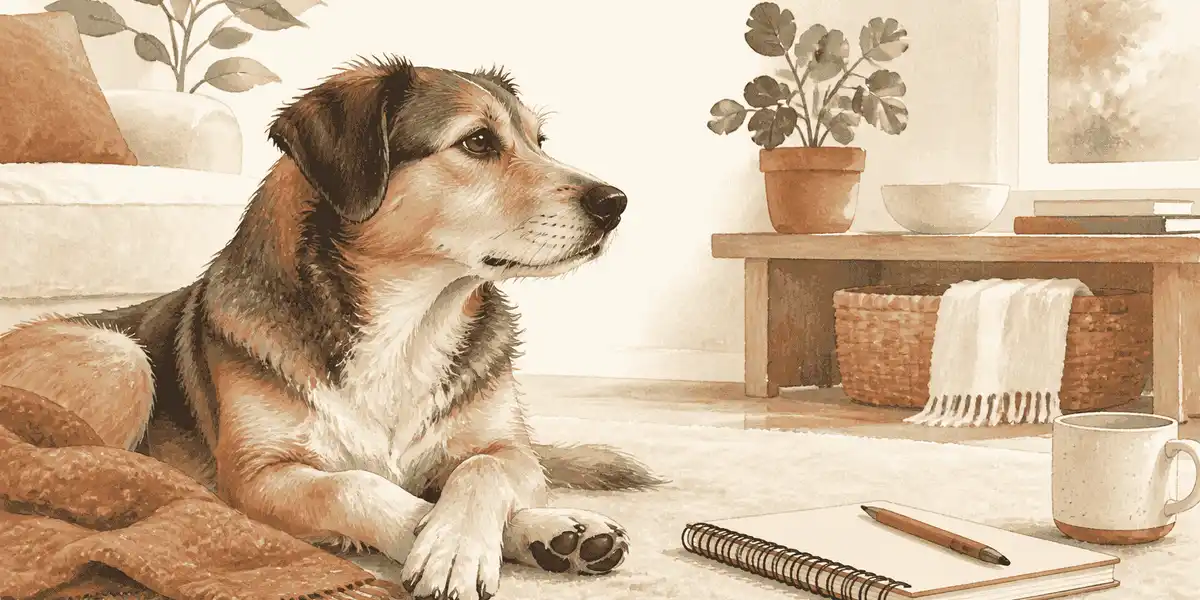
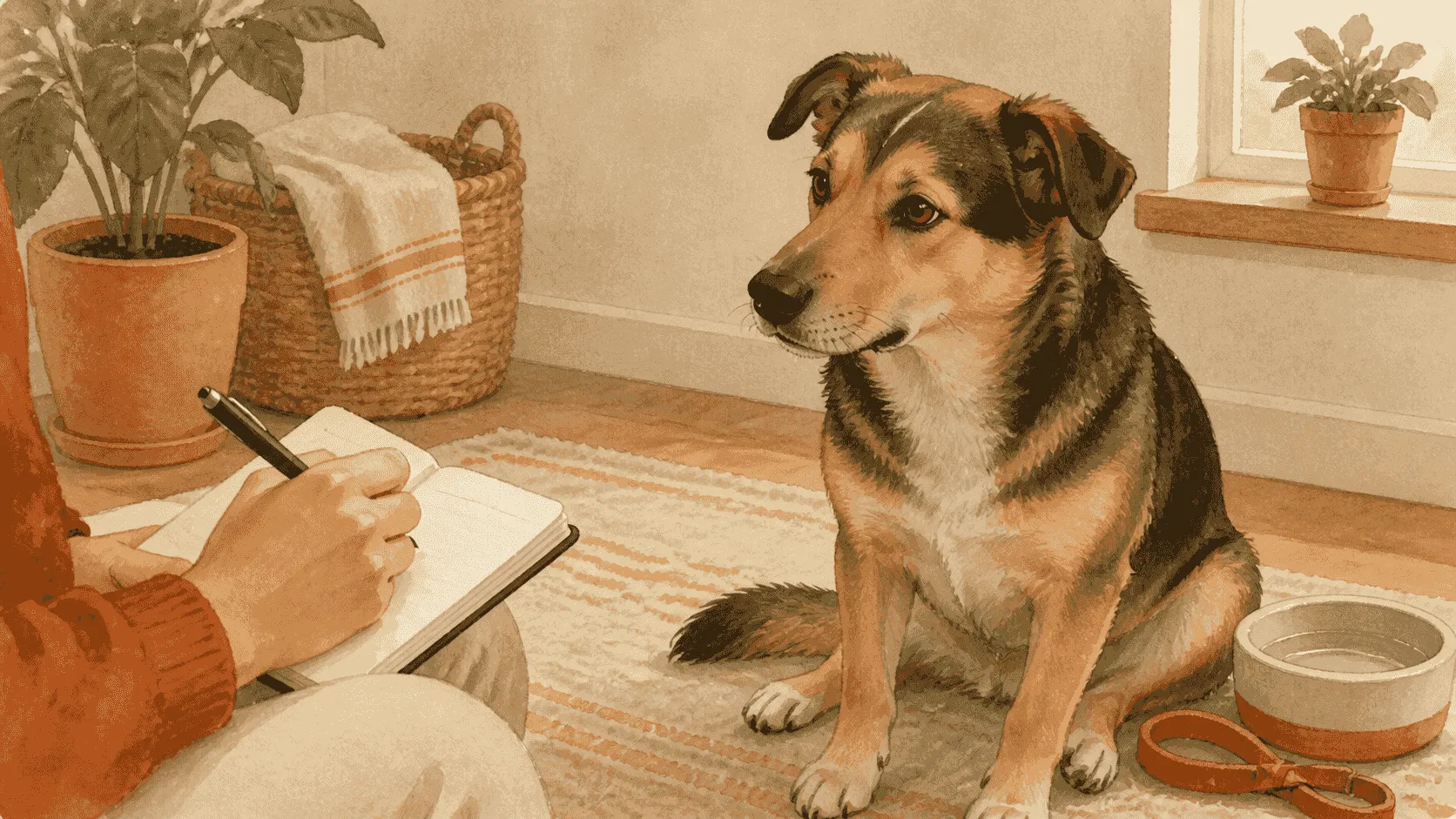
If the nose looks different, make a calm note rather than repeatedly handling it. Record:
- whether the moisture is different from your dog’s usual baseline;
- whether there is discharge, and what you can plainly see about it;
- whether the skin looks cracked or the color or texture has changed;
- whether your dog appears painful or less comfortable with ordinary handling; and
- whether there are wider changes in appetite, energy, behavior, or general appearance.
Keep the note factual. “New crust at the edge this morning” is more useful than “nose looks unhealthy.” Do not scrape, squeeze, or apply a home product to make the surface look different. The observation is for deciding what to report, not for treating or diagnosing the cause.
When a Nose Change Needs a Veterinarian
Ask your veterinarian about a meaningful or painful change, especially when it persists or comes with other signs that your dog is unwell. Persistent discharge, cracks, or a change in color or texture deserve more attention than moisture alone. A sudden, severe, or continuing change is a good reason to contact the clinic rather than waiting for the nose to return to a familiar appearance.
That boundary does not identify a condition from home. It simply separates a surface observation that may be ordinary from a pattern that needs professional context. Tell the veterinarian what you noticed, when it began, what was happening around it, and what else has changed. If you are worried, you do not need to prove that the nose looks serious before asking for guidance.
Keep Nose Moisture in Its Lane
Nose moisture answers a narrow question about one visible feature. It does not explain a dog’s whole mood, comfort, or behavior. For those decisions, read posture, movement, facial expression, and the situation together with the whole-body dog body-language pause map. If the nose change is part of repeated sneezing or discharge, the dog sneezing context and health check can help you organize the history you bring to your veterinarian.
Use the nose as one note in a wider record, not as a verdict. The right next step is usually simple: observe a brief, isolated variation without panic; call your veterinarian about a new local change or a persistent pattern; and seek prompt professional direction when the whole dog looks suddenly or seriously different. That is the answer to why do dogs have wet noses that helps a new owner most: variation is common, context matters, and one wet or dry nose cannot carry the whole decision.
Sources
Petzette's claim cards for this article point to the following scientific, veterinary, or animal-welfare sources.
- Dog Nose Moisture Is Not An Overall Health Score: Veterinary-school education