Health Signals11 September 2026
Signs a Dog Is in Pain: What to Notice Before the Vet
Signs a dog is in pain can hide in changed movement, appetite, or behavior. Learn what to record and when to ask your veterinarian.
TextPetzette Editorial
Read4 Min
Evidence status
Source-backed editorial
- Evidence record
- 1 claim card linked to 1 documented source.
- Independent expert review
- Not commissioned. Petzette Editorial is responsible for the published wording.
- Source record checked
- 14 July 2026
- Scope
- General information, not an individual diagnosis or treatment plan.
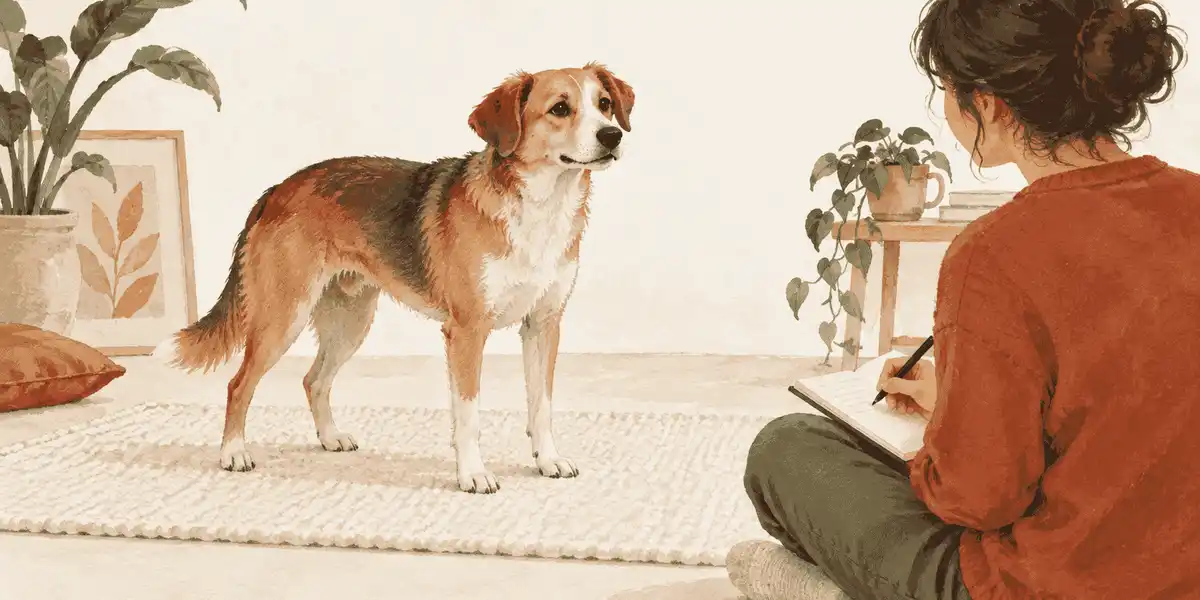
Signs a dog is in pain are often changes from that dog’s ordinary pattern rather than a universal checklist. A dog may stand, walk, move, eat, or behave differently to reduce discomfort, but one change cannot prove pain or explain its cause.
The useful first-year decision is small: notice what changed, record the context, and ask your veterinarian how to interpret it. This guide is for observation and referral, not for diagnosing, scoring, or treating pain at home.
Compare the Dog You See With the Dog You Know
The 2022 American Animal Hospital Association (AAHA) Pain Management Guidelines describe changes in demeanor, posture, movement, appetite, or behavior as possible pain-related adjustments. They also recognise that an owner’s knowledge of a dog’s ordinary behavior can support a pain conversation with the veterinary team.
That does not turn a behavior change into a diagnosis. A quieter dog, a different stance, a reluctance to move, or a change in eating can have more than one explanation. A calm-looking dog can still need assessment, and an energetic dog can still have a problem. Read the whole change against the dog’s baseline rather than waiting for one dramatic sign.
Five Useful Areas to Observe
Keep the check simple and non-invasive. You are describing a change, not testing the dog.
- Posture: Notice whether the dog stands or holds the body differently from usual.
- Movement: Watch ordinary walking or getting up without making the dog repeat an action for your inspection.
- Appetite: Record a change in how the dog approaches or eats ordinary food.
- Demeanor: Note a new difference in quietness, engagement, or willingness to participate in familiar routines.
- Behavior: Write down a broader routine change, such as doing less of a familiar activity or responding differently to normal surroundings.
No item on this list identifies a cause. It is also possible for more than one change to appear together. The pattern, timing, and your dog’s normal behavior give a veterinarian a better starting point than a search for a fixed number of signs.
Make a Short Veterinary-Ready Note
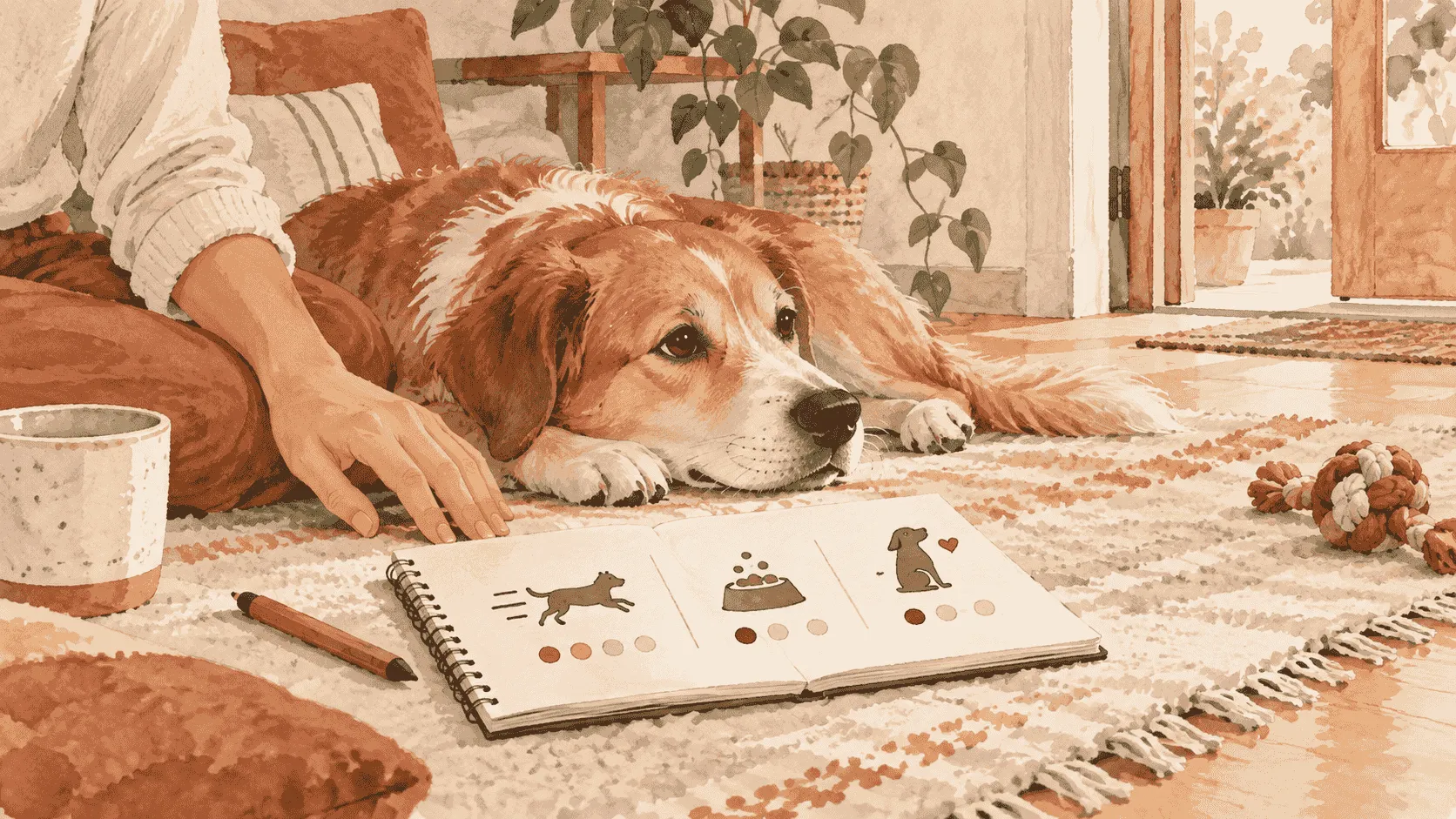
Write down when you first noticed the change and what “usual” looks like for this dog. Add what was happening beforehand, whether the change repeats, and which ordinary activity seems different. If the dog is comfortable and the situation is safe, a brief video of an unprompted movement can help show the veterinary team the pattern; do not stage an action, force handling, or keep recording while the dog is distressed.
Keep the note descriptive. “Walked more slowly than usual after getting up” is more useful than “has a hip problem.” “Left part of breakfast and seemed less engaged” records an observation without assigning a cause. Do not press on a body area, stretch a limb, or repeatedly make the dog move to confirm a theory.
Keep Pain Separate From a Specific Diagnosis
A changed walk does not identify a paw condition, joint problem, injury, or other single cause. If the change is focused on a foot, our guide to calm dog-paw checks explains how to observe without probing. If licking or scratching is the main change, dog itchy skin has a different observation boundary.
This distinction matters because an online list cannot choose a safe treatment. Do not use a pain checklist to select a medicine, dose, supplement, brace, cream, or home remedy. In particular, do not give human pain medicine unless a veterinarian has specifically directed it for this dog.
When to Ask Your Veterinarian
Contact your veterinarian about a new, persistent, worsening, or concerning change in movement, appetite, demeanor, posture, or behavior. Ask promptly if the change is sudden or marked, affects an ordinary activity, or leaves you unsure how to keep the dog comfortable while arranging care. If the dog appears seriously unwell or you are worried about an urgent problem, use your veterinary practice’s urgent or emergency route rather than trying to prove the cause at home.
The veterinary team can decide whether the next step is an examination, monitoring, testing, or treatment. The right assessment is individual: a video, a quiet moment, or a single sign cannot estimate pain severity reliably on its own.
A Safer Next Step
- Compare the change with the dog’s normal pattern.
- Write a brief note about timing, context, and affected routines.
- Keep observation calm and stop if handling or movement worries the dog.
- Share the note with your veterinarian and follow the plan they give you.
Noticing a change is useful. Naming the cause or treating it from a checklist is the part that belongs with a veterinarian.
Sources
Petzette's claim cards for this article point to the following scientific, veterinary, or animal-welfare sources.
- AAHA Pain Management Guidelines 2022: Veterinary clinical guideline and consensus statement