Health SignalsUpdated 20 August 2026
Dog Paw Care: Calm Checks for Every Season
Dog paw care includes calm checks, safer seasonal routes, a clear winter boundary for dog paw balm, and knowing when to call your veterinarian.
TextPetzette Editorial
Read4 Min
Evidence status
Source-backed editorial
- Evidence record
- 5 claim cards linked to 5 documented sources.
- Independent expert review
- Not commissioned. Petzette Editorial is responsible for the published wording.
- Source record checked
- 14 July 2026
- Scope
- General information, not an individual diagnosis or treatment plan.
Dog paw care works best as a calm habit. Check after the kinds of outing that add a hazard, notice a change from your dog’s usual walk or stance, and know when the veterinarian—not a home remedy—should take over.
A paw cannot diagnose a problem. Your dog’s familiar movement and comfort with handling provide the useful baseline.
A Dog Paw Check Starts With the Whole Dog
The American Animal Hospital Association’s 2022 pain-management guidelines note that pain can change a dog’s posture, movement, demeanor, appetite, or behavior. Owners know the ordinary pattern, but the cause and acute-pain assessment need veterinary guidance.
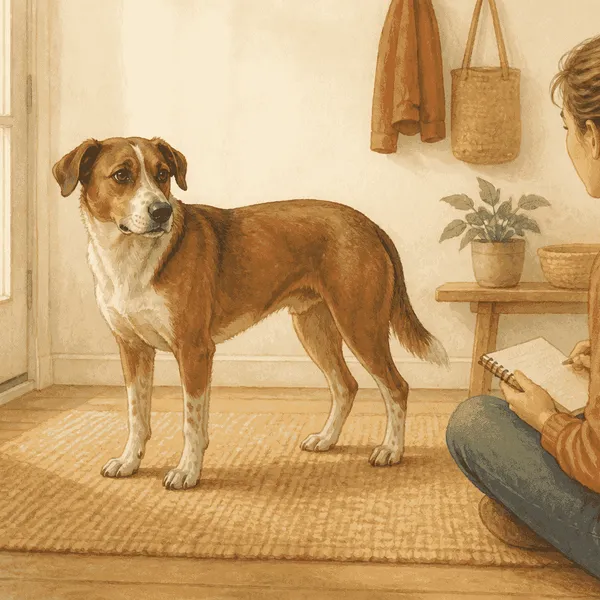
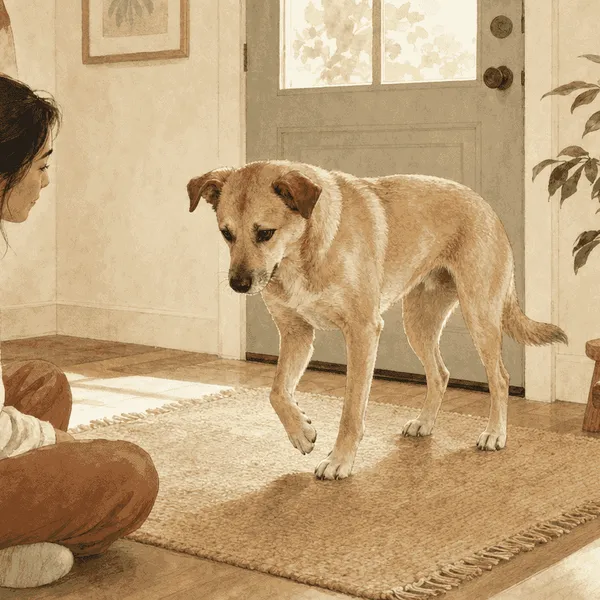
Watch your dog move before you touch a foot. A shortened step, held-up paw, or resistance to a normal activity can support a veterinary conversation; it cannot identify the cause.
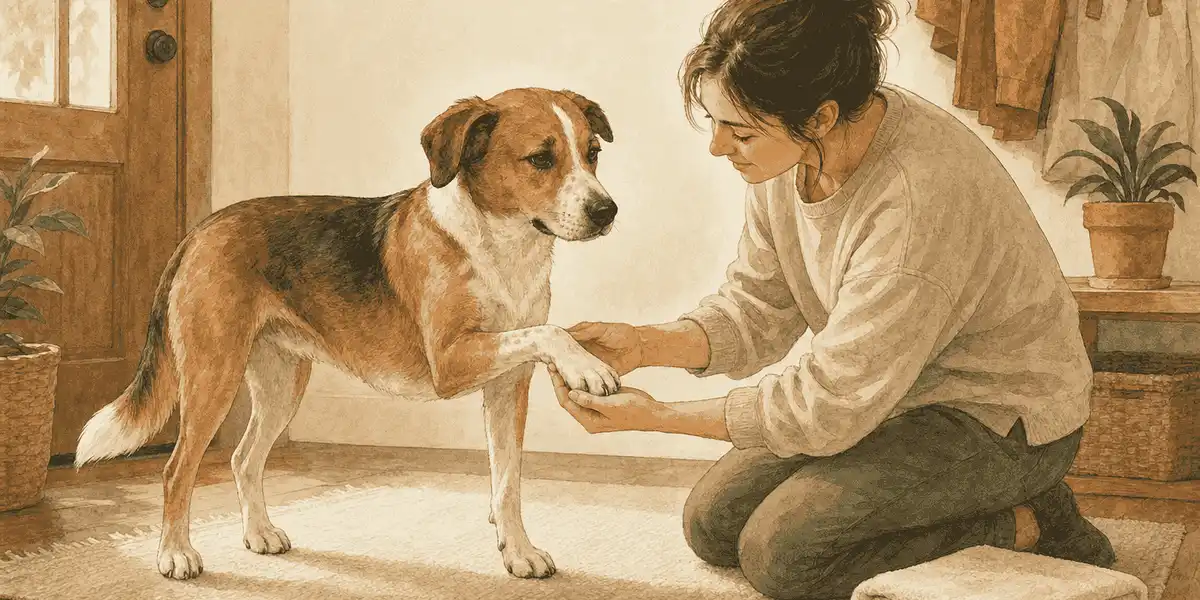
When your dog is comfortable being handled, make the visual check simple:
- Look across the pads and between the toes.
- Notice a new crack, cut, swelling, discharge, or trapped material.
- Include the nails without forcing the paw into an awkward position.
- Stop if the dog becomes worried or the paw seems painful.
Do not probe a wound or dig for embedded material. Notice; do not perform a home procedure.
Why Do Dogs Lick Their Paws? Read the Pattern
Repeated licking, biting, or chewing at a paw does not tell you why. It can appear with a pain-related change or seasonal hazard, but does not prove infection, a foxtail, or another single cause.
Use a three-part pattern check:
- The repetition: Is this new, repeated, persistent, or worsening? Did it begin after a walk on a hot surface, a salted path, or dry, seedy grass?
- The whole dog: Has the stride, stance, posture, appetite, demeanor, or willingness to move changed?
- The paw: Without squeezing or probing, can you see a crack, cut, swelling, bleeding, discharge, wound, or trapped material?
A quick lick and a repeated return are different observations, but neither names the cause. Call your veterinarian if it recurs, persists, worsens, or appears with limping, swelling, bleeding, discharge, a visible wound, or another change from normal. Sudden severe pain, inability to bear weight, uncontrolled bleeding, a deep wound, or suspected embedded material needs prompt veterinary direction.
Protect Dog Paw Pads From Seasonal Hazards
The route changes with the weather. UC Davis School of Veterinary Medicine guidance notes that sidewalks, asphalt, sand, and artificial turf can become hot enough to burn paw pads. If the ground feels uncomfortably warm against the back of your hand, choose a cooler time or move to a shaded, grassy route.
That hand check is a warning, not a guarantee or a whole-body heat plan. Our guide to early dog heatstroke signs and first aid covers the bigger picture; footwear does not justify a dangerous hot-weather walk.
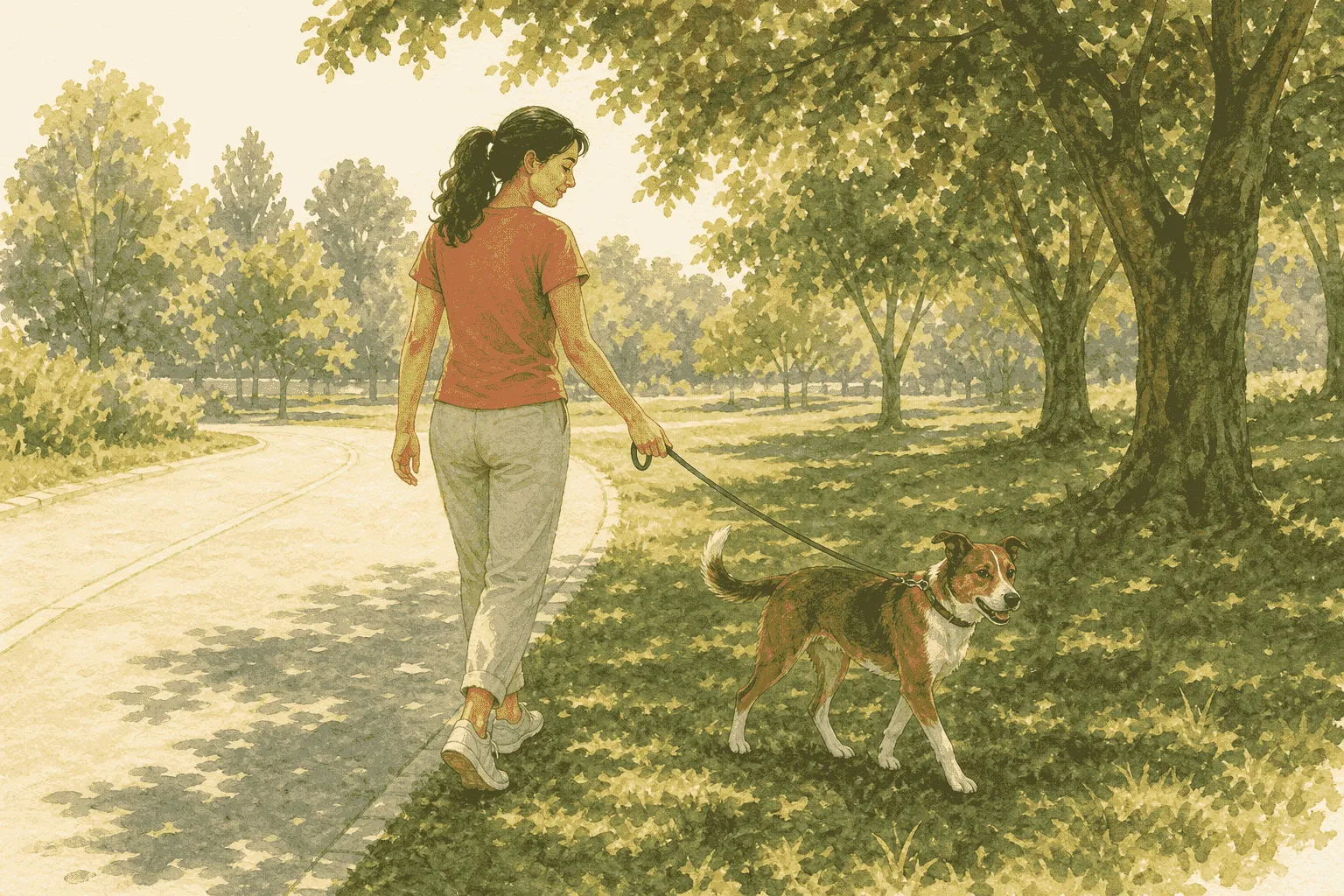
Cornell University College of Veterinary Medicine advises checking for cracks, cuts, and snowballs, then wiping or washing away salt and de-icer after winter walks. These residues can irritate paws, and licking them can expose the mouth and digestive tract.
Dog Paw Balm: Keep the Winter Boundary Clear
Dog paw balm can feel like the obvious winter answer. Cornell notes that a dog’s need for and tolerance of balms or boots are individual, with no named product supported. Do not treat balm as a universal need or a way to postpone an assessment.
Use this boundary:
- Routine: After an ordinary winter walk, look between the toes and across the pads, then remove salt, de-icer, and snow. This matters whether or not balm is part of your dog’s individual routine.
- New problem: Do not use a product to solve pain, a new crack or cut, persistent discomfort, or suspected cold injury. Ask your veterinarian instead.
This guide does not choose a balm, direct its use, or promise it prevents winter injury. If a pad is unusually hard, thickened, rough, or horn-like, our hyperkeratosis guide explains what to record before the veterinary visit.
After dry, seedy grass, UC Davis advises checking fur and between toes for barbed foxtail seed heads. Do not dig for suspected embedded material; persistent limping, licking, swelling, or a draining sore needs veterinary attention.
Keep Nail Care Cooperative
Nails belong in the routine, but a nail trim should not become a wrestling match. VCA recommends tiny steps, body-language watching, and pairing touch or tools with something the dog enjoys.
One relaxed paw touch can be a session. Progress only while your dog is comfortable; our calm dog-grooming routine uses the same principle across brushing, bathing, and nail care.
If the paw pulls away, the body stiffens, or the dog tries to leave, pause. Severe fear, pain, overgrown nails, a medical nail problem, or bite risk needs a veterinarian or qualified professional.
Know When a Dog Paw Needs a Veterinarian
Call your veterinarian about a change that persists or worsens, or comes with limping, swelling, bleeding, discharge, a visible wound, or repeated licking. Sudden severe pain, inability to bear weight, a deep wound, uncontrolled bleeding, or suspected embedded material needs prompt veterinary direction.
Do not give a human pain reliever or apply an improvised treatment: appearance alone cannot choose a safe plan.
Know your dog’s baseline, check after relevant walks, change routes when needed, and let the veterinary team interpret a change.
Sources
Petzette's claim cards for this article point to the following scientific, veterinary, or animal-welfare sources.
- AAHA Pain Management Guidelines 2022: Veterinary clinical guideline and consensus statement
- UC Davis Summer Paw Hazards 2026: Veterinary-school practical safety guidance
- Cornell Winter Paw Safety: Veterinary-school seasonal safety guidance
- AVSAB Humane Dog Training 2021: Veterinary behavior society position statement
- VCA Nail Trim Stress Reduction: Veterinary hospital behavior guidance