New Owner Guide11 July 2026
Signs Your Cat Is Accepting the New Kitten
Signs your cat is accepting the new kitten include calmer routines and easier movement. Learn how to read progress without rushing friendship.
TextPetzette Editorial
Read4 Min
Evidence status
Source-backed editorial
- Evidence record
- 3 claim cards linked to 2 documented sources.
- Independent expert review
- Not commissioned. Petzette Editorial is responsible for the published wording.
- Source record checked
- 10 July 2026
- Scope
- General guidance. Individual animals and circumstances can differ.
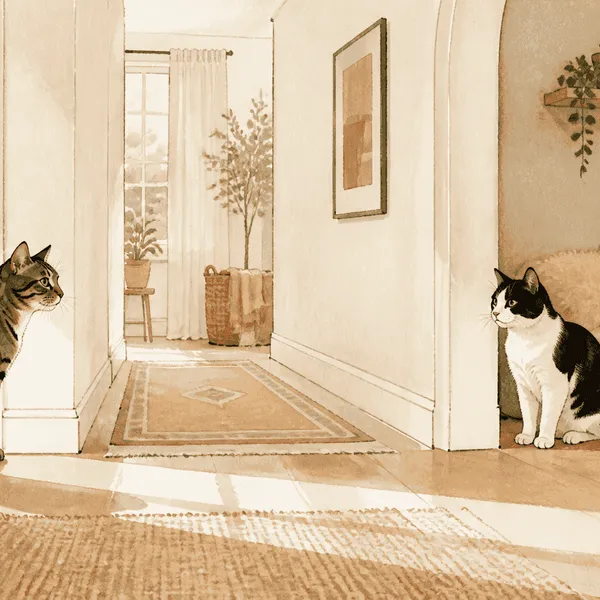
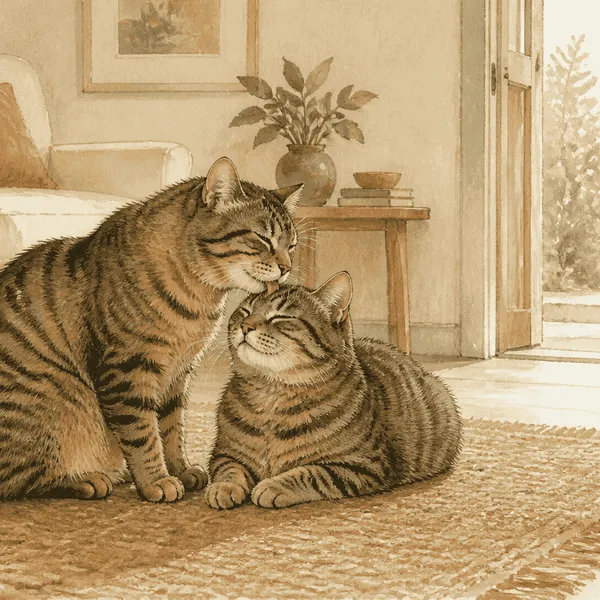
Signs your cat is accepting the new kitten are usually quieter than a dramatic cuddle. The resident cat may keep normal routines, move through the home without being blocked, and tolerate the kitten at a comfortable distance. Those changes can mark progress, but they are not a promise that the cats will become close friends.
A careful introduction is less about reaching a deadline than noticing whether both cats still have choices. They should be able to approach, pause, and retreat without being forced into contact.
Acceptance Can Look Like Ordinary Life
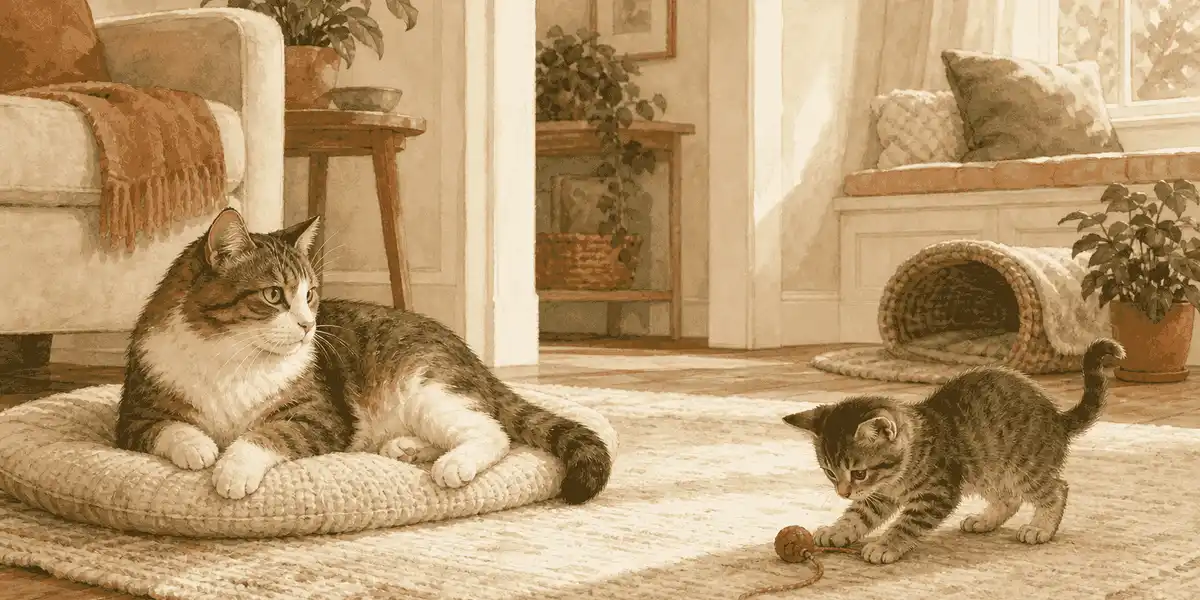
The most useful signs often involve normal activity. Your resident cat may eat, rest, groom, play, and use the litter area without repeatedly changing route because the kitten is nearby. The kitten may explore without being stalked or cornered. Brief looks can happen, but neither cat should have to remain frozen in a fixed stare.
Watch what happens around doorways, hallways, food, water, resting places, and litter boxes. The 2024 AAFP intercat tension guideline, published in the Journal of Feline Medicine and Surgery, notes that tension can be subtle. Staring, blocking, stalking, fleeing, hiding, and reduced activity may appear before an obvious fight.
That makes easy movement meaningful. If each cat can enter and leave important areas, settle at a distance, and return to normal activities, the household may be moving in a better direction. Judge the pattern over time, not one photogenic moment.
Cat Hissing at a New Kitten Needs Context
A cat hissing at a new kitten is giving information, not handing you a final verdict. One hiss or brief disagreement does not automatically equal chronic tension. Look at what comes with it and what happens next.
If the resident cat hisses and then chooses more distance, that is different from persistent staring, stalking, doorway blocking, or chasing that stops the kitten from reaching resources. A cat who starts hiding much more, eating less, or abandoning normal play also deserves closer attention. As with other reasons cats may hide, the wider change matters more than one behavior in isolation.
Do not hold the cats nose to nose or expect them to “work it out.” Create distance and return to an earlier introduction stage when either cat looks unable to settle. Severe or persistent tension calls for help from a veterinarian and a qualified behavior professional; sudden behavior change also deserves a veterinary check for pain or illness.
Introducing a Kitten to a Cat, One Stage at a Time
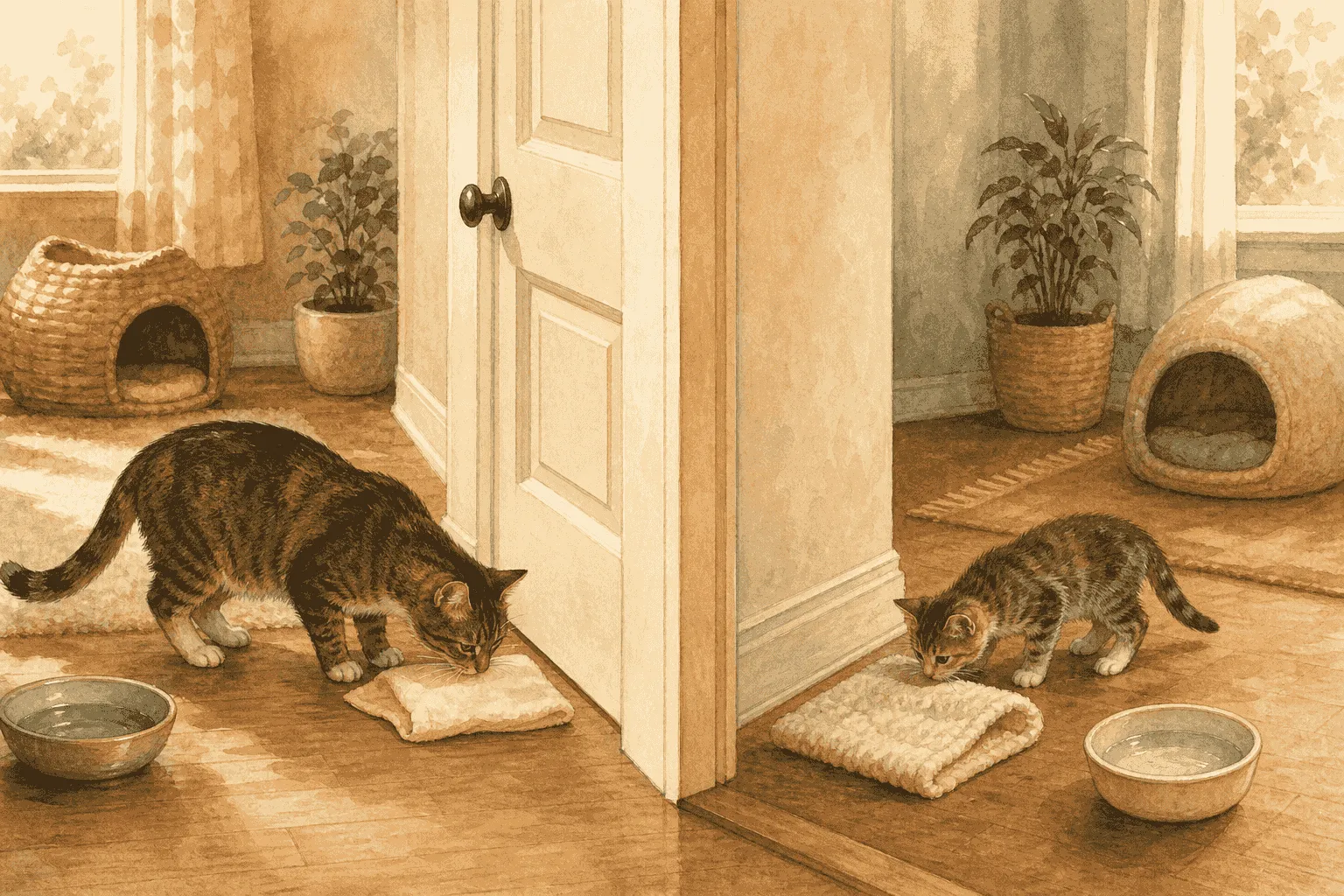
Cats Protection guidance and the AAFP guideline support a gradual sequence: separate space first, then scent exchange, barrier-based visual contact, and only later brief supervised physical proximity. There is no universal timeline. The cats’ responses decide when to advance.
Start with a sanctuary room for the kitten. Exchange bedding or soft cloths so each cat can investigate the other’s scent without sharing a room. When both can stay reasonably settled around that stage, use a secure barrier for short visual meetings. Each cat should be free to approach or retreat.
Face-to-face time comes later and should stay supervised. Keep it short enough that you can finish while the scene is still manageable. If tension grows, going back a step is useful information, not failure.
Separate Resources Prevent Quiet Bottlenecks
Extra bowls or beds help only when both cats can reach them. Three bowls side by side still form one feeding station if one cat can control the whole row. Distribute food, water, litter boxes, resting places, scratching areas, and hiding options in different locations, with distance and visual separation where possible.
Then watch access rather than counting objects. Does one cat wait for the other to leave before drinking? Does the resident cat sit in a doorway the kitten must cross? Does either cat stop using a favorite resting place? These small route changes can reveal tension that a peaceful-looking room hides.
Separate resources do not guarantee harmony or treat every conflict. They give each cat more usable choices while you assess the relationship.
Friendship Is Not the Only Good Outcome
Some cats may eventually rest together or choose close contact. Others may simply share a home while keeping more personal space. Both pictures can be workable if the cats can move, rest, eat, and use essential resources without persistent fear or obstruction.
Avoid using purring, one nap, or one nose touch as proof that the introduction is finished. Even a familiar sound such as a cat’s purr needs context. Look instead for a stable pattern: ordinary routines, voluntary distance changes, fewer traffic jams, and the ability to disengage.
The safest measure of acceptance is not instant affection. It is growing room for both cats to make choices and live their normal lives.
Sources
Petzette's claim cards for this article point to the following scientific, veterinary, or animal-welfare sources.
- 2024 AAFP Intercat Tension Guideline Brief: Veterinary consensus-guideline brief
- Cats Protection Gradual Cat Introductions: Animal-welfare behavior guidance