Nutrition04 August 2026
Why Is My Dog Not Eating Food but Will Eat Treats? What to Do First
Why is my dog not eating food but will eat treats? Record the pattern, pause food experiments, and know when to call a veterinarian.
TextPetzette Editorial
Read3 Min

Evidence status
Source-backed editorial
- Evidence record
- 4 claim cards linked to 5 documented sources.
- Independent expert review
- Not commissioned. Petzette Editorial is responsible for the published wording.
- Source record checked
- 15 July 2026
- Scope
- General information, not an individual diagnosis or treatment plan.
Why is my dog not eating his food but will eat treats? Treat acceptance is one observation, not an explanation. A dog may take a snack while refusing its usual meal, but that pattern cannot identify whether the next step is a routine food change or veterinary advice. Start by making the whole pattern visible rather than guessing from one treat.
The useful decision is simple: record what changed, pause the temptation to keep swapping foods, and contact your veterinarian when appetite loss persists, worsens, or arrives with other concerning signs. This is not a guide to diagnosing a picky eater, stomach problem, or dental issue at home.
A Treat Is One Observation, Not an Explanation
The MSD Veterinary Manual describes appetite change alongside signs such as vomiting, diarrhea, abdominal discomfort, bleeding, bloating, and dehydration. Those signs can overlap across many possible problems, so a treat cannot settle the cause of regular-food refusal.
That does not mean the situation has one hidden explanation. It means the detail is useful when it joins the rest of the story. Record whether the dog approached the bowl, sniffed it, tried to eat, dropped food, or walked away; then record treats separately. “Ate two training treats but left the usual meal” is more useful to a veterinary team than “being fussy.”
Build a Same-Day Food and Treat Record
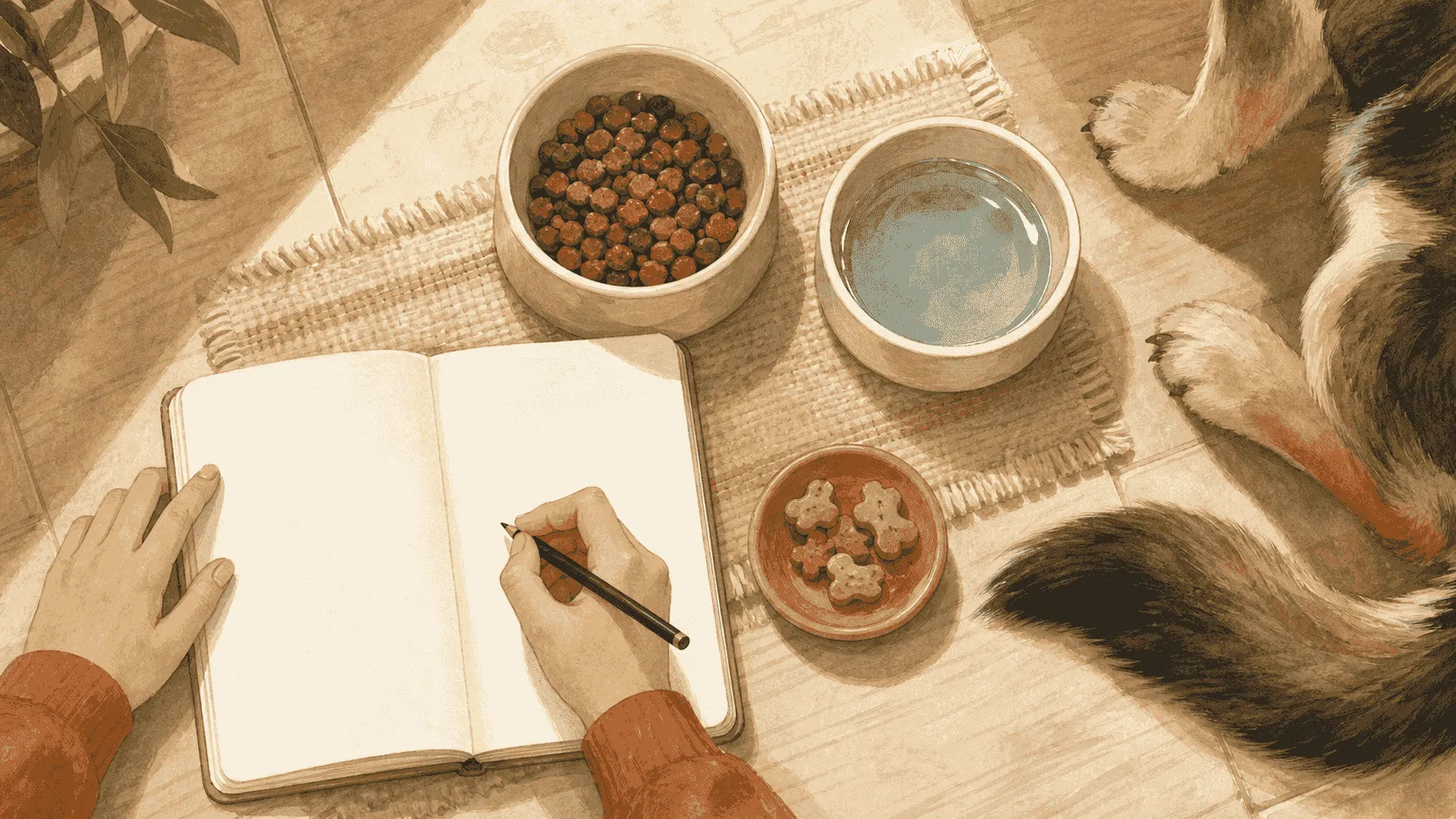
Put these observations in one phone note before you call or change the plan:
- the usual food, meal schedule, and most recent normal meal;
- what was offered, what remained, and every treat, chew, topper, or table food offered that day;
- when the change began and whether a food, routine, household, or access-to-hazards change came before it;
- drinking, energy, stool, vomiting, gas, abdominal discomfort, and other changes you can observe; and
- possible access to rubbish, medication, plants, chemicals, toys, or other swallowable objects.
The goal is a clear timeline, not a home diagnosis. The MSD guidance emphasizes that a dog’s age, diet, history, exposures, and other signs help determine what assessment may be appropriate. The new-puppy appetite guide has a more urgent, life-stage-specific checklist if the dog is a young puppy.
Pause the “Try Another Food” Loop
World Small Animal Veterinary Association wellness guidance supports a gradual food transition for an otherwise stable dog when a routine change is actually needed. That slower approach makes acceptance, stool, and tolerance easier to monitor.
An active appetite change is different. Replacing each untouched meal with a new flavor, topper, or treat can make the history harder to read and add more dietary change to an uncertain pattern. Vomiting, diarrhea, pain, lethargy, blood, a possible toxin, or a possible swallowed object are also outside the routine-transition boundary. Ask your veterinarian what should happen next instead of using a generic calendar.
After veterinary guidance makes a routine food change appropriate, keep the feeding plan steady enough to observe. Package directions are starting points, not a diagnosis or a universal portion prescription. A puppy food transition plan explains the same monitoring principle for a young dog.
Put Treats Back in the Whole-Day Picture
For generally healthy dogs, the American Animal Hospital Association nutrition and weight-management guideline recommends keeping complete and balanced food as at least 90 percent of total calories, with treats and other extras at 10 percent or less. That ceiling is not a reason to press treats on a dog with an appetite change, and it is not a guarantee that any snack fits an individual dog.
It does explain why treat acceptance is not the same as a complete feeding plan. Count the extras accurately while you speak with the clinic. Once the concern has been assessed, the everyday dog-treat guide can help place rewards back into an ordinary day.
Know When to Call Your Veterinarian
Contact your veterinarian promptly when appetite loss continues, repeats, becomes severe, or comes with vomiting, diarrhea, low energy, weakness, pain, dehydration concerns, blood or black tarry stool, or another sudden change. Cornell University College of Veterinary Medicine also identifies continued appetite loss with those kinds of changes as a reason for veterinary advice.
Possible toxin exposure, a swallowed object, severe pain or bloating, collapse, breathing difficulty, inability to keep food or water down, or rapid worsening needs urgent professional direction. Tell the clinic exactly what the dog ate, what treats were accepted, and what changed around the meal. The safer next step is a readable record and veterinary guidance—not a guess based on one snack.
Sources
Petzette's claim cards for this article point to the following scientific, veterinary, or animal-welfare sources.
- Cornell Dog Diarrhea Guidance: Veterinary-school clinical owner guidance
- MSD Dog Digestive Disorders: Veterinary manual / clinical owner guidance
- WSAVA Principles Of Wellness 2025: Global veterinary-association wellness guidance
- AAHA Nutrition And Weight Management Guidelines 2021: Peer-reviewed veterinary clinical guideline
Cline MG, Burns KM, Coe JB, et al. 2021 AAHA Nutrition and Weight Management Guidelines for Dogs and Cats. Journal of the American Animal Hospital Association. 2021;57:153-178.
- AAFCO Pet Food Labels And Nutritional Adequacy: US feed-control association consumer and regulatory guidance