Nutrition14 October 2026
What Seasoning Can Dogs Eat? Use a Plain-Food Rule
What seasoning can dogs eat? Learn why a plain-food rule is safer than a generic spice list, how to check labels, and when to call your veterinarian.
TextPetzette Editorial
Read5 Min

Evidence status
Source-backed editorial
- Evidence record
- 6 claim cards linked to 7 documented sources.
- Independent expert review
- Not commissioned. Petzette Editorial is responsible for the published wording.
- Source record checked
- 11 September 2026
- Scope
- General information, not an individual diagnosis or treatment plan.
What seasoning can dogs eat? The safest new-dog answer is not a universal spice list. If you are deciding whether to share a human-food bite, identify the exact ingredient, preparation, and product form first. A plain, named food is easier to assess than a seasoned recipe whose label may hide several other ingredients.
This guide is for an ordinary treat decision and for recognizing when that decision has become a possible-exposure question. It is not a recipe, a dose chart, or a way to clear a dog with a medical condition or a therapeutic diet. If your dog may have eaten an unknown, concentrated, or concerning product, contact your veterinarian or an animal poison-control service for individual direction.
“Seasoning” Can Describe Several Different Things
The word may refer to a fresh herb, a dried spice, a seasoning blend, a prepared sauce, a baked recipe, a powder, an extract, or an essential-oil product. Those are not one exposure category. The ingredient list, route, possible amount, and the dog’s individual situation can change the question.
That is why a search result that names one plant or spice cannot clear every food with the same word on the label. A new puppy may also meet seasoning in places you did not plan to share: a dropped piece of dinner, a sauce on a plate, a flavored chew, or a mixed household product. Start with what is actually in front of you rather than with a list copied from memory.
Start With Plain Food, Not a Generic Green List
For a generally healthy dog, veterinary nutrition guidance can provide a few named, plain treat examples without turning them into a universal menu. UC Davis lists options such as raw or boiled carrots, boiled zucchini, baked butternut squash, boiled spinach, and boiled green beans. Its point is narrower than “dogs can eat every vegetable”: use a verified ingredient and preparation, keep extras small, and ask whether a specific treat fits the individual dog.
Keep the complete food as the nutritional foundation. Treats, toppers, table food, and seasoning experiments belong in the extras part of the plan, not in place of the diet that was chosen for the dog’s life stage and needs. If your dog has a diagnosed condition, a therapeutic diet, a history of food reactions, or a current digestive concern, ask your veterinarian before adding a new human-food extra.
The practical rule is simple: when you want to offer a food, choose the plain, named version first. Do not assume that a seasoned version, mixed recipe, sauce, or flavored product has the same answer. Our everyday dog-treat guide explains how to keep ingredient checks and small extras part of an ordinary routine.
Check the Label for Allium Ingredients
Onion, garlic, chives, and leeks should stay out of food offered to dogs. They can appear fresh, cooked, dried, powdered, or inside a seasoning blend, sauce, leftover, or packaged recipe. A visible piece is not the whole label check; read the ingredients when you can.
The veterinary toxicology review behind this guidance describes Allium exposure across different preparations and explains that important effects may be delayed. That is why “it was cooked,” “it was only seasoning,” or “the dog looks normal” does not create a home safety rule. Do not intentionally offer these ingredients, and do not use a body-weight calculation to decide that a possible exposure is cleared.
If your dog may have eaten an Allium-containing food, keep the recipe, wrapper, or ingredient panel. Note the best estimate of the time and amount without inventing precision, then contact a veterinarian or animal poison-control service promptly. Do not induce vomiting, give medication, or try a home remedy unless the professional handling the case directs it. The allium exposure guide covers why there is no useful public home threshold.
A Plant Listing Does Not Clear a Spice Jar or Oil
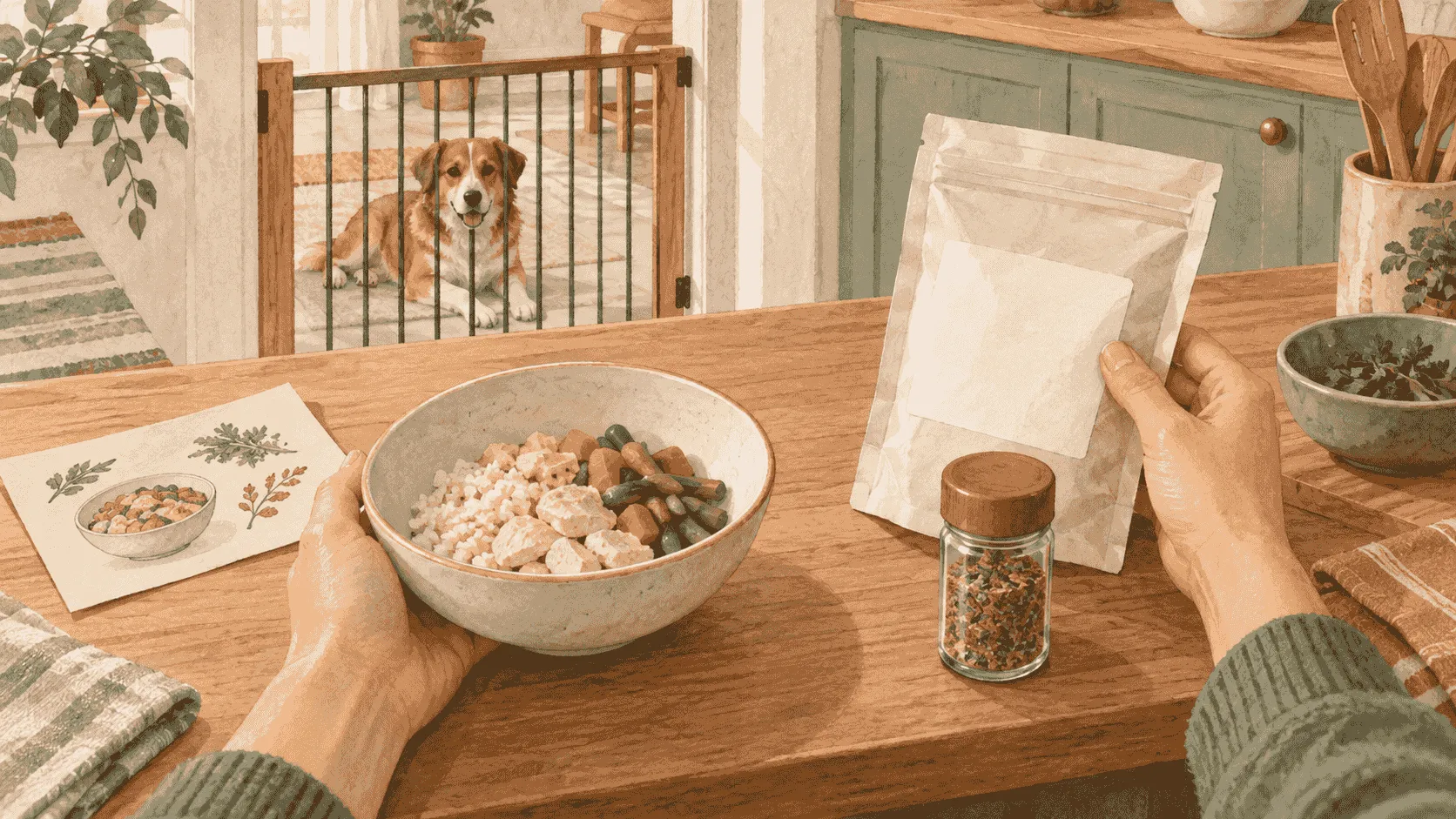
Rosemary and cinnamon show why a familiar name needs more context. ASPCA lists its named rosemary plant entry, Rosmarinus officinalis, as non-toxic to dogs and cats. That is a plant classification, not a feeding recommendation and not a clearance for rosemary seasoning, oil, extract, supplement, fertilizer, pesticide, or a mixed dish.
The same distinction applies to cinnamon. ASPCA’s named cinnamon plant entry, Cinnamomum zeylanicum, is listed as non-toxic to dogs, but the source guidance separates the plant from powder, sticks, cinnamon-containing foods, inhaled spice, and essential-oil products. The form and route matter more than the familiar word. The cinnamon form-and-oil guide walks through that narrower exposure decision.
So if the question is “can my dog eat rosemary?” or “is cinnamon safe in this recipe?”, do not borrow a named-plant classification as an answer to a prepared-food question. Keep the exact label, recipe, or plant identity available and ask for individual guidance when the form or exposure is uncertain.
If the Seasoned Food Was Already Eaten
First, block further access and keep the product or a clear ingredient-label photo. Write down what the food was, what may be missing, the possible route, and the best timing estimate. If the recipe includes onion, garlic, chives, or leeks—or if the ingredient, product, amount, or route is unknown—make the professional call rather than waiting for a dramatic sign.
Call before trying to make the dog vomit or giving food, milk, water, charcoal, medication, or another home response. An online symptom list cannot identify the ingredient or choose treatment for the dog in front of you. The useful next step is a factual label-and-timing record that a veterinarian or animal poison-control professional can assess.
The First-Year Kitchen Rule
Use a plain-food rule for routine sharing: choose a named ingredient, keep the portion an extra rather than a replacement for complete food, and check the whole preparation before it reaches the bowl. Store seasonings, blends, extracts, oils, and leftovers behind a closed door or beyond a curious dog’s reach.
There is no need to memorize a long list of “safe seasonings.” The better habit is to separate a plain food from a seasoned recipe, read the actual label, and keep uncertainty visible. If the dog may already have had access to a concerning product, preserve the details and let your veterinarian guide the case-specific next step.
Sources
Petzette's claim cards for this article point to the following scientific, veterinary, or animal-welfare sources.
- AAHA Nutrition And Weight Management Guidelines 2021: Peer-reviewed veterinary clinical guideline
Cline MG, Burns KM, Coe JB, et al. 2021 AAHA Nutrition and Weight Management Guidelines for Dogs and Cats. Journal of the American Animal Hospital Association. 2021;57:153-178.
- AAFCO Pet Food Labels And Nutritional Adequacy: US feed-control association consumer and regulatory guidance
- UC Davis Treat Guidelines For Dogs: Veterinary-school nutrition-service guidance
- Allium Food Exposure In Dogs And Cats — Review And Guidance: Peer-reviewed veterinary toxicology review, peer-reviewed veterinary manual, and established animal poison-control guidance
Hayes C. Garlic and Onion (Allium spp) Toxicosis in Animals. MSD Veterinary Manual, full review September 2024; Cortinovis C, Caloni F. Household Food Items Toxic to Dogs and Cats. Front Vet Sci. 2016;3:26. doi:10.3389/fvets.2016.00026; ASPCA Animal Poison Control. People Foods to Avoid Feeding Your Pets.
- AVMA Pet First Aid: Poison Response Boundary: Veterinary-association first-aid brochure
- ASPCA And Pet Poison Helpline Cinnamon Cat Safety: Animal poison-control database and veterinary poison-control guidance on cinnamon forms and cat exposure boundaries
- ASPCA Rosemary Plant Classification: Animal poison-control plant database and public exposure classification