BehaviorUpdated 12 July 2026
Why Dogs Look to You When They Are Unsure
When something unfamiliar unsettles your dog at home or outside, that look back may be information-gathering. Here's how to answer it calmly.
TextPetzette Editorial
Read4 Min
Evidence status
Source-backed editorial
- Evidence record
- 3 claim cards linked to 3 documented sources.
- Independent expert review
- Not commissioned. Petzette Editorial is responsible for the published wording.
- Source record checked
- 06 July 2026
- Scope
- General guidance. Individual animals and circumstances can differ.
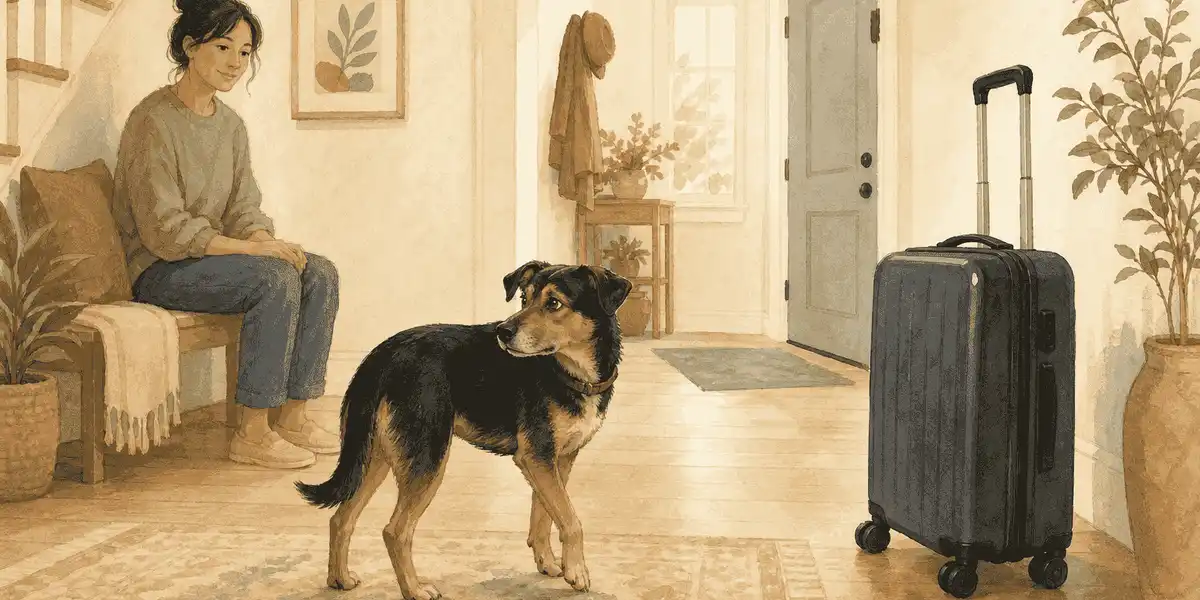
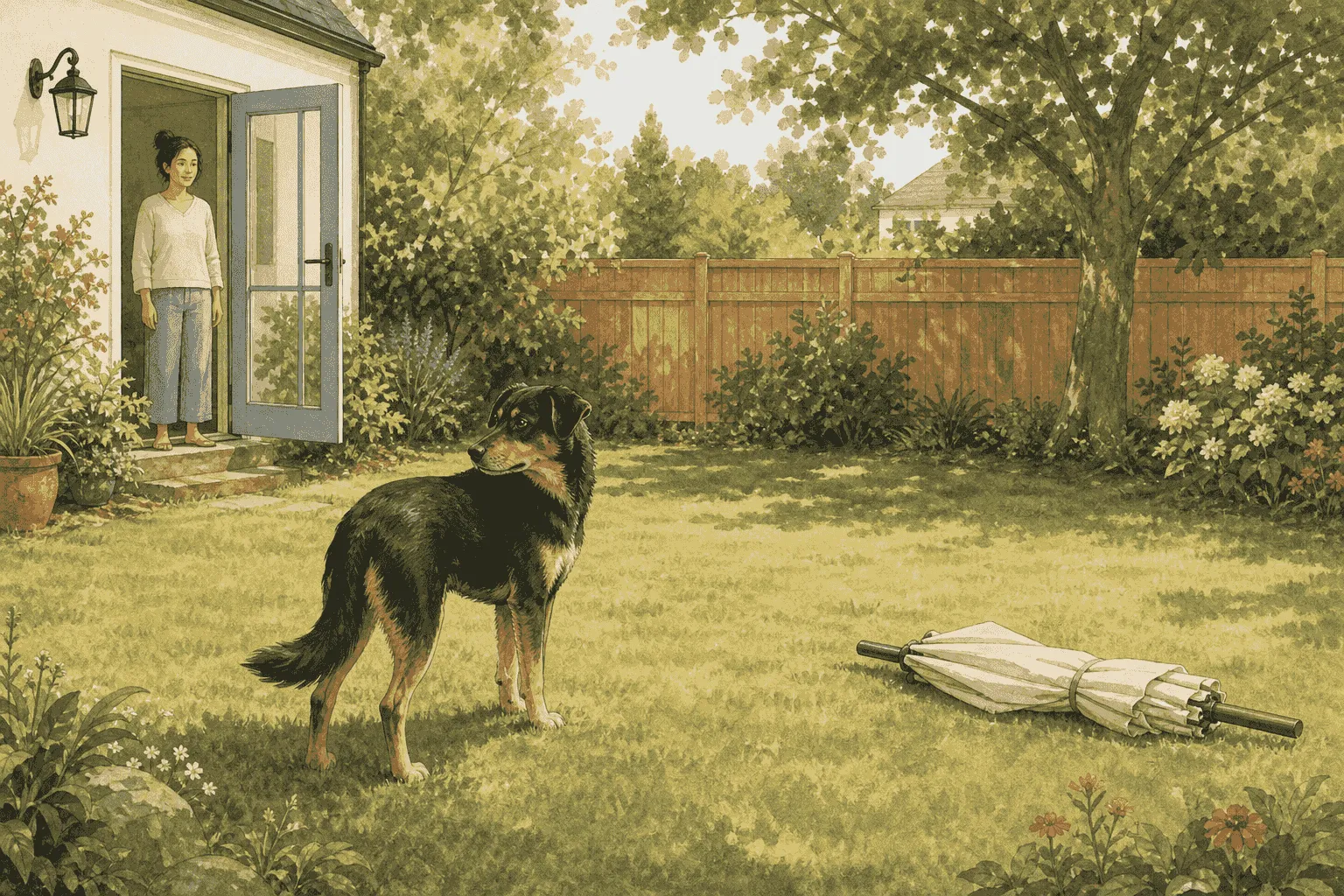
A rolling suitcase rattles past the porch. A recycling bin tips over in the wind. A holiday decoration appears where the plain hallway used to be. Your dog freezes for a second, looks at the thing, then looks back at you.
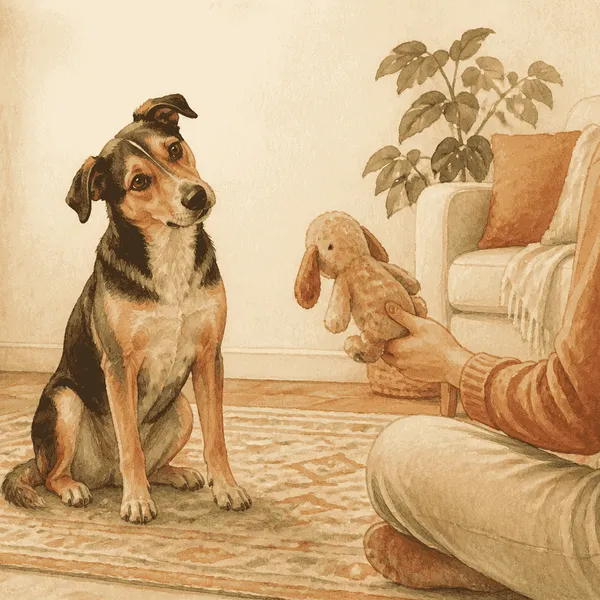
That glance is easy to miss because it is so ordinary. It can look cute, clingy, or random. But in the right context, a dog looking back at a trusted person may be doing something more useful: checking human information before deciding what to do next.
The Look-Back Is Information
In a 2012 study in PLOS ONE, “Dogs’ Social Referencing towards Owners and Strangers,” adult dogs encountered a potentially scary object while an owner or stranger gave positive or negative emotional messages. The home takeaway should stay narrow: when something feels uncertain, dogs may look toward people and use emotional cues as part of their next move.
This is not a blame story about owners, and it is not a magical translation of a dog’s inner life. The safer interpretation is simpler and kinder: in an unfamiliar moment, your reaction can become part of the information your dog is collecting.
So when your dog checks your face, treat it as a small conversation. A steady voice, relaxed pacing, and a little distance from the strange object can give the dog a clearer situation to read. A big performance, a sudden reach, or pressure to approach can make the moment harder to interpret.
You May Be The Safe Base
Another piece of the picture comes from a 2013 PLOS ONE study, “The Importance of the Secure Base Effect for Domestic Dogs - Evidence from a Manipulative Problem-Solving Task.” Researchers varied owner presence while dogs worked on a problem-solving task, supporting the idea that dogs can use their owner as a secure base while interacting with the environment.
That makes the look-back less like neediness and more like orientation. A dog may glance at you before exploring, sniffing, or deciding whether the unfamiliar thing is worth approaching. For some dogs, your calm presence is not a command. It is a reference point.
This is also why the same dog can seem bold in one setting and careful in another. A familiar living room, a quiet sidewalk, a crowded lobby, and a vet clinic are not the same problem to solve. The dog is reading the object, the space, the people, the exits, and you.
How To Answer The Check-In
The goal is not to push bravery. It is to make the scene easier for your dog to understand.
- Pause before reaching, lifting, or correcting.
- Notice what changed: a new object, a new person, a tight space, or a sudden movement.
- Keep your voice and movement steady.
- Give your dog room to step away from the uncertain thing.
- Let investigation happen at the dog’s pace, if it happens at all.
Small choices matter because they preserve choice. A dog that can look, pause, move away, and try again has more room to gather information. A dog pulled toward the object has fewer options and less time to think.
Read The Whole Dog, Not One Signal
Dogs Trust body-language guidance makes an important point for everyday owners: read the individual dog, the whole body, and the moment. One body part is not the whole dog dictionary. The same behavior can mean different things in different contexts, and coat, tail, ear shape, and body differences can make some signals harder to read.
That same discipline helps with other social behaviors. Our guide to why dogs lick people shows how setting and the rest of the body keep one familiar action from becoming a fixed translation.
That caution applies here too. A look-back around a new object may be information-gathering. A look-back during a favorite game may be a different kind of social check-in. A repeated pattern that is sudden, escalating, or worrying deserves more than a quick label.
If your dog’s uncertainty is intense, new, or affecting normal routines, start with a veterinarian check for possible medical influence. When behavior help is needed, ask for a qualified, accredited behavior professional rather than trying to decode one sign in isolation.
The Useful Takeaway
The next time your dog looks from the unfamiliar thing to you, do not rush to name the emotion. Notice the whole scene. What changed? Does your dog have space? Is your response easy to read?
Your dog may not be asking you to fix the world. They may simply be checking the safe base before facing it.
Sources
Petzette's claim cards for this article point to the following scientific, veterinary, or animal-welfare sources.
- Dogs Social Reference Humans Around Novel Objects: Peer-reviewed paper
- Dogs Use Owners As A Secure Base: Peer-reviewed paper
- Dogs Trust Body Language Context Guidance: Welfare organization dog body-language guidance