Nutrition24 July 2026
Can Adult Cats Eat Kitten Food? Build a Separate Feeding Plan
Can adult cats eat kitten food? A stolen bite differs from a shared diet. Match each cat’s life stage and separate feeding stations.
TextPetzette Editorial
Read3 Min

Evidence status
Source-backed editorial
- Evidence record
- 5 claim cards linked to 5 documented sources.
- Independent expert review
- Not commissioned. Petzette Editorial is responsible for the published wording.
- Source record checked
- 14 July 2026
- Scope
- General information, not an individual diagnosis or treatment plan.
Can adult cats eat kitten food? A few stolen bites and a regular feeding plan are different decisions. Kitten food is not poison to an adult cat, but food designed for growth should not quietly become the adult cat’s default. Match each cat’s main food to that cat’s life stage and condition, then arrange the room so you can tell who is eating what.
This guide is about managing two diets in one home. If you are still choosing the kitten’s main food, begin with the kitten-food label checklist.
A Stolen Bite Is Different From a Shared Diet
Finding the adult cat at the kitten’s bowl once does not establish harm. The more useful question is whether this was a brief food theft or a pattern that changes either cat’s daily intake.
The Association of American Feed Control Officials advises choosing food for the pet’s species, life stage, and condition. Its consumer guidance also notes that calorie-rich foods designed for young animals may contribute to obesity in a less active adult. That is a reason to stop routine sharing, not a reason to turn one mouthful into an emergency.
The reverse matters too. A growing kitten needs a main food that is complete and balanced for cats in the growth life stage. Regular access to the adult cat’s bowl can displace that plan. Our guide to measuring a kitten’s daily food explains why the label amount is only a starting point.
Match Each Bowl to a Life Stage
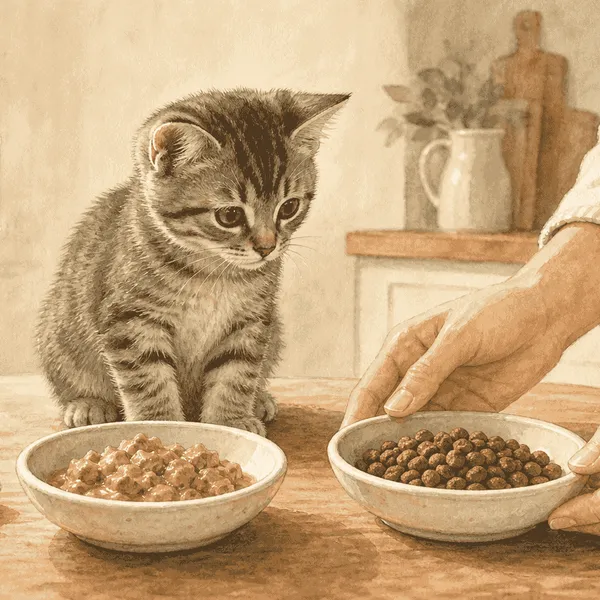
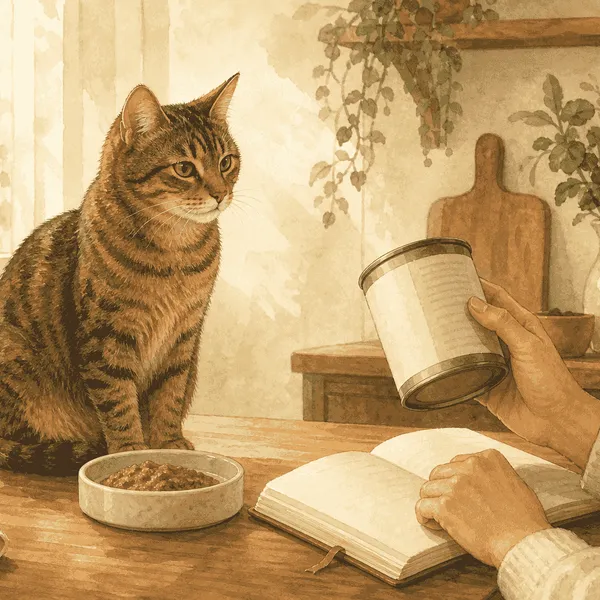
Photograph the nutritional adequacy or intended-use statement on both foods. For the kitten, look for cats and growth. For the adult, check that the food and feeding directions match the adult cat’s life stage, condition, and veterinary plan.
“All life stages” needs a closer look rather than an automatic yes or no. Read the intended-use statement and the separate feeding directions, then ask your veterinarian how that food fits the adult cat in front of you. Pregnancy, nursing, low body condition, disease, and a prescribed therapeutic diet can all change the decision.
AAHA nutrition guidance recommends assessing the whole cat: diet history, weight, body condition, muscle condition, life stage, activity, and health. Package directions start the plan; they do not replace those rechecks.
Build a Two-Cat Feeding Map
For one ordinary day, record the system rather than estimating from memory:
- Write down which food belongs to each cat and the label’s starting directions.
- Measure the full daily amount offered to each cat before dividing it into meals.
- Mark every place food appears, including leftovers, treats, toppers, and the other cat’s bowl.
- Note what remains after each feeding opportunity instead of assuming the intended cat ate it.
- Recheck both cats’ weight and body condition over time with veterinary guidance.
This map does not need calorie calculations or a universal cup amount. Its job is to reveal access. If the adult can graze from the kitten’s bowl all day, or the kitten routinely finishes the adult’s leftovers, the written plan and the real intake are not the same.
Separate Feeding Stations Without Adding Pressure
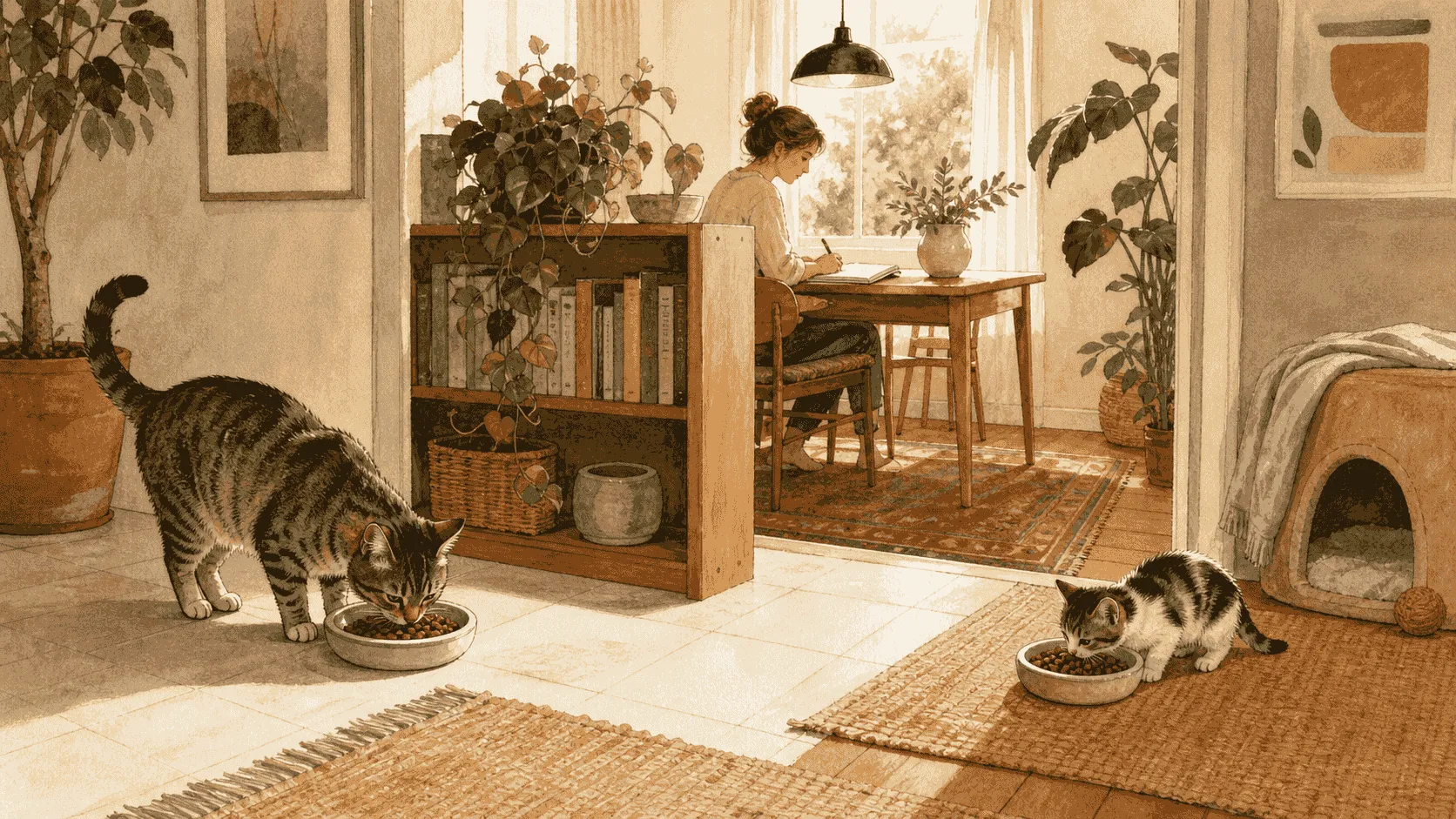
Feline feeding consensus supports multiple small opportunities within the same measured daily allowance and private feeding locations when cats prefer distance. Separation can be simple: different rooms, a visual barrier, or stations positioned so one cat cannot watch and block the other.
Three bowls in a row are still one feeding station if one cat can control the whole area. Look for quiet signs such as waiting at a doorway, leaving when the other cat arrives, rushing, or repeatedly switching bowls. Those observations do not label either cat as “dominant”; they show whether the layout gives both cats reliable access. If shared-space tension is part of the pattern, the guide to signs an adult cat is accepting a new kitten can help you read the wider interaction.
When to Ask Your Veterinarian
Ask your veterinarian before changing a therapeutic diet or making a plan for a pregnant, nursing, underweight, growing, or medically affected cat. Arrange advice if either cat’s weight, appetite, digestion, or body condition changes, or if one cat cannot reliably reach the assigned food.
Your next step is concrete: photograph both label statements, make the one-day feeding map, and move the bowls far enough apart that access is visible. A stolen bite may remain just that. A repeated pattern deserves a feeding plan built for two different cats.
Sources
Petzette's claim cards for this article point to the following scientific, veterinary, or animal-welfare sources.
- AAHA Nutrition And Weight Management Guidelines 2021: Peer-reviewed veterinary clinical guideline
Cline MG, Burns KM, Coe JB, et al. 2021 AAHA Nutrition and Weight Management Guidelines for Dogs and Cats. Journal of the American Animal Hospital Association. 2021;57:153-178.
- AAFCO Pet Food Labels And Nutritional Adequacy: US feed-control association consumer and regulatory guidance
- AAFP Consensus Statement On Feline Feeding Programs: Veterinary consensus statement
- 2024 AAFP Intercat Tension Guideline Brief: Veterinary consensus-guideline brief
- Cats Protection Gradual Cat Introductions: Animal-welfare behavior guidance