Health Signals01 September 2026
Why Do Dogs Smell Like Fritos? A Calm Paw Check
Why do dogs smell like Fritos? Learn what a corn-chip-like paw odor can and cannot tell you, what to record, and when to call your veterinarian.
TextPetzette Editorial
Read4 Min
Evidence status
Source-backed editorial
- Evidence record
- 6 claim cards linked to 8 documented sources.
- Independent expert review
- Not commissioned. Petzette Editorial is responsible for the published wording.
- Source record checked
- 30 August 2026
- Scope
- General information, not an individual diagnosis or treatment plan.
Why do dogs smell like Fritos? If the corn-chip-like scent seems to come from your dog’s paws, treat that phrase as a description, not a diagnosis. The first-year owner decision is whether to leave a familiar, mild pattern alone for now, or record a change and ask a veterinarian what it needs. Odor matters most alongside your dog’s comfort, paw appearance, and ordinary movement.
What a Corn-Chip Odor Can—and Cannot—Tell You
A smell by itself cannot identify what is happening under or between the pads. It does not establish an infection, an allergy, irritation, or a walk-related problem. The safer interpretation is narrower: you have noticed a sensory change worth locating and comparing with your dog’s usual pattern.
Merck Veterinary Manual describes itchy skin as a clinical sign rather than a diagnosis. Scratching, biting, chewing, or licking can have more than one possible cause, and hair loss, scaling, odor, or discharge may accompany some skin infections without identifying the cause at home. That same restraint applies here. Do not let the nickname “Frito feet” do the work of an examination.
If the odor is actually coming from an ear, or it appears with head shaking, redness, swelling, discharge, or pain, use the dog ear-signs guide for that separate decision. This page stays focused on a paw-centered smell and what to observe next.
Start With the Paw, Not a Product
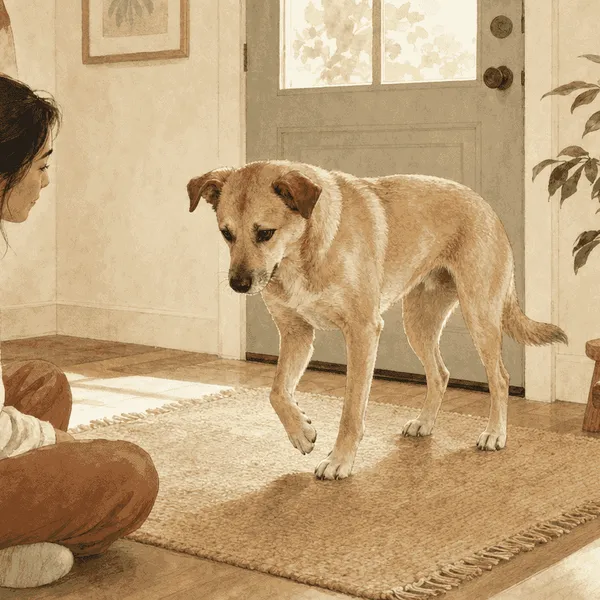
Watch your dog walk before you handle a foot. A shortened step, held-up paw, reluctance to move, or change in ordinary behavior can support a veterinary conversation, but it cannot name the cause. When your dog is comfortable with handling, keep the check visual and brief:
- Look across the pads, between the toes, and around the nails.
- Notice a new crack, cut, swelling, bleeding, discharge, wound, or trapped material.
- Compare one paw with the others and compare today with your dog’s usual walk and stance.
- Stop if your dog pulls away, stiffens, seems painful, or becomes worried.
The timing of a walk can add useful context. Cornell University College of Veterinary Medicine advises checking for cracks, cuts, salt, de-icer, and snowballs after winter walks, then wiping or washing away residue. UC Davis School of Veterinary Medicine recommends checking between the toes after dry, seedy grass because barbed foxtail seed heads can lodge there. These are hazard checks, not a home explanation for the smell. Do not probe a wound, dig for embedded material, or keep handling a sore paw to chase an answer.
Use a Four-Part Paw-Odor Note
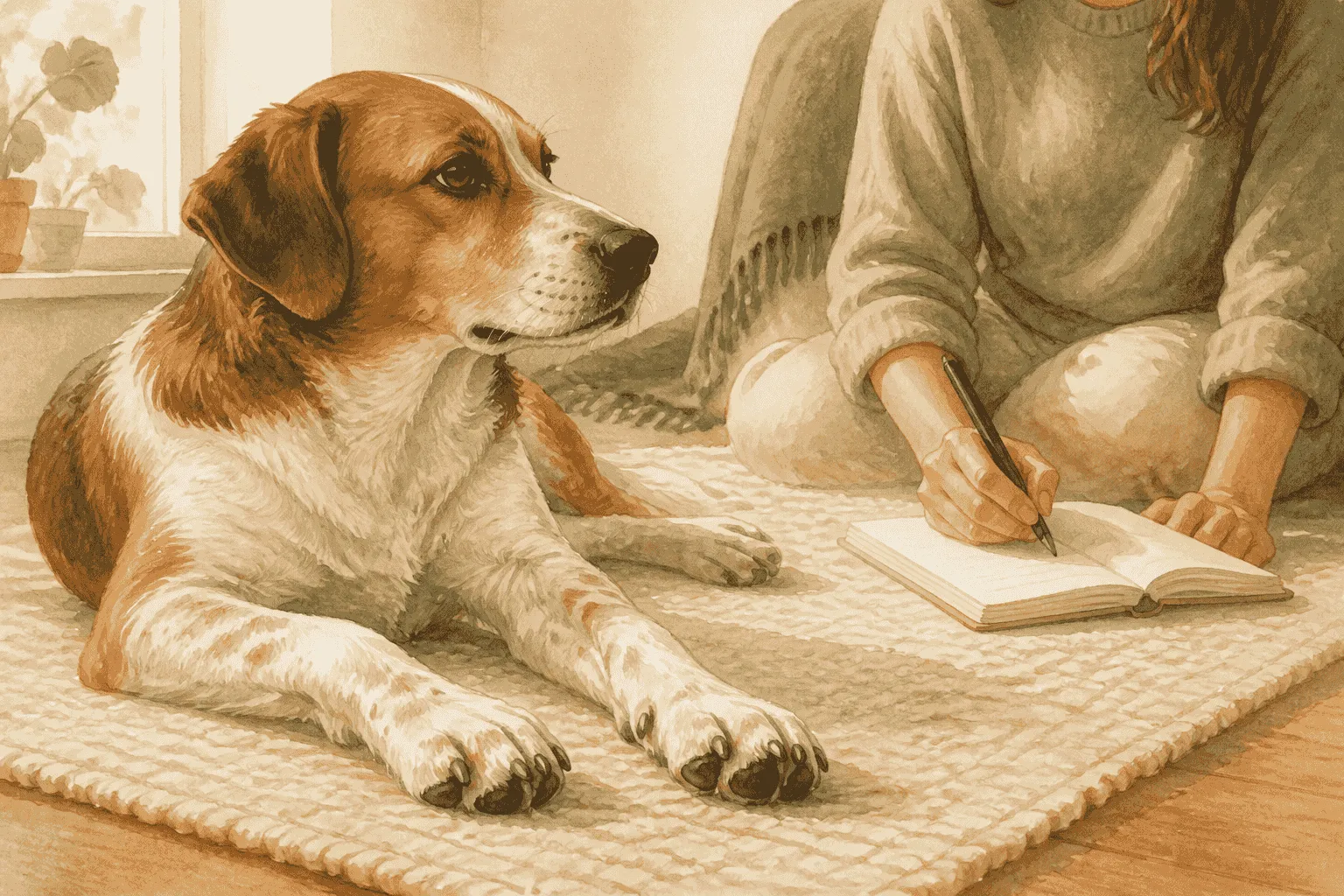
If the smell keeps returning or seems different, make a short note before reaching for a cleaner, balm, cream, shampoo, or other product. A clear record gives your veterinarian a better starting point than a guessed cause.
- Location: Is the odor strongest at one paw, several paws, between the toes, across the pads, or somewhere else?
- Timing: When did you notice it, and was it after a particular outing or a change in the routine?
- Change: Is this new, more noticeable, persistent, or linked to repeated licking or chewing? There is no universal “safe” number of licks or minutes of odor to count.
- Companions: Note redness, hair loss, saliva staining, cracks, swelling, sores, discharge, apparent pain, limping, or a change in eating, sleeping, movement, or behavior.
A calm photograph from a respectful distance can help you compare a visible change over time, but it cannot diagnose the cause. Keep the note literal. “The left front paw smelled stronger after the walk and the dog licked it three times” is more useful than “this is a yeast infection.”
When the Pattern Needs a Veterinarian
Contact your veterinarian when the odor is new, persistent, or worsening, especially if it comes with repeated licking or chewing, visible skin or coat changes, pain, limping, swelling, bleeding, discharge, or a change from your dog’s ordinary behavior. UC Davis guidance also places frequent or intense licking that affects eating or sleeping, or that results in hair loss or a rash, in a veterinary assessment.
Sudden severe pain, inability to bear weight, uncontrolled bleeding, a deep wound, or suspected embedded material needs prompt veterinary direction. Do not wait for the smell to become stronger so you can feel more certain, and do not use a product to test a diagnosis. If routine grooming is the only issue, the calm dog-grooming routine can help you keep handling brief; health changes belong with a veterinarian or qualified professional.
A Small Next Step for Today
Use this three-step check:
- Watch the walk and note whether the dog is moving as usual.
- If the dog is comfortable, look without probing and write down the location, timing, and any visible change.
- Leave treatment choices to your veterinarian if the pattern persists, worsens, or affects comfort or ordinary activity.
Why do dogs smell like Fritos? Sometimes the honest answer is that an odor description cannot tell you enough by itself. Your job is not to force a reassuring or frightening explanation from one smell. Locate the pattern, protect a comfortable paw check, and let a changed or painful picture receive the professional look it needs.
Sources
Petzette's claim cards for this article point to the following scientific, veterinary, or animal-welfare sources.
- AAHA Pain Management Guidelines 2022: Veterinary clinical guideline and consensus statement
- UC Davis Summer Paw Hazards 2026: Veterinary-school practical safety guidance
- Cornell Winter Paw Safety: Veterinary-school seasonal safety guidance
- Merck Veterinary Manual: Itching (Pruritus) in Dogs: Clinician-authored veterinary manual, pet-owner edition
- PDSA: Itchy Skin in Dogs: Veterinary charity symptom guidance
- VCA Nail Trim Stress Reduction: Veterinary hospital behavior guidance
- PDSA Pet Grooming Guidance: Veterinary charity practical-care guidance
- UC Davis School of Veterinary Medicine: Scratching the Itch: Veterinary-school magazine / clinician-informed pet health guidance