Nutrition23 August 2026
How Much to Feed a Dog: A Measured Adult-Dog Starting Plan
How much to feed a dog depends on the food, life stage, activity, and body condition. Start with the label, measure a plan, and recheck.
TextPetzette Editorial
Read4 Min

Evidence status
Source-backed editorial
- Evidence record
- 6 claim cards linked to 6 documented sources.
- Independent expert review
- Not commissioned. Petzette Editorial is responsible for the published wording.
- Source record checked
- 19 July 2026
- Scope
- General information, not an individual diagnosis or treatment plan.
How much to feed a dog is not one universal scoop. For a generally healthy adult dog—especially one newly adopted or starting a new household routine—the safest starting point is the food in front of you, the label’s guidance, and a plan to recheck the individual dog. Measure the full day’s food, count the extras, and watch the pattern before deciding whether anything needs to change.
This guide is for ordinary adult-dog feeding decisions. It does not set a portion for a puppy, a kitten, a homemade or raw diet, a therapeutic food, or a dog with active illness. The puppy feeding plan owns the growth-stage question; this page starts with an adult dog whose baseline still needs to be built.
How Much to Feed a Dog Starts With the Current Food
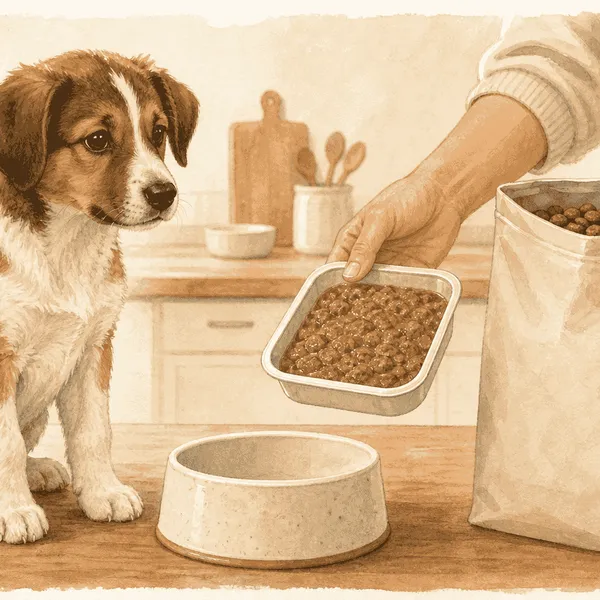
First, read the nutritional adequacy statement and intended use on the food you are actually serving. Whether it is dry food, wet food, or canned food, AAFCO label guidance distinguishes species, life stage, complete-and-balanced foods, and products intended only for intermittent or supplemental feeding. AAFCO does not approve or endorse individual products. For a generally healthy adult, the main food should fit the dog’s species and life stage rather than being chosen from a popularity list.
Then find that food’s feeding directions. The 2021 American Animal Hospital Association nutrition and weight-management guidelines treat package directions as a starting point, not a prescription. The amount depends on the food’s energy density as well as the dog’s activity, body condition, muscle condition, health, and intake. Do not carry the same cup amount from one food to another and assume the daily intake stayed the same.
How Much to Feed a Dog by Weight Is Only a Starting Point
A weight-based chart can help you locate the food’s starting range, but weight alone cannot finish the decision. Two adult dogs at the same weight may have different activity, muscle, health, or body-condition needs. A newly adopted dog may also be moving from a shelter, foster, or previous home into a very different routine, so one early impression is not a reliable long-term baseline.
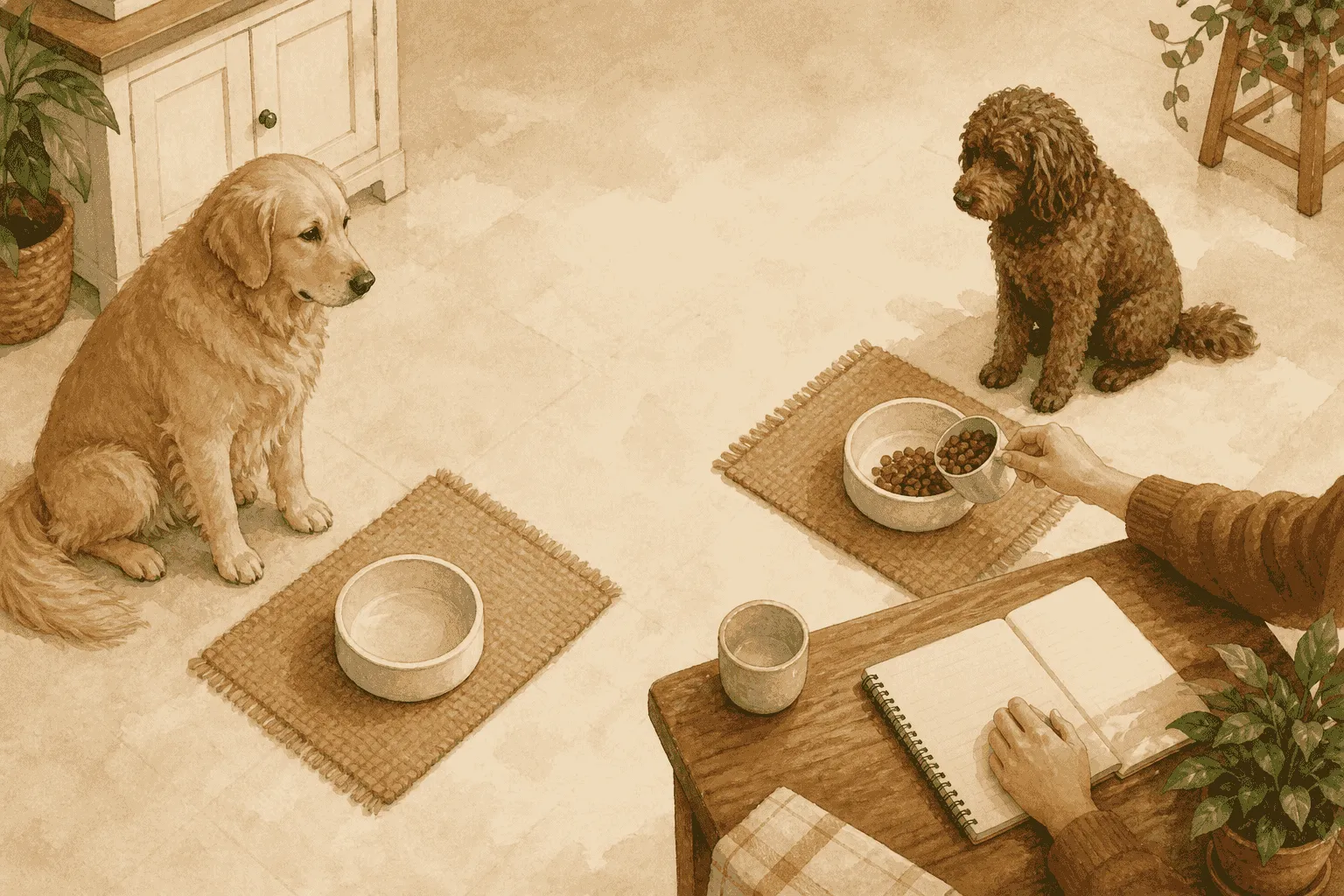
Use one measured starting plan and make it readable. Write down the food, the label’s starting guidance, the date, and how the daily amount will be divided. If your dog lives with another dog, keep the bowls and feeding areas separate enough that you can tell who ate what. An adult dog’s regular food should match the adult’s life stage and condition; calorie-rich puppy food may contribute to excess weight in a less active adult dog when it becomes the regular plan. A stolen bite is a different question from sharing a bowl every day.
Turn the Daily Amount Into a Household Plan
Decide what counts before the first meal. Measure the main food consistently, then record training rewards, toppers, table bites, chews, and food used for medication or handling. AAHA guidance recommends that complete and balanced food provide at least 90 percent of total calories for generally healthy dogs and cats, with treats and other extras at 10 percent or less. That is a ceiling, not a promise that every extra is suitable, and a veterinarian may set a different plan for a dog with disease or a therapeutic diet.
Keep the plan simple enough for every person in the home to follow. A note on the food container or a shared feeding log can prevent two people from adding a second “small” serving. If the dog is newly sharing a home with a resident dog, Dogs Trust guidance also supports supervised early interactions, planned breaks, and separate places to eat and rest. Separate stations are a way to make the amount observable, not a claim that two dogs will automatically get along.
Recheck After the New-Home Baseline Appears
Recheck the dog, not just the scoop. WSAVA body-condition tools describe body condition as an assessment of fat stores through shape, while muscle condition is a separate observation. Body condition is a shape check, not a shame check; a photo or a number cannot diagnose a nutrition problem on its own.
Keep a short record of appetite, stool, energy, movement, the measured food, and the extras. When the dog is otherwise stable and a routine food change is necessary, WSAVA wellness guidance recommends introducing the new diet gradually so acceptance and tolerance can be monitored. Cornell University’s Riney Canine Health Center notes that a rapid food switch can be one possible contributor to diarrhea, but diarrhea can also have many other causes. Do not use a transition schedule to explain away ongoing signs.
If the dog’s food, activity, or routine changes, change one meaningful part at a time when practical. That makes the next observation more useful and keeps you from responding to a new appetite or stool pattern by changing several variables at once.
When a Feeding Question Becomes a Veterinarian Question
Ask your veterinarian before changing a prescribed diet, or when weight and body condition are changing quickly, appetite is different, or the dog has vomiting, diarrhea, pain, low energy, or another sign of illness. Cornell specifically flags blood or black, tarry stool, vomiting, continued appetite loss, lethargy, and a pattern that does not settle as reasons for veterinary advice. If this is sudden or severe, ask your veterinarian rather than adjusting the scoop at home.
Your next step is concrete: photograph the current food’s adequacy statement and feeding directions, write down everything the dog receives in one ordinary day, and bring that record to the next veterinary check. The label supplies a starting point. The adult dog in front of you—and the pattern you can actually observe—decides what deserves a closer conversation.
Sources
Petzette's claim cards for this article point to the following scientific, veterinary, or animal-welfare sources.
- AAHA Nutrition And Weight Management Guidelines 2021: Peer-reviewed veterinary clinical guideline
Cline MG, Burns KM, Coe JB, et al. 2021 AAHA Nutrition and Weight Management Guidelines for Dogs and Cats. Journal of the American Animal Hospital Association. 2021;57:153-178.
- AAFCO Pet Food Labels And Nutritional Adequacy: US feed-control association consumer and regulatory guidance
- WSAVA Body Condition Score Tools: Veterinary association nutrition toolkit
- WSAVA Principles Of Wellness 2025: Global veterinary-association wellness guidance
- Cornell Dog Diarrhea Guidance: Veterinary-school clinical owner guidance
- Dogs Trust New Dog And Puppy Introductions: Current first-party dog-welfare behavior guidance