Health Signals18 September 2026
Is Cinnamon Toxic to Dogs? Separate Plant, Spice, and Oil
Is cinnamon toxic to dogs? Separate a named plant from powder, food, and oil, then keep the label and know when to call a veterinarian.
TextPetzette Editorial
Read5 Min

Evidence status
Source-backed editorial
- Evidence record
- 3 claim cards linked to 3 documented sources.
- Independent expert review
- Not commissioned. Petzette Editorial is responsible for the published wording.
- Source record checked
- 11 September 2026
- Scope
- General information, not an individual diagnosis or treatment plan.
Is cinnamon toxic to dogs? The safer answer depends on what the word “cinnamon” describes. ASPCA lists the named cinnamon plant, Cinnamomum zeylanicum, as non-toxic to dogs. That classification does not clear a jar of powder, a cinnamon stick, a baked recipe, or an essential-oil product. Identify the form first, keep the label, and ask a veterinarian or animal poison-control service when the exposure is concentrated, inhaled, large, or uncertain.
This is a form-and-next-call guide, not a dose chart. It cannot diagnose a dog, decide that an unknown product is harmless, or replace professional advice after a possible exposure.
Start With the Exact Cinnamon Item
Before you interpret the word “cinnamon,” look at the thing your dog could reach. The answer changes when the item changes:
- A named plant: a potted or garden plant that can be matched to Cinnamomum zeylanicum.
- Dry spice: loose powder, a cinnamon stick, or a container of ground seasoning.
- Prepared food: a cookie, drink, supplement, or other recipe with cinnamon among its ingredients.
- A concentrated product: essential oil, diffuser liquid, extract, cosmetic, or cleaner using cinnamon in its name.
ASPCA’s individual Cinnamon record answers one narrow question: its named plant entry is listed as non-toxic to dogs, cats, and horses. It does not identify an unlabeled plant, review every recipe, or classify an oil bottle because the label includes the same familiar word.
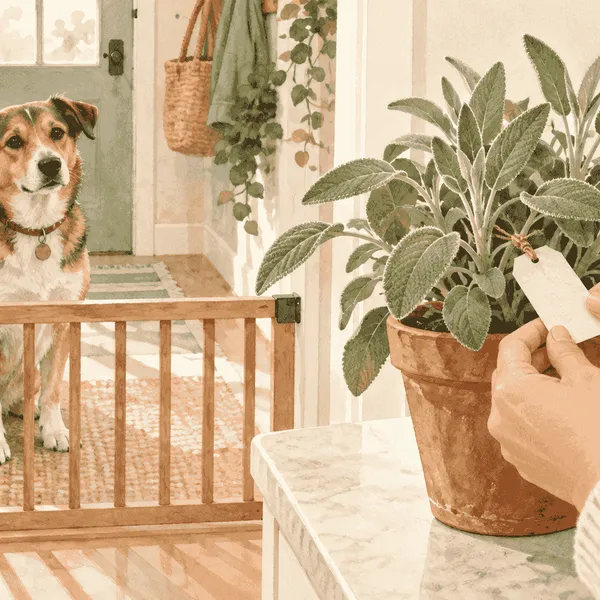
If you are still making a new-dog home safe, save the plant tag and keep spices, sticks, extracts, and oils closed and out of reach. The whole-home plant safety checklist can help you keep exact plant names and product labels together rather than relying on memory.
“Non-Toxic” Is Not an Edible Label
Poison-control classifications have a specific job. “Non-toxic” for a named plant is not a recommendation to feed that plant, a universal safe-amount rule, or permission to use a cinnamon product around a dog. A dog can also have gastrointestinal upset after eating plant material that is listed as non-toxic, so a label classification should not be used to dismiss a current change.
The form and route still matter. A dog that sniffed near a closed jar is not the same exposure question as a dog that may have licked loose powder, chewed a stick, reached a mixed recipe, or contacted an oil product. Do not turn those situations into one online yes-or-no answer. If the item is unknown, keep the uncertainty in the record instead of borrowing reassurance from the named-plant entry.
This is also why the cat version of the cinnamon form-and-oil guide is a related page, not a substitute for dog-specific advice. The shared habit is to identify the material before choosing the next step; the individual pet and exposure still belong in the professional conversation.
Make an Exposure Record Before Details Disappear
If your dog may have reached cinnamon, move the dog away from the source calmly and preserve the useful evidence. Keep the container, plant tag, ingredient panel, or a clear product label. Write down:
- the exact name and form of the item;
- whether the possible route was licking, swallowing, skin contact, or inhalation;
- what part or product may be missing, without inventing an exact amount;
- the best estimate of when access happened; and
- any new change you notice in your dog’s behavior or physical condition.
Do not make the dog vomit, give medication, or try a household remedy unless a veterinarian or poison-control professional specifically directs you. A home action can change the next assessment and can create a second problem while you are still unsure what the original item was.

When to Call a Veterinarian or Poison Control
Call promptly when the exposure may involve an essential-oil or other concentrated product, inhaled powder, a large direct-spice exposure, or an unknown route or amount. Call sooner when your dog is suddenly unwell or the pattern is changing. You do not need to identify the cause before making the call; the useful information is the item, label, route, timing, and what you can observe.
The American Veterinary Medical Association’s pet first-aid guidance supports keeping product information available and contacting a veterinarian or animal poison-control center rather than improvising at home. Follow the professional’s instructions about what to do next. Do not use a symptom list to calculate a safe amount, and do not wait for a dramatic sign before asking whether the exposure needs attention.
If the only question is whether a named plant is the ASPCA Cinnamon entry, keep the scientific name and the source classification with your household records. If the question is about powder, food, a stick, or oil, describe that exact form instead of saying only “cinnamon.” Precision helps the veterinary team answer the real exposure question.
Keep Cinnamon Out of the Next Reach
Store ground spice and sticks in closed cupboards. Keep extracts, essential oils, diffusers, and mixed products where a curious dog cannot nose, paw, or chew them open. Do not apply cinnamon oil to a dog or use a scented product as a calming shortcut. A familiar kitchen smell is not a safety assessment.
When cooking, put the finished recipe and the ingredient container away before letting a dog investigate the room. If a spill happens, keep the dog out while you identify what was spilled and clean it according to the product label. If any amount, route, or product remains uncertain, keep the package and call rather than trying to settle the question by watching for symptoms.
Use a Four-Part Cinnamon Decision
- Identify: Is it the named plant, dry spice, a prepared food, or a concentrated product?
- Preserve: Keep the original label, plant tag, ingredient list, and the best timing estimate.
- Protect: Move the dog away and do not induce vomiting, give medication, or use a home remedy without professional direction.
- Call: Contact a veterinarian or animal poison-control service for a concentrated, inhaled, large, unknown, or concerning exposure.
The useful first-year habit is not memorizing a single cinnamon verdict. It is learning to separate a named plant listing from the many products that share its name, then keeping enough evidence for a professional to guide the next step. This article cannot choose treatment for an individual dog, and uncertainty is a reason to make the call—not a reason to guess.
Sources
Petzette's claim cards for this article point to the following scientific, veterinary, or animal-welfare sources.
- AVMA Pet First Aid: Poison Response Boundary: Veterinary-association first-aid brochure
- ASPCA And Pet Poison Helpline Cinnamon Cat Safety: Animal poison-control database and veterinary poison-control guidance on cinnamon forms and cat exposure boundaries
- Spider Plant Poison-Control Classification And Name Check: Animal poison-control databases and veterinary manual guidance