Health Signals06 September 2026
Mobile Dog Grooming: A Calm First-Visit Fit Check
Considering mobile dog grooming? Use your dog's coat, handling comfort, service questions, and clear vet boundaries to plan a safer first visit.
TextPetzette Editorial
Read6 Min

Evidence status
Source-backed editorial
- Evidence record
- 3 claim cards linked to 3 documented sources.
- Independent expert review
- Not commissioned. Petzette Editorial is responsible for the published wording.
- Source record checked
- 14 July 2026
- Scope
- General information, not an individual diagnosis or treatment plan.
Mobile dog grooming can sound like a simple answer for a new owner: a groomer comes to you, the coat gets attention, and the day moves on. But the word “mobile” does not tell you whether a visit fits this dog, this coat, or this handling history. The useful decision is narrower: can you choose a service and first appointment that keep the grooming job clear, the dog’s comfort visible, and health questions with a veterinarian?
This is not a ranking of mobile services or a promise that one format is calmer for each dog. It is a preparation and fit check.
Start With the Grooming Job, Not the Service Label
Write down the actual job before you book. “Grooming” can mean a short brush, a bath, coat clipping, nail care, a mat assessment, or several separate tasks. One task does not automatically make every other task suitable for the same visit.
PDSA says a dog’s grooming rhythm should reflect coat length, texture, season, and the individual dog rather than one universal calendar. Longer, denser, or curlier coats often need more attention, while many short coats need less. Note what you can observe without diagnosing anything: coat texture, tangling, calm handling time, and recent changes.
If the coat is tightly matted, the skin looks different, the dog reacts suddenly to touch, or you are unsure which tools or process are appropriate, do not turn the first booking into a home experiment. PDSA identifies difficult matting and uncertainty about coat care as reasons to use a reputable professional groomer or ask a veterinarian. Our calm dog-grooming routine covers the everyday coat-care decision; this guide focuses on choosing and preparing for outside help.
Decide What Your Dog Can Practice Before the Appointment
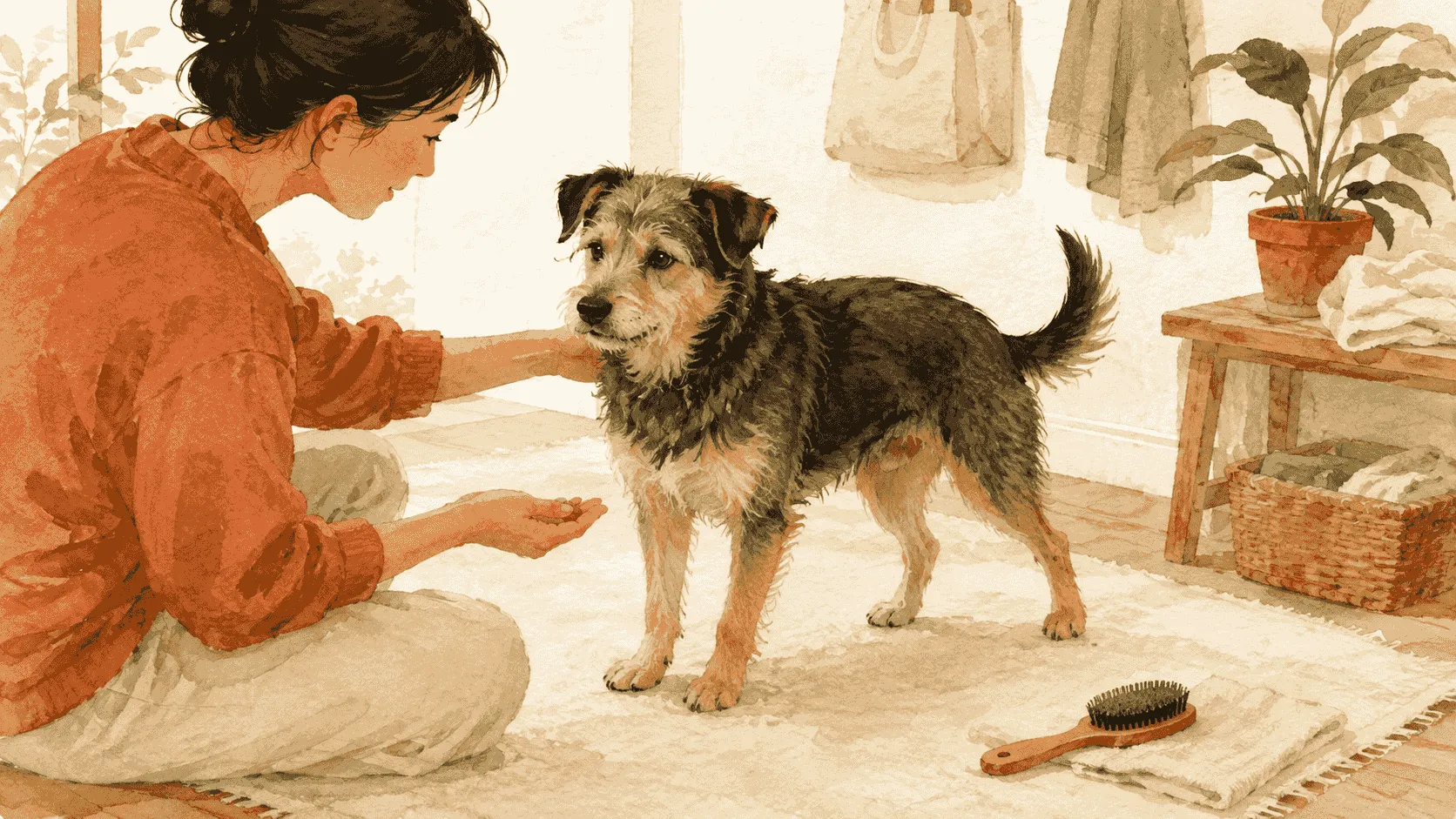
A first visit does not need to begin with a full grooming performance. It can begin with a tiny handling rehearsal at home. Dogs Trust recommends short, calm sessions that start on an already comfortable body area. Touch briefly, take your hand away, reward if your dog wants the reward, and stop while the body remains relaxed.
Use one small step at a time:
- Choose a familiar place and a body area your dog already accepts.
- Touch for a moment, then remove your hand before the dog needs to pull away.
- Pause and let your dog choose whether to stay nearby.
- Repeat only if the next step still looks easy; otherwise finish the session.
This is preparation, not a test of obedience. A dog who turns away, stiffens, withdraws a paw, tries to leave, or becomes worried is giving you useful information. VCA’s veterinary guidance on nail-trim stress likewise recommends tiny, rewarded steps and says established fear should not be rushed. Do not hold a dog still until the job is finished, and do not assume a treat overrides pain or fear.
Tell the groomer what happened in plain language: “My dog accepted one brief shoulder touch but left when I touched the paws.” That is more useful than declaring that your dog is difficult or naming a diagnosis.
Ask Questions Before You Book
The first conversation is part of the safety plan. Ask the groomer to describe the visit clearly. Useful questions include:
- Where exactly will the dog be handled, and what happens before the first tool or wash is introduced?
- Which tasks are planned for this visit, and can the appointment stay limited to the task the dog can manage?
- How do you respond if the dog becomes worried, tries to leave, or cannot tolerate a particular body area?
- What is your plan if you find tight matting, a skin change, an itchy or smelly ear, or another concern outside routine grooming?
- Can we agree in advance on a pause or stop, and what information should I take back to my veterinarian?
You are listening for a process that leaves room for observation and adjustment. A sensible answer may include a shorter visit, a pause, a referral, or a gradual return rather than a promise to complete everything at any cost. If a service treats fear as something to overpower, dismisses sudden sensitivity, or promises that one visit will solve a handling problem, keep looking.
Mobile service can change the setting, but it does not remove the need for a suitable plan. Confirm where you will meet the groomer, what the dog experiences first, and how you can keep the approach quiet. A van, home visit, or familiar driveway does not automatically make the appointment comfortable.
Build a Small First-Visit Plan
Keep the first appointment readable. Share your dog’s age, coat history, previous grooming experience, and any known veterinary instructions. Describe what your dog accepts and what makes the body tense. If a health change is part of the story, say that plainly rather than asking the groomer to work out the cause.
Before the appointment:
- Confirm the exact task and where it will happen.
- Avoid adding several new handling challenges on the same day.
- Bring the information the groomer requested, including relevant veterinary guidance.
- Agree on the signal or decision that means the session pauses.
On the day, give your dog room to notice the person and setting without being dragged toward the equipment. Watch the whole body, not just whether the dog remains still. A quiet dog can still be worried. If the dog becomes tense or tries to leave, say so early; stopping sooner can protect the next session.
The goal is not the longest possible appointment. Leave with a clearer record of what this dog can handle today and what the next step should be.
Know When Grooming Should Pause for Veterinary Help
Grooming observations are not a diagnosis. PDSA advises contacting a veterinarian about skin or coat changes and about ears that become itchy, smelly, or unusually waxy. A sudden reaction to touch, persistent pain, bleeding, breathing difficulty, or a marked change from your dog’s usual behavior also deserves veterinary advice rather than a more forceful grooming attempt.
Do not cut tight mats close to the skin, clean a painful or smelly ear, choose a medicated shampoo, or use a home remedy based on an article. A reputable groomer may be able to explain what they can and cannot safely do, but a veterinarian should guide health concerns. Severe fear, bite risk, injury risk, or a dog who cannot participate safely may also need qualified behavior support alongside veterinary assessment.
That boundary is especially important with a newly adopted dog. The coat may be the first visible issue, but the dog’s history, baseline, and comfort with handling may still be unfamiliar. Give the professional enough information to work with the individual in front of them, and let a health professional decide what a symptom means.
A Five-Question Go/No-Go Check
Before confirming the appointment, answer these five questions:
- Do I know the exact grooming task rather than relying on the word “grooming”?
- Can I describe what my dog accepts, avoids, or has recently changed?
- Has the service explained how it handles pauses, worry, matting, and health concerns?
- Is there a clear stop point if the dog cannot stay comfortable?
- Do I know when the veterinarian, not the groomer or an online guide, should take over?
If the answers are mostly yes, book the smallest sensible first step and share the plan in advance. If one answer is no, ask another question or delay. Mobile dog grooming is useful only when the service format, coat work, handling pace, and professional boundaries fit the dog you have today.
Sources
Petzette's claim cards for this article point to the following scientific, veterinary, or animal-welfare sources.
- PDSA Pet Grooming Guidance: Veterinary charity practical-care guidance
- VCA Nail Trim Stress Reduction: Veterinary hospital behavior guidance
- Dogs Trust Gradual Handling Guidance: Animal-welfare cooperative handling guidance