Health Signals27 August 2026
Dog Grooming Table: A Calm Setup and Safety Check
Considering a dog grooming table? Use this product-neutral checklist to plan short, calm care and know when a floor setup or professional help is safer.
TextPetzette Editorial
Read4 Min
Evidence status
Source-backed editorial
- Evidence record
- 4 claim cards linked to 4 documented sources.
- Independent expert review
- Not commissioned. Petzette Editorial is responsible for the published wording.
- Source record checked
- 14 July 2026
- Scope
- General information, not an individual diagnosis or treatment plan.
Considering a dog grooming table? Treat it as a setup decision, not a shortcut to a finished groom. The useful question is whether this arrangement lets you keep care brief, predictable, and comfortable for the individual dog. If it requires pinning, rushing, or working through worry, it is the wrong setup for that moment.
A table also does not replace the coat-specific planning in our calm dog grooming routine. It answers a narrower question: can the place where grooming happens help you notice, pause, and hand difficult work to a professional?
Start With the Job, Not the Dog Grooming Table
Write down the one task you are considering: a few brush strokes, a paw touch, a nail-care step, or a routine bath. These are separate jobs, and a table that seems useful for one does not automatically make every other job easier. The coat, season, density, curl, and the individual dog can all change what is practical.
PDSA veterinary guidance gives broad brushing examples—from daily attention for many long coats to a few times each week for many medium coats and about weekly for many short coats—but presents them as starting points, not universal prescriptions. Use the same restraint with equipment. Do not choose a table because a size label or a promise sounds definitive; choose a setup only when it helps you work on the small task in front of you.
Before the first session, ask:
- What is the smallest useful version of this task?
- Can the dog remain relaxed enough to notice and respond?
- Can I stop without turning the table into a struggle?
- Do I know which part belongs with a groomer or veterinarian instead?
If the answer to the second or third question is no, a table is not a solution to force into the routine.
Keep the First Step Voluntary
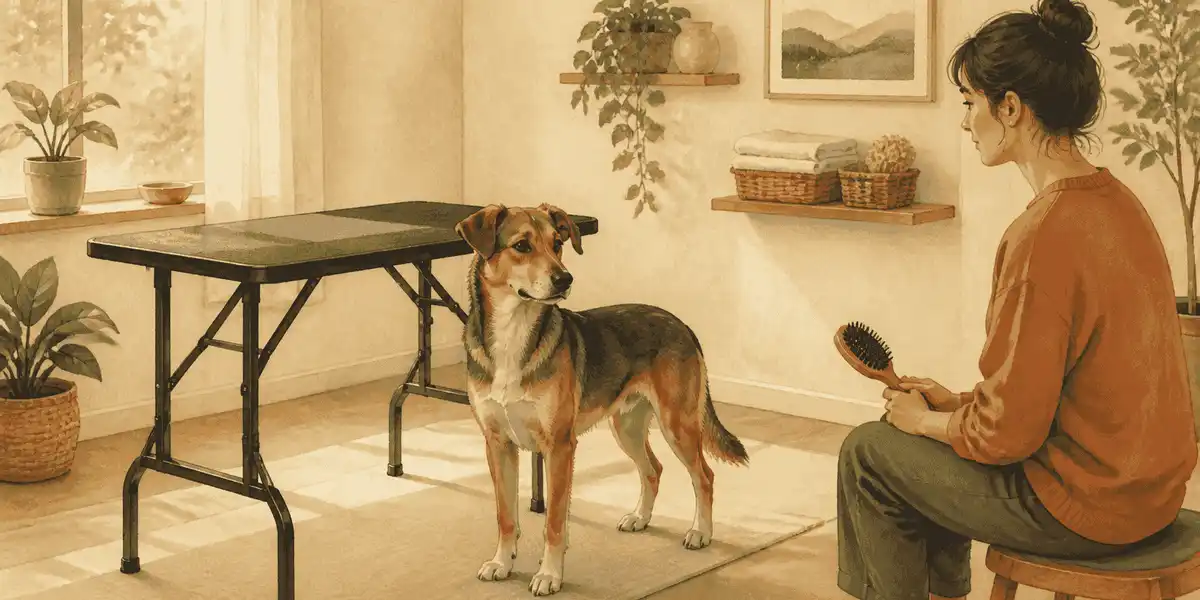
Dogs Trust handling guidance recommends a short, predictable sequence: begin with an area the dog already accepts, touch briefly, take the hand away, and then reward. The dog’s body—not a timer—sets the pace. A first session may be approaching the setup, looking at the brush, or accepting one gentle touch. Finishing every area is not the goal.
Set the tool down before you invite the dog closer. Leave enough room for the dog to change position or step away safely, and keep the surrounding area quiet. A dog’s resting place should have free entry and exit and should not become a place where people drag the dog out; the same choice principle matters during care. If you need to hold the dog in place to complete the task, stop and rethink the setup rather than adding pressure.
Watch the whole dog for a change from the familiar baseline: a stiffening body, paw withdrawal, turning away, repeated attempts to leave, or a sudden shift in tolerance. One signal is not a diagnosis, but it is useful information. End the session while the next repetition still feels possible.
Make a Table a Small Part of the Routine
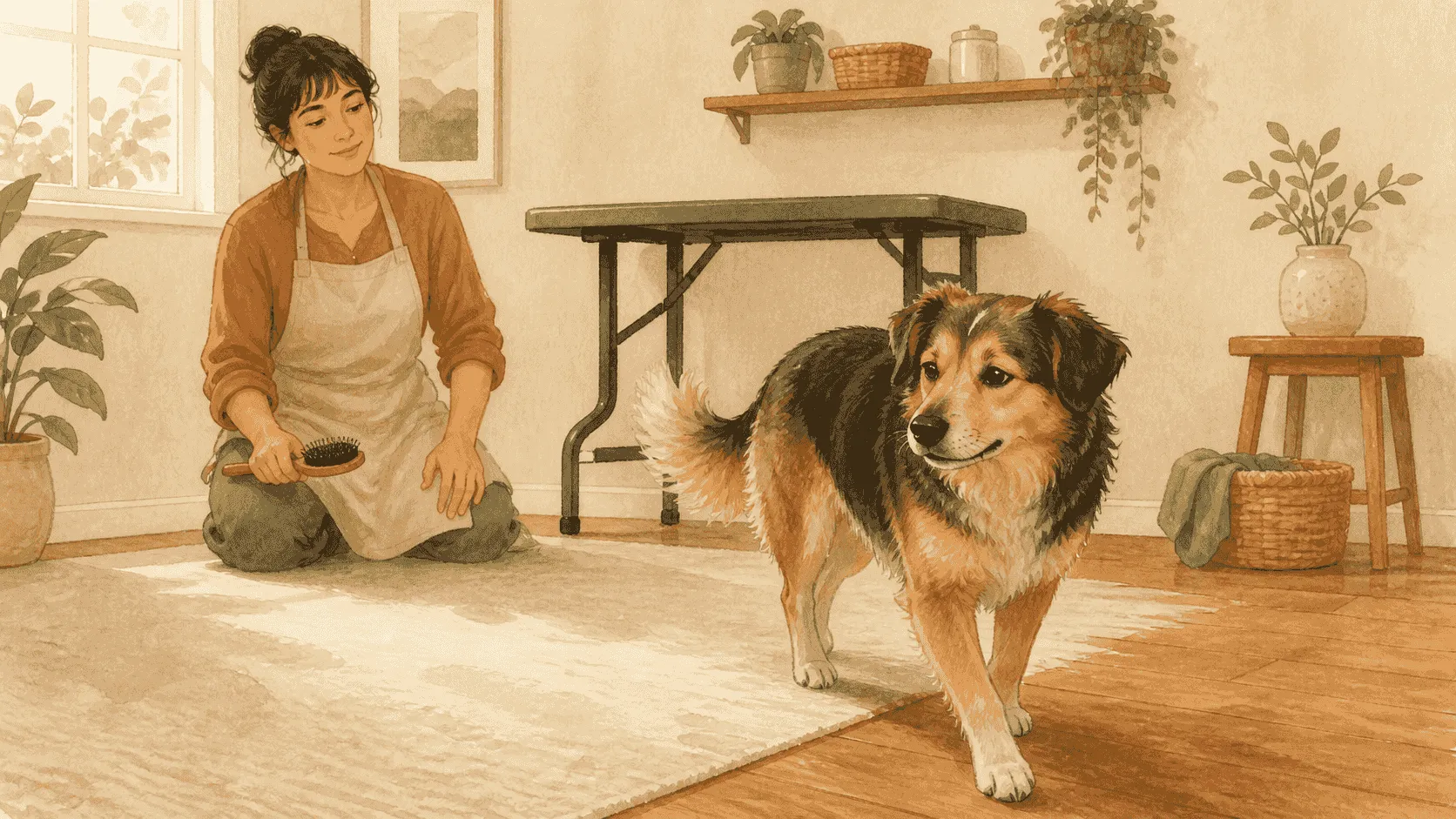
VCA veterinary guidance on nail-trim stress recommends tiny, rewarded steps, short and frequent sessions, and increasing difficulty only while the dog is comfortable. That principle applies to the decision around a grooming table: introduce one variable at a time. The table, the tool, the touch, and the task do not all need to become unfamiliar on the same day.
Try this sequence:
- Prepare only the tool for today’s task and remove distractions.
- Let the dog investigate the area without being cornered.
- Reward a relaxed pause, then stop if that is all the dog can offer.
- If the dog stays comfortable, do one tiny touch-and-release repetition.
- Record what was easy, what changed, and where you stopped.
This is not a grooming-table training guarantee. Some dogs may find a different, lower-pressure arrangement easier, and a new dog may need time to show you what handling has meant in the past. The best setup is the one that keeps the task readable and the next choice smaller.
Know When the Table Should Leave the Plan
PDSA advises stopping when a pet is worried or stressed and contacting a veterinarian about skin or coat changes, or ears that become itchy, smelly, or unusually waxy. Tight matting, pain, a sudden change, or uncertainty about the coat is not an invitation to add scissors, cleaners, or medicated products at home. It is a reason to ask a reputable groomer or veterinarian.
Move the whole job to qualified help when fear is severe, there is bite or injury risk, or the dog cannot be handled without escalating distress. A table cannot identify the cause of a health change, and it should never be used to work around one. If this is sudden or severe, ask your veterinarian before trying to continue routine care.
A Five-Question Dog Grooming Table Check
Before the next session, answer these questions:
- Is this one small task matched to this dog’s coat and today’s needs?
- Can the dog stay involved without being pinned or rushed?
- Is there a clear pause point before worry rises?
- Can the dog move away safely when the session ends?
- Do any changes belong with a veterinarian or professional groomer?
If the setup passes those checks, keep the session modest and repeatable. If it fails one, the useful decision may be to use a different setup, postpone the task, or get help. Good grooming equipment supports cooperative care; it does not replace it.
Sources
Petzette's claim cards for this article point to the following scientific, veterinary, or animal-welfare sources.
- Dogs Trust Gradual Handling Guidance: Animal-welfare cooperative handling guidance
- VCA Nail Trim Stress Reduction: Veterinary hospital behavior guidance
- PDSA Pet Grooming Guidance: Veterinary charity practical-care guidance
- Dogs Trust Safe Space For Dogs: Animal-welfare home-environment guidance