Health Signals15 September 2026
Senior Dog Drinking a Lot of Water: What to Record and Ask a Veterinarian
A senior dog drinking more than usual needs context, not a home diagnosis. Learn what to record and what to share with your veterinarian.
TextPetzette Editorial
Read5 Min
Evidence status
Source-backed editorial
- Evidence record
- 1 claim card linked to 1 documented source.
- Independent expert review
- Not commissioned. Petzette Editorial is responsible for the published wording.
- Source record checked
- 15 September 2026
- Scope
- General information, not an individual diagnosis or treatment plan.
If your senior dog is drinking a lot of water, the useful first question is not which disease the bowl has revealed. It is what changed from this dog’s usual pattern, and what information can you give a veterinarian. A new or ongoing change in drinking or urination is a history signal for professional assessment, not a home diagnosis.
An empty bowl, an extra trip outside, or an accident can be worth recording. None of those observations can tell you why the pattern changed. They also do not make it safe to restrict water while you wait for an answer.
What “A Lot” Can—and Cannot—Tell You
There is no safe conclusion to draw from the phrase “a lot” by itself. A dog’s usual pattern matters, and water use can be difficult to interpret when bowls are shared or when day-to-day conditions vary. A single refill or one day of watching is not a diagnostic test or a complete measure of what the dog needs.
Cornell Richard P. Riney Canine Health Center’s April 2024 owner guidance recommends veterinary evaluation when a dog is drinking or urinating more than usual. Its practical boundary is important for an older dog: the change should not be dismissed as normal aging simply because of the dog’s life stage.
The same observation can sit inside very different contexts. Heat, activity, medication, a change in routine, and medical or behavioral explanations can affect how a caregiver interprets a bowl or a trip outside. The observation does not sort those possibilities at home. Do not label it as diabetes, kidney disease, anxiety, or “just getting old” from the visible sign alone.
Build a Short, Useful Record
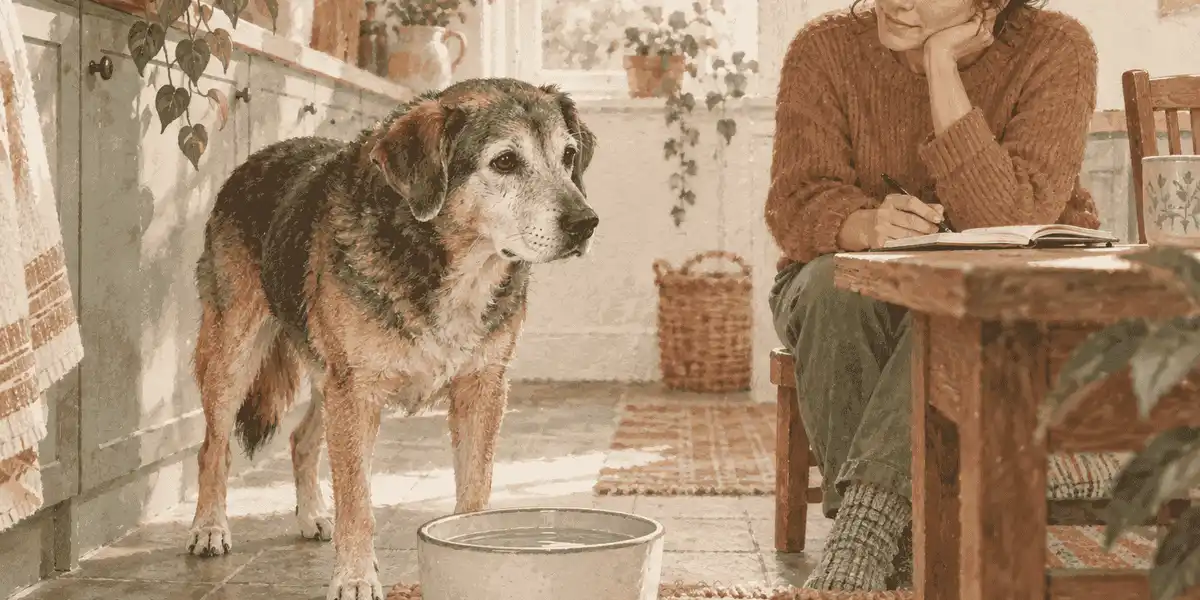
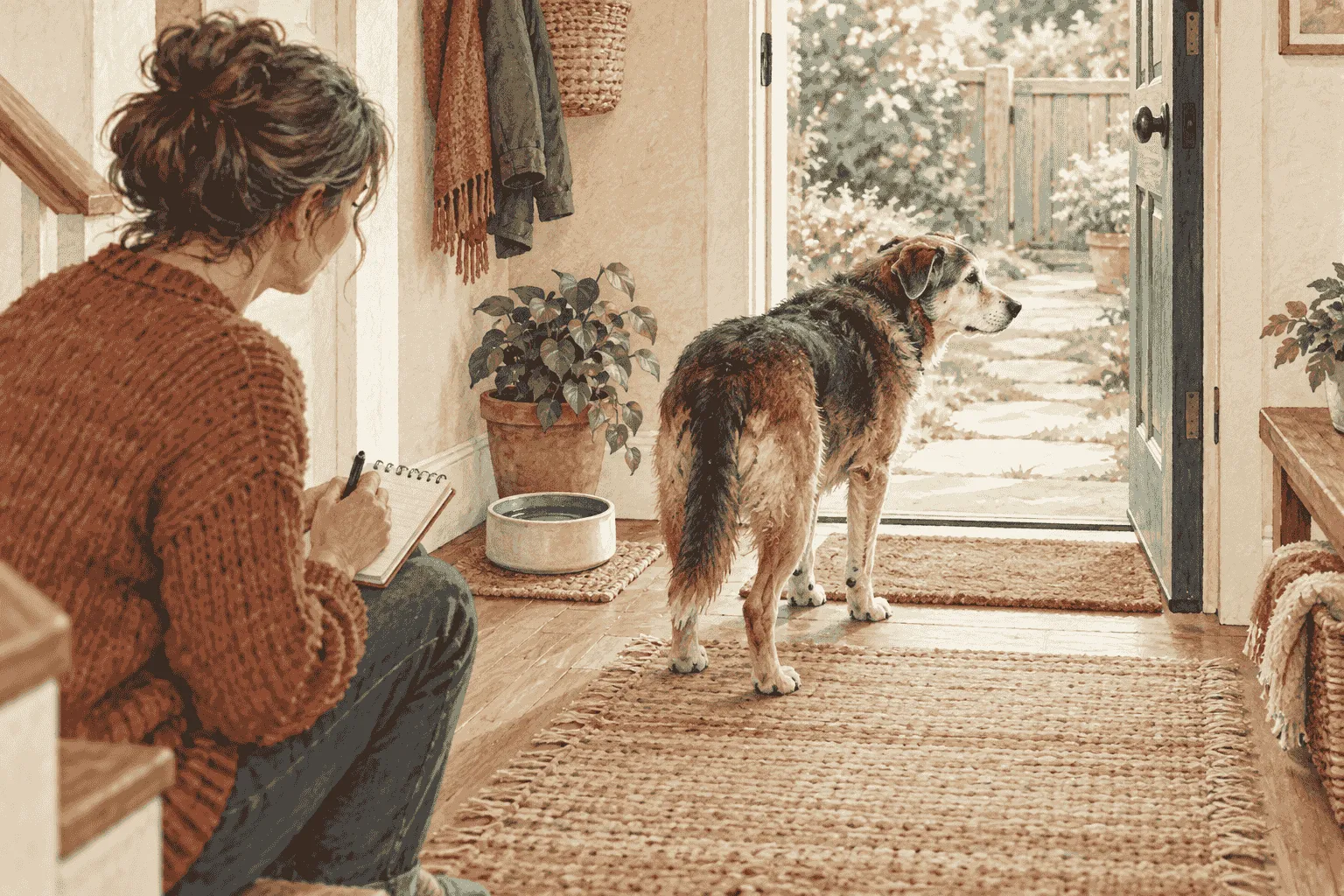
Before you call, make a note that describes the pattern without trying to name the cause. Keep it simple enough that you can maintain it for the veterinary conversation:
- Date the change. Write when you first noticed it and whether it has happened once, returned, or continued.
- Compare it with usual. Describe what is different from this dog’s normal drinking or urination pattern. “Refilled the bowl twice today” or “asked to go out more often than usual” is more useful than a disease label.
- Describe the setup. Note whether the bowl is shared, whether there are several water locations, and what you actually observed. An empty bowl is history, not a measurement of a diagnosis.
- Record the other pattern. Note any new urination change you can see, such as extra trips outside or an accident, without assuming that it has the same explanation as the drinking change.
- Add relevant context. Include anything that clearly changed around the same time, such as heat, activity, routine, or medication. Context helps a clinic ask better questions; it does not let you rule a cause in or out.
Do not turn the record into a home test. A photo of the bowl, an app, a video, or a caregiver estimate cannot establish a severity score or diagnose the reason for the change. If more than one person cares for the dog, ask everyone to describe the same ordinary pattern rather than competing over an exact number.
Keep Water Available While You Arrange Advice
Do not withhold or restrict water to see whether the dog “really needs it.” Cornell’s guidance warns against water restriction before assessment. A 2026 review of psychogenic polydipsia in dogs discusses how a confirmed clinical problem may be approached, but its diagnostic boundary comes first: no specific test establishes that explanation, and other causes need systematic exclusion. That is not a home experiment.
Likewise, do not use a change in drinking as a reason to start a medicine, change the diet, add electrolytes, test urine at home, or improvise another treatment. This page is for observation and referral. The next step is a veterinary conversation about the dog’s own history and what assessment is appropriate.
There is no fixed waiting period that can be safely chosen from an empty bowl or one extra trip outside. If the change is new, ongoing, or concerning, share it with your veterinary team rather than waiting for the pattern to prove a theory. If you are unsure what to say, send the short record and explain what the dog’s usual pattern was before this change.
Why Senior Status Is Not the Explanation
Older dogs deserve an individual plan, but “senior” is not a cause. The senior dog care observation plan covers home routes, movement observations, and the boundary between making a space easier to use and asking a veterinarian about a change. This page owns a narrower question: how to treat a drinking or urination change as useful history rather than as proof of a condition.
If the dog’s age or life stage is uncertain, the senior life-stage framework can help you separate that planning question from the health observation. You do not need to settle the label before reporting a changed pattern. A dog can be in a senior life stage and still need the same careful attention to what is ordinary for that individual.
What to Bring to the Veterinary Conversation
The current Journal of Small Animal Practice review by Pavlovsky, the 2019 In Practice review by McGrotty and Randell, Cornell’s owner guidance, and the Merck Veterinary Manual all support the same modest conclusion here: visible drinking and urination changes are not enough to name a cause. Merck’s current diabetes reference requires persistent laboratory findings rather than signs alone.
Bring the timeline, the comparison with usual, the water setup, the urination observations, and the relevant context. Ask what the clinic wants you to observe next and which information would make the history clearer. Let the veterinary team decide what assessment is appropriate instead of trying to turn the bowl into a test.
Your next step is small: leave water available, write down what changed from normal, and contact a veterinarian about a new or ongoing difference. The record can make the call more useful; it cannot replace the assessment.
Sources
Petzette's claim cards for this article point to the following scientific, veterinary, or animal-welfare sources.
- A Dog's Change In Drinking Or Urination Does Not Name A Cause: Cross-source canine drinking-and-urination observation and veterinary-assessment evidence synthesis