Behavior28 August 2026
Why Do Dogs Sniff Your Crotch? A Calm Greeting Guide
Why do dogs sniff your crotch? Learn what scent can and cannot tell you, how to respond calmly, and when to create more space.
TextPetzette Editorial
Read4 Min
Evidence status
Source-backed editorial
- Evidence record
- 3 claim cards linked to 3 documented sources.
- Independent expert review
- Not commissioned. Petzette Editorial is responsible for the published wording.
- Source record checked
- 20 July 2026
- Scope
- General guidance. Individual animals and circumstances can differ.
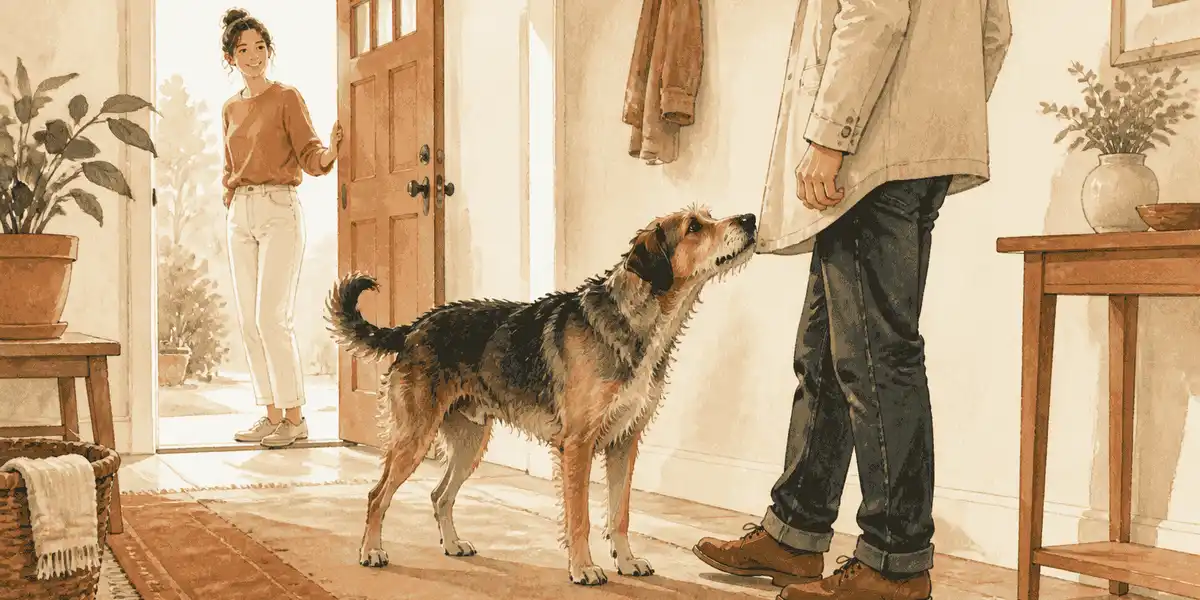
Why do dogs sniff your crotch? For a new dog owner or someone greeting an unfamiliar dog, the useful answer is modest: smell may be one part of what a dog notices in a close approach, but a sniff does not announce a fixed motive. The first-year decision is what to do next—stay still, make space, or end the greeting—without turning an awkward moment into a test.
What Scent Can—and Cannot—Tell You
An 18-dog 2024 experiment published in Scientific Reports tested whether odors from stressed or relaxed unfamiliar people changed responses in a cognitive-bias task. The dogs were exposed to scent from three unfamiliar volunteers. When the stress odor appeared in the third test session, dogs were less likely to approach one near-negative ambiguous bowl location than under the blank-cloth condition.
That is useful evidence that smell may be one part of a dog’s context. It is not a crotch-sniffing experiment, and it did not test an owner’s everyday scent in a home or public greeting. The effect also depended on session order and the particular bowl location. It does not show that a dog can identify exactly how a person feels, read a person’s character, or explain the purpose of one close-range sniff.
So if you are searching “why do dogs smell your crotch,” keep the interpretation unfinished. A dog may be gathering information through smell, but the approved evidence does not name one universal reason for the behavior. The dog-to-dog sniffing guide covers the related but different question of how two dogs should meet.
Treat the Sniff as a Greeting Question, Not a Verdict
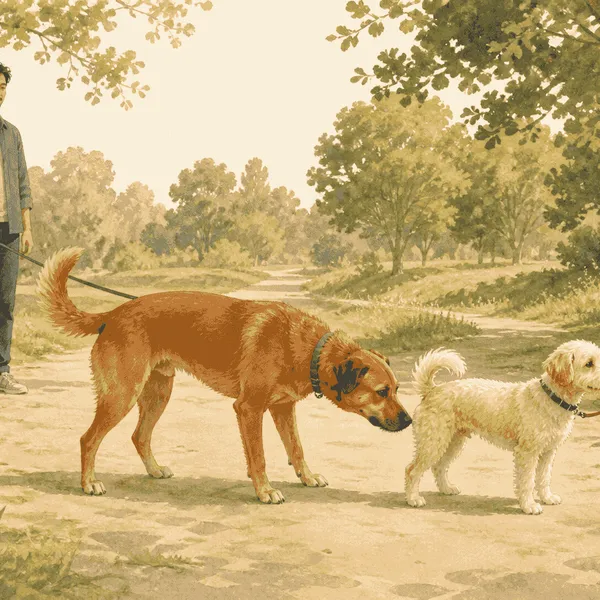
Blue Cross and Dogs Trust guidance separates two permissions in an unfamiliar-dog greeting. First ask the owner. Then let the dog decide whether to approach. An owner saying yes does not require the dog to come closer, and a dog that stays away, turns away, or moves away has given useful information.
If a dog chooses to approach you, keep the reply small and calm:
- Keep your body quiet and avoid leaning over, hugging, chasing, or crowding the dog.
- Let the dog finish the brief sniff and choose whether to step away.
- If the owner says a greeting is appropriate and the dog remains relaxed, offer only a few gentle shoulder strokes, then pause with your hand away.
- Do not turn the sniff into a request for prolonged touching. The dog can leave even after approaching.
This matters whether you are visiting someone with a dog or managing your own dog around guests. The goal is not to make the encounter look friendly. It is to keep both the person and the dog able to change distance without pressure.
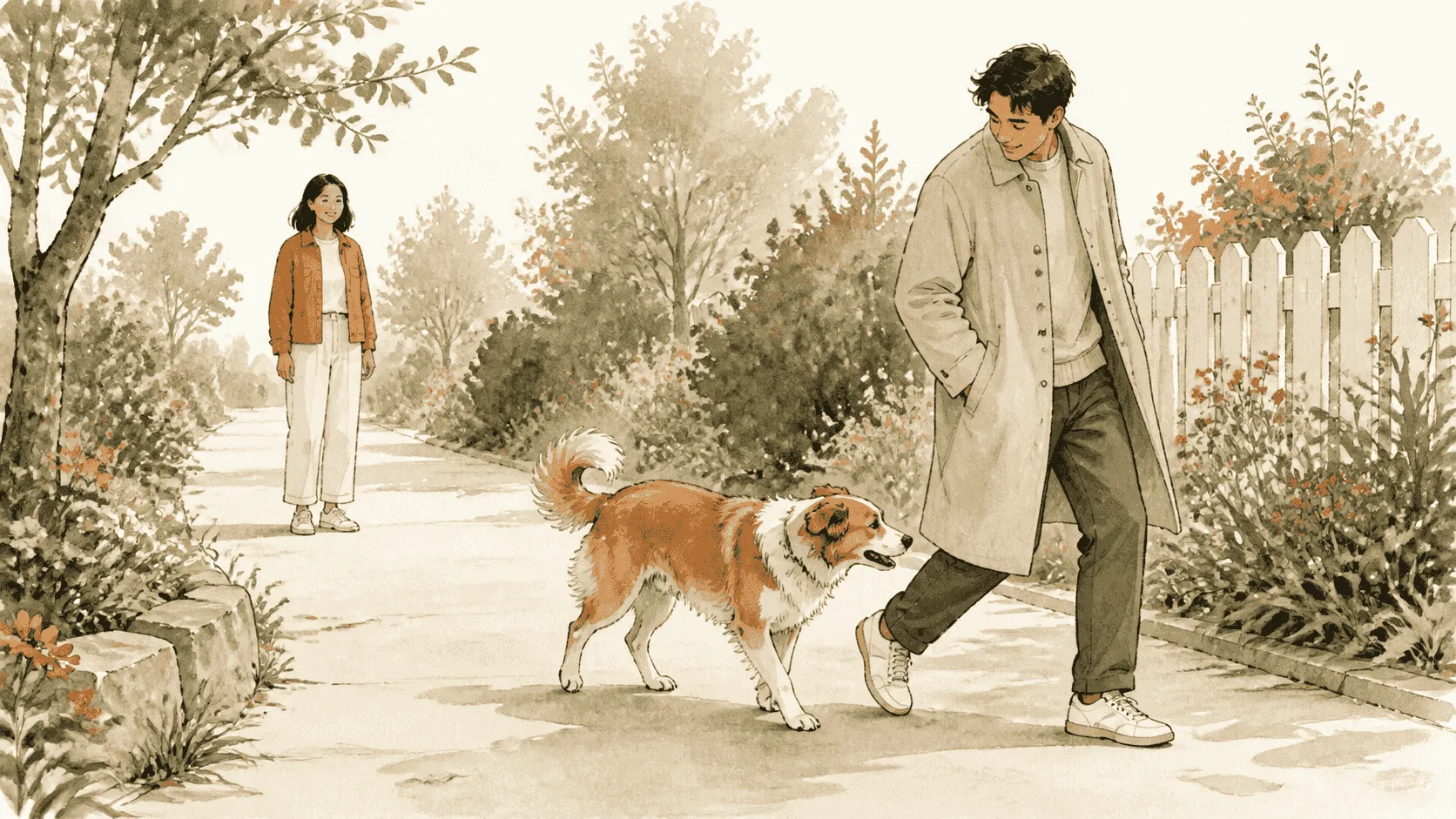
Read the Whole Dog Before You Respond
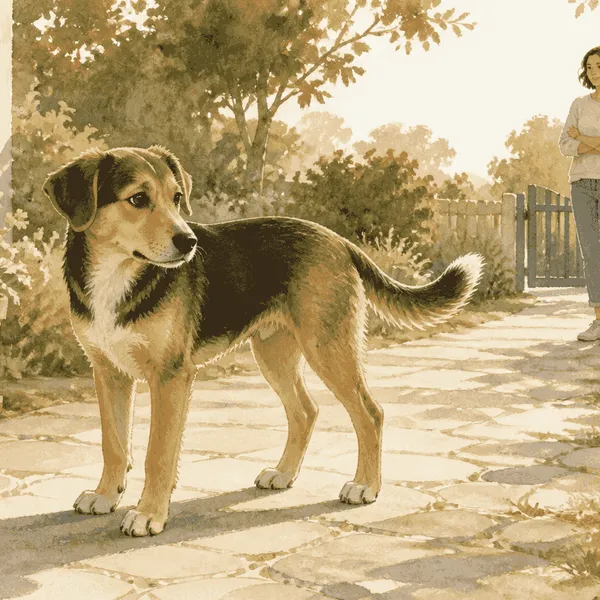
A sniff is one behavior, not a body-language translation. Dogs Trust advises reading the individual dog, the whole body, and the situation because the same action can have different meanings in different contexts. Notice four parts of the moment:
- Choice: Did the dog approach freely, pause, or try to move away?
- Whole body: Do the posture, face, ears, mouth, tail, weight, and movement look loose for this dog, or tense and held back?
- Route: Can the dog move away, and can the person step aside without being cornered?
- Sequence: Does the sniff end naturally, or does the dog keep pressing while the person or dog tries to disengage?
The whole-body dog-language pause map gives a broader way to use these observations. A wag, a lowered head, a stare, or a sniff should not be used alone to decide that contact is welcome or unsafe.
A Calm Response for an Unexpected Sniff
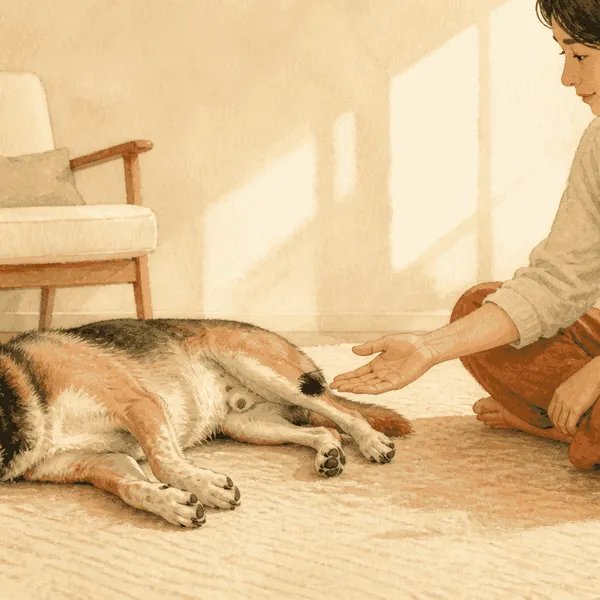
When the approach catches you off guard, use a short reset rather than a dramatic correction. Pause your hands. Keep your movement predictable. Give the handler room to call the dog away or guide the dog onward. If the dog or person chooses more distance, let that be the end of the interaction instead of calling the dog back to repeat it.
If you are the owner, make the choice easy before the greeting starts: ask the visitor to wait, check that there is a clear route away, and invite rather than pull the dog toward the person. A brief sniff can end with both parties returning to their own space. It does not need to become a lesson in obedience, affection, or social confidence.
When the Sniff Becomes a Space or Safety Problem
Create more distance early if the dog is pulling hard, repeatedly pressing forward, staring, barking, lunging, snapping, freezing, or unable to disengage. Do not stage another greeting to test what the sniff “means,” and do not ask a worried or already reactive dog to tolerate closer contact.
This routine is for ordinary greeting decisions, not a loose, injured, trapped, threatening, or highly aroused dog. Prioritize safe separation and qualified behavior support when someone may be bitten. If the behavior is sudden, escalating, or paired with signs of pain or illness, ask your veterinarian; scent cannot diagnose a health or behavior problem.
The next time a dog sniffs a person, keep the answer practical: ask, invite, pause, and respect the exit. Smell may be part of the context, but the whole dog and the next movement are what should set the distance.
Sources
Petzette's claim cards for this article point to the following scientific, veterinary, or animal-welfare sources.
- Human Stress Odour And Dog Ambiguous-Choice Study: Peer-reviewed canine cognition and welfare paper
Parr-Cortes Z, Müller CT, Talas L, Mendl M, Guest C, Rooney NJ. The odour of an unfamiliar stressed or relaxed person affects dogs' responses to a cognitive bias test. Scientific Reports. 2024;14:15843.
- Unfamiliar-Dog Greeting: Owner Permission And Dog Choice: Established UK animal-welfare guidance
- Dogs Trust Body Language Context Guidance: Welfare organization dog body-language guidance