Health Signals14 August 2026
Why Do Cats Drool? A Context-First Check
Why do cats drool? Use this calm, context-first check to note exposure and eating changes, know when to call your veterinarian, and avoid guesswork.
TextPetzette Editorial
Read3 Min

Evidence status
Source-backed editorial
- Evidence record
- 4 claim cards linked to 4 documented sources.
- Independent expert review
- Not commissioned. Petzette Editorial is responsible for the published wording.
- Source record checked
- 14 August 2026
- Scope
- General information, not an individual diagnosis or treatment plan.
Why do cats drool? A wet chin can be unsettling, especially when it is new. The useful first question is not whether your cat is happy, sick, or reacting to one particular thing. It is what else is happening around the drooling. The Merck Veterinary Manual explains that visible drool can result from increased saliva production or from difficulty swallowing saliva, and that several very different contexts are possible.
That makes cat drooling a clue, not a home diagnosis. A short, factual note about timing, access, eating, and the rest of your cat’s behavior gives your veterinarian better information than a guess about the cause.
Cat Drooling Is Not One Answer
Mouth or tongue problems, an object in the mouth, chemical or poison contact, medication, motion sickness, fear, excitement, swallowing difficulty, and systemic illness are among the contexts Merck lists for excessive salivation. That list is not a checklist to work through until one answer feels right. It shows why drooling alone cannot tell you what is going on.
Avoid turning the appearance of the saliva into a verdict, too. Clear drool does not clear a cat medically, and a little saliva does not prove a dental problem or poisoning. Do not pry open the mouth, try to remove a suspected object, or start a rinse, food change, or home remedy to test a theory.
Make a Four-Part Cat Drooling Note
Use the next few minutes to collect details that are useful for a professional assessment:
- Timing: When did you first notice the drooling? Is it new, repeating, or happening during one particular activity?
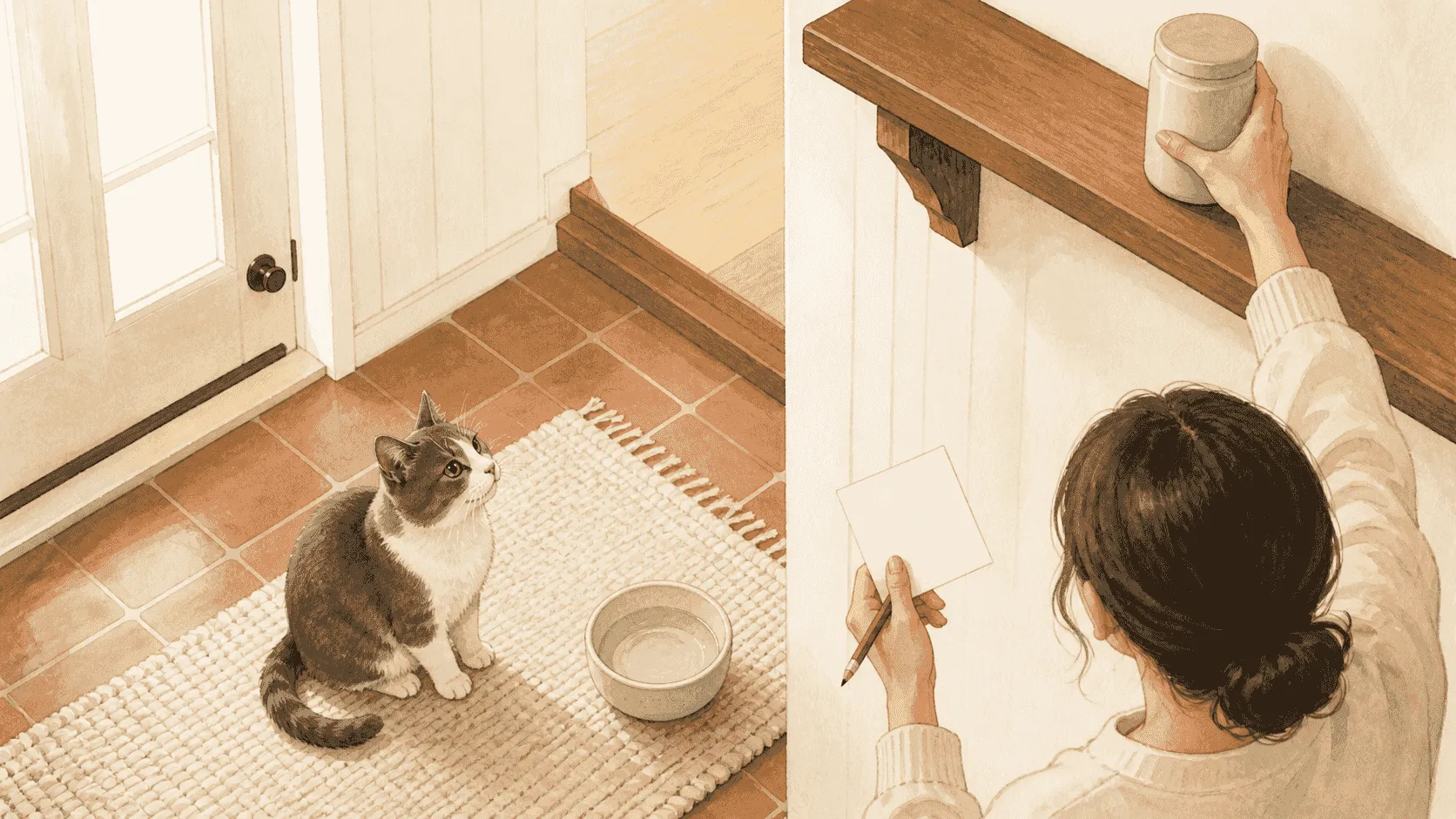
- Possible access: What was within reach just beforehand? Keep a product, medicine, plant, or food label available if one could matter.
- Eating and mouth changes: Note reluctance to eat, food dropping, altered chewing, difficulty swallowing, bad breath, pawing at the mouth, blood-tinged saliva, or facial swelling.
- The whole cat: Record any change in energy, movement, breathing, vomiting, or ordinary behavior without deciding what it means.
The goal is a clean timeline, not a more confident diagnosis. If drooling arrives with mouth or eating changes, contact your veterinarian rather than forcing an examination. The cat dental care guide explains why a quick look cannot settle what is happening below the gumline.
Drooling While Purring, Petting, or Kneading
The setting can be reassuring without being a diagnosis. Purring, petting, or kneading may be part of the moment, but they do not turn drooling into proof that nothing is wrong. Watch whether the pattern is familiar, whether the cat remains comfortable with food and normal routines, and whether anything else has changed.
This is a different question from what purring itself communicates. Our guide to reading cat purring in context focuses on that behavior; this page keeps the attention on a new or noticeable saliva change. In either case, one signal is not the whole story.
When Cat Drooling Needs a Veterinarian
Call your veterinarian when drooling is new or accompanied by reluctance to eat, difficulty swallowing, mouth pain, pawing at the mouth, bad breath, abnormal chewing, food dropping, reduced appetite, oral bleeding, or facial swelling. Those signs can have several explanations, so they are a reason for an assessment, not a label you can safely apply at home.
Keep your hands away from a painful mouth. A cat who resists face or mouth handling may be protecting a sore area, and trying to get proof can add stress or cause a bite. Describe what you saw, when it started, what your cat had access to, and any change in food, water, litter-box, or usual activity instead.
If Something May Have Been in Reach
Treat a possible exposure as its own decision. If your cat may have contacted or swallowed a product, medicine, plant, or another unsafe substance, call your veterinarian or an animal poison-control service before trying to induce vomiting, give medication, or use a home treatment. Have the item, amount if known, timing, and observed changes ready for the call.
For everyday prevention, the cat household-hazard checklist can help you spot items worth storing out of reach. It cannot identify the cause of drooling after the fact.
The practical next step is simple: make the four-part note, keep any relevant label nearby, and let the combination of timing, access, and other changes guide the call. If this is sudden or severe, ask your veterinarian promptly.
Sources
Petzette's claim cards for this article point to the following scientific, veterinary, or animal-welfare sources.
- Merck Veterinary Manual: Mouth Disorders And Drooling In Cats: Veterinary-manual owner guidance
- AVMA Pet Dental Care: Veterinary association client-education brochure
- AAHA Dental Care Guidelines 2019: Veterinary practice guideline
- AVMA Pet First Aid: Poison Response Boundary: Veterinary-association first-aid brochure