Behavior29 August 2026
Why Do Dogs Have Tails? Read the Whole Signal
Why do dogs have tails? Learn how tail position and movement support canine communication, and how to read the whole dog before you approach.
TextPetzette Editorial
Read4 Min
Evidence status
Source-backed editorial
- Evidence record
- 4 claim cards linked to 4 documented sources.
- Independent expert review
- Not commissioned. Petzette Editorial is responsible for the published wording.
- Source record checked
- 20 July 2026
- Scope
- General guidance. Individual animals and circumstances can differ.
Why do dogs have tails? For a new dog owner, the most useful answer is not a one-word anatomy fact. A dog’s tail is part of visible communication: its position and movement can add information about the moment. But a tail is one clue, not a permission slip. The decision in front of you is whether to pause, give space, or continue a low-pressure interaction after reading the whole dog.
Why a Dog’s Tail Matters in a New-Owner Moment
The evidence-backed answer is that the tail contributes to a dog’s visible social signaling. A 2007 paper in Current Biology found that dogs showed different tail-wagging responses to different emotional stimuli. That supports a narrow, useful conclusion: tail movement can carry information. It does not create a fixed left-right decoder, and it does not tell you that a dog wants to be touched.
Dogs Trust guidance makes the next boundary clearer. A dog should be read as an individual, with the whole body and the situation in view. Coat, tail shape, ear shape, and body differences can also make one feature harder to interpret. If a new dog’s tail looks different from the picture in a chart, return to the dog in front of you rather than forcing the dog into a template.
Dog Tail Meaning Begins With the Whole Body
Dog tail body language becomes more useful when you connect it to what happened before and what the dog does next. Ask four small questions:
- Is the body loose or held still and tense?
- Are the ears, eyes, mouth, weight, and feet moving with the tail?
- Is the dog approaching, pausing, turning away, or trying to create distance?
- What changes when the noise, touch, crowding, or other dog moves farther away?
RSPCA guidance describes worried dogs through combinations such as a lowered head or body, tucked tail, ears back, turning away, lip licking, yawning, or a lifted paw. Those signs are not a diagnosis on their own. They become more informative when they appear together in a matching situation and when the dog is asking for more room.
Tail Wagging Is Not Permission
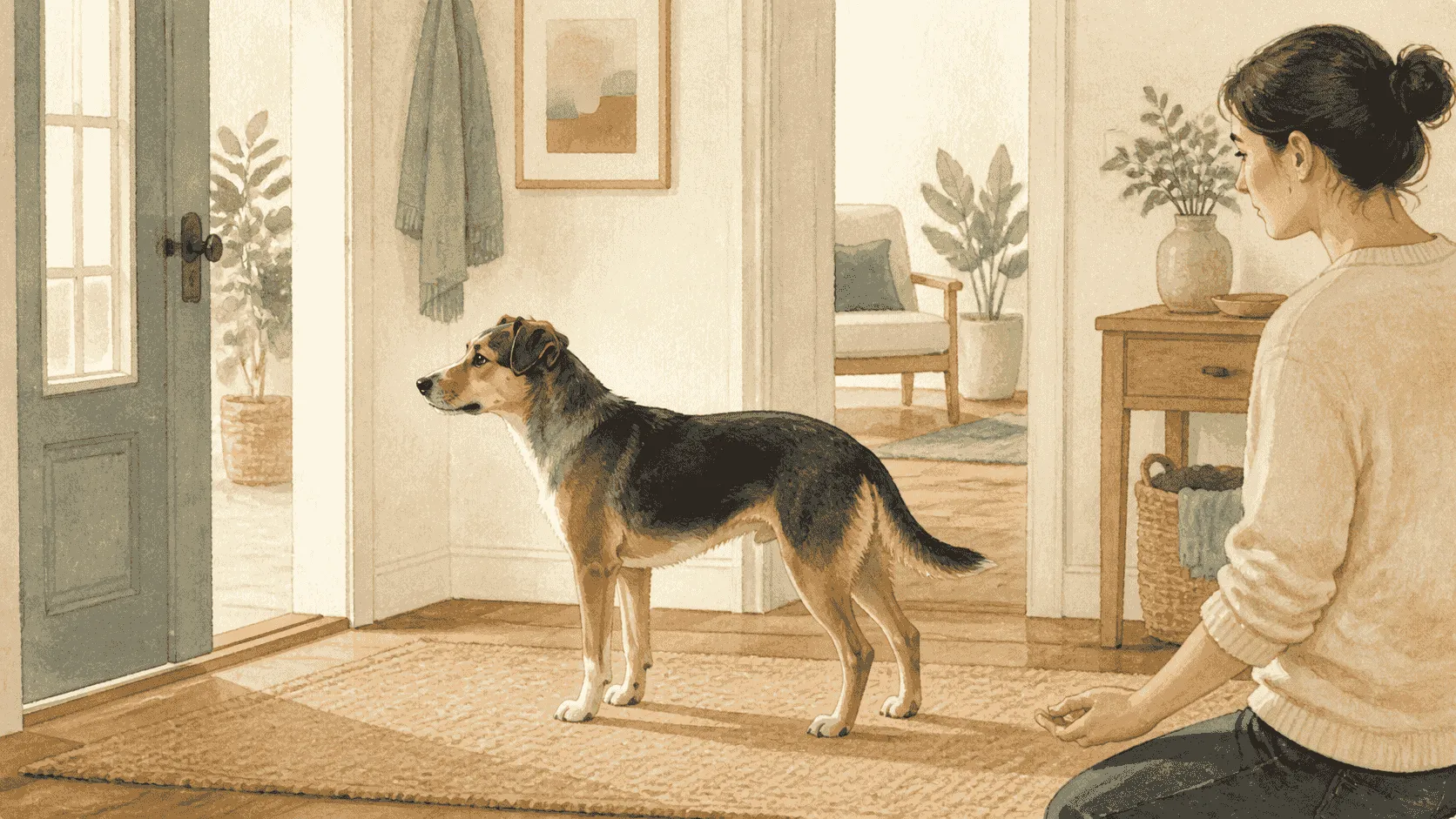
The safest interpretation of a wag is an invitation to look wider, not an instruction to reach in. A wag can happen during more than one kind of interaction, and the same movement may look different on different dogs. A still tail can also be meaningful context, but it is not a complete translation either. Do not make a greeting decision from the tail alone.
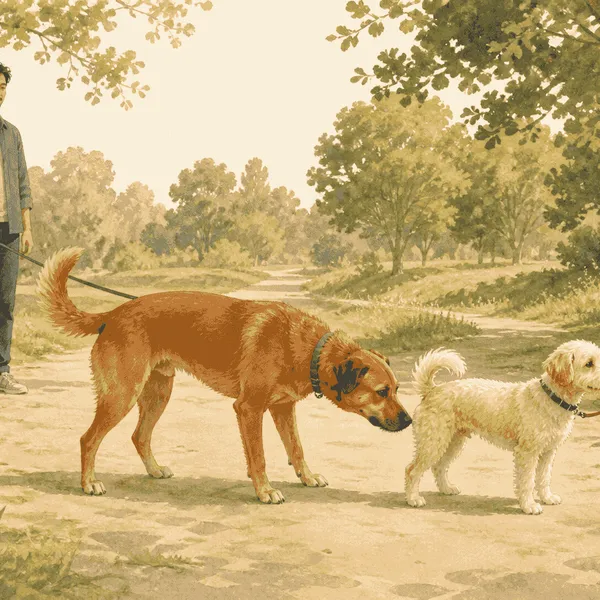
This matters most with an unfamiliar dog. A wagging tail does not cancel the dog’s distance, posture, or exit route. For the broader scene, use the whole-body dog-language pause map when you are deciding whether to lower pressure or stop an interaction.
A Three-Step Dog Tail Check Before You Touch
Use this sequence whenever you are meeting a dog you do not know:
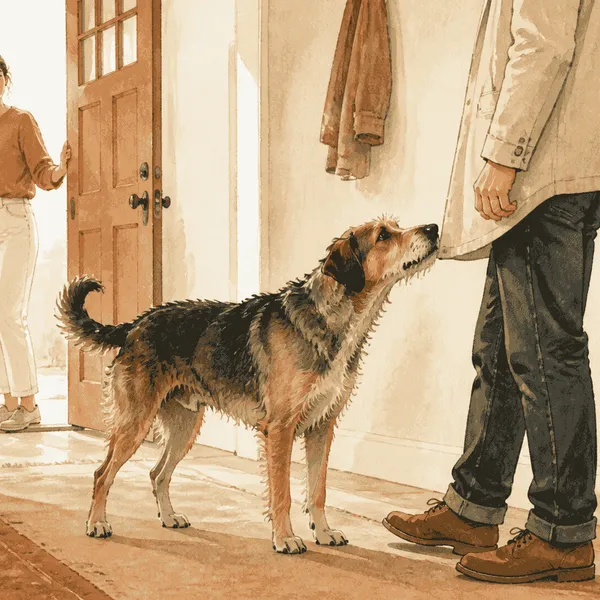
- Ask the owner first. If the owner is absent or says no, do not approach. Permission is necessary, but it does not require the dog to come closer.
- Invite rather than reach. Stand at a respectful distance and let the dog choose whether to approach. Watch the route out as carefully as the route in.
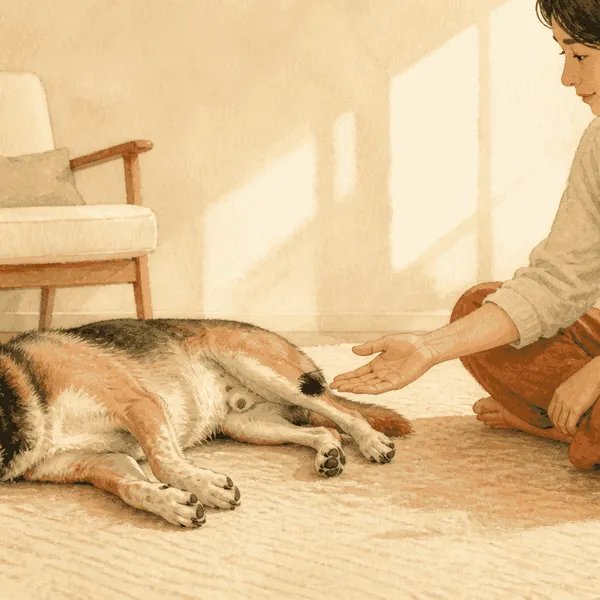
- Pause after contact. If the dog voluntarily comes close and appears relaxed, use up to three gentle strokes on the nearest shoulder, then stop and move your hand away. A dog that turns away, stays back, or leaves has given you useful information: end the greeting.
The pause is the important part. It leaves the dog free to continue or go. Do not lean over, hug, chase, crowd, or take a retreat personally. With a puppy or newly adopted dog, practice this pattern with willing adults before expecting a busy public greeting. A safe first-year socialization checklist can help you plan low-pressure exposure without turning every meeting into forced contact.
When a Tail Change Needs a Veterinarian
A tail observation can describe a pattern; it cannot identify the cause of a sudden change. If a dog’s tail position or movement changes abruptly, persists, or appears alongside pain, illness, unusual movement, collapse, or a wider behavior change, ask your veterinarian for an individual assessment. Do not keep repeating a greeting or handling test to get a clearer answer.
If it is safe to do so, note what happened just before the change, what the whole body looked like, and what happened after you reduced pressure. A short video can help only when it can be captured without following, cornering, or provoking the dog. The goal is not to become fluent in a tail code. It is to make one calmer decision: look at the whole dog, leave an exit, and let the dog’s choice shape what happens next.
Sources
Petzette's claim cards for this article point to the following scientific, veterinary, or animal-welfare sources.
- Dog Tail Wag Direction And Emotional Stimuli: Peer-reviewed paper
- Dogs Trust Body Language Context Guidance: Welfare organization dog body-language guidance
- RSPCA Dog Body Language: Animal-welfare behavior guidance
- Unfamiliar-Dog Greeting: Owner Permission And Dog Choice: Established UK animal-welfare guidance