Behavior26 August 2026
Why Do Dogs Sniff Butts? A Safer Greeting Read
Why do dogs sniff butts? Learn what scent can and cannot tell you, when to let a greeting continue, and when to create more space.
TextPetzette Editorial
Read4 Min
Evidence status
Source-backed editorial
- Evidence record
- 5 claim cards linked to 5 documented sources.
- Independent expert review
- Not commissioned. Petzette Editorial is responsible for the published wording.
- Source record checked
- 20 July 2026
- Scope
- General guidance. Individual animals and circumstances can differ.
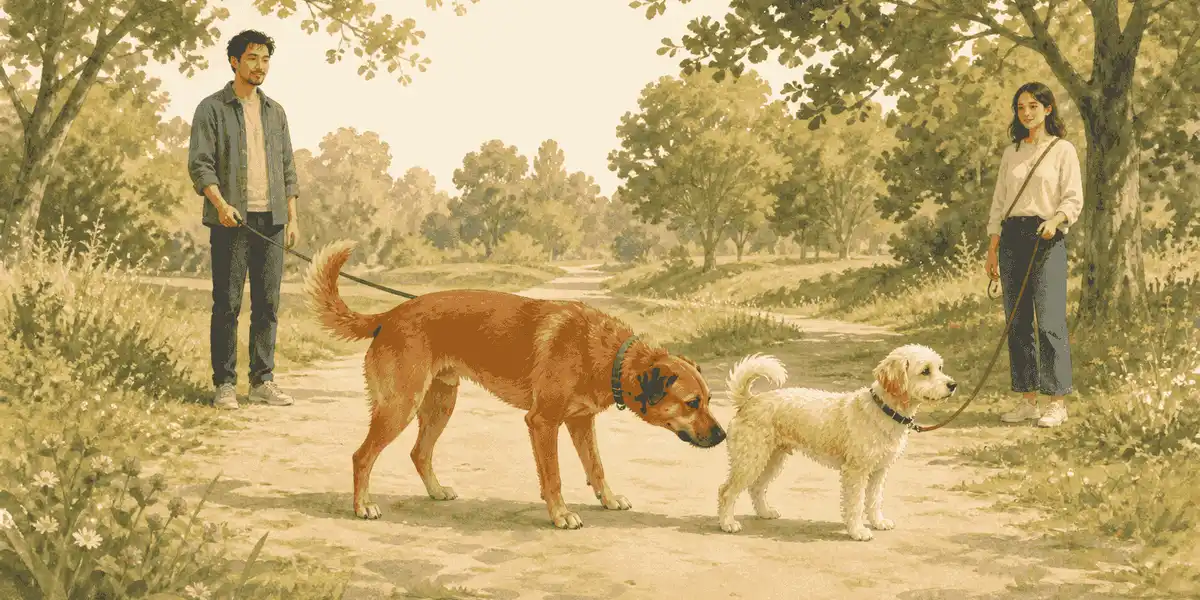
Why do dogs sniff butts? In a dog-to-dog greeting, a brief rear-end sniff may be a way for a dog to sample scent information, but it is not a complete readout of mood, health, or compatibility. The useful first-year owner decision is whether to let the greeting continue, add distance, or end it—based on both dogs, the setting, and what happens after the sniff.
Why Dog-to-Dog Sniffing Is Useful—but Limited
A narrow study gives us a reason to keep scent in the explanation without turning it into a superpower. In a 2026 paper in Scientific Reports, Wang and Horowitz tested 43 pet dogs with odor samples from one unfamiliar dog after rest, play, and a nail trim. The dogs distinguished some odor pairings in parts of the task. In the smaller second phase, stress odor changed proximity to the owner and a stranger, but the study did not show reliable emotional mirroring.
That is interesting evidence about canine odor discrimination. It is not an everyday butt-sniffing experiment, a compatibility test, or a way to tell what another dog “feels.” Every sample came from one donor, the baseline was imperfect, and only 24 dogs entered the second phase. The study cannot tell you that a sniff identifies age, health, friendliness, or a plan for the next five minutes.
So if you search “why do dogs smell butts,” keep the answer modest: scent may be part of the information a dog gathers in a social moment, while the exact meaning of one sniff remains uncertain. Let the interaction—not a story about the odor—decide what happens next.
Read the Approach Before You Allow the Sniff
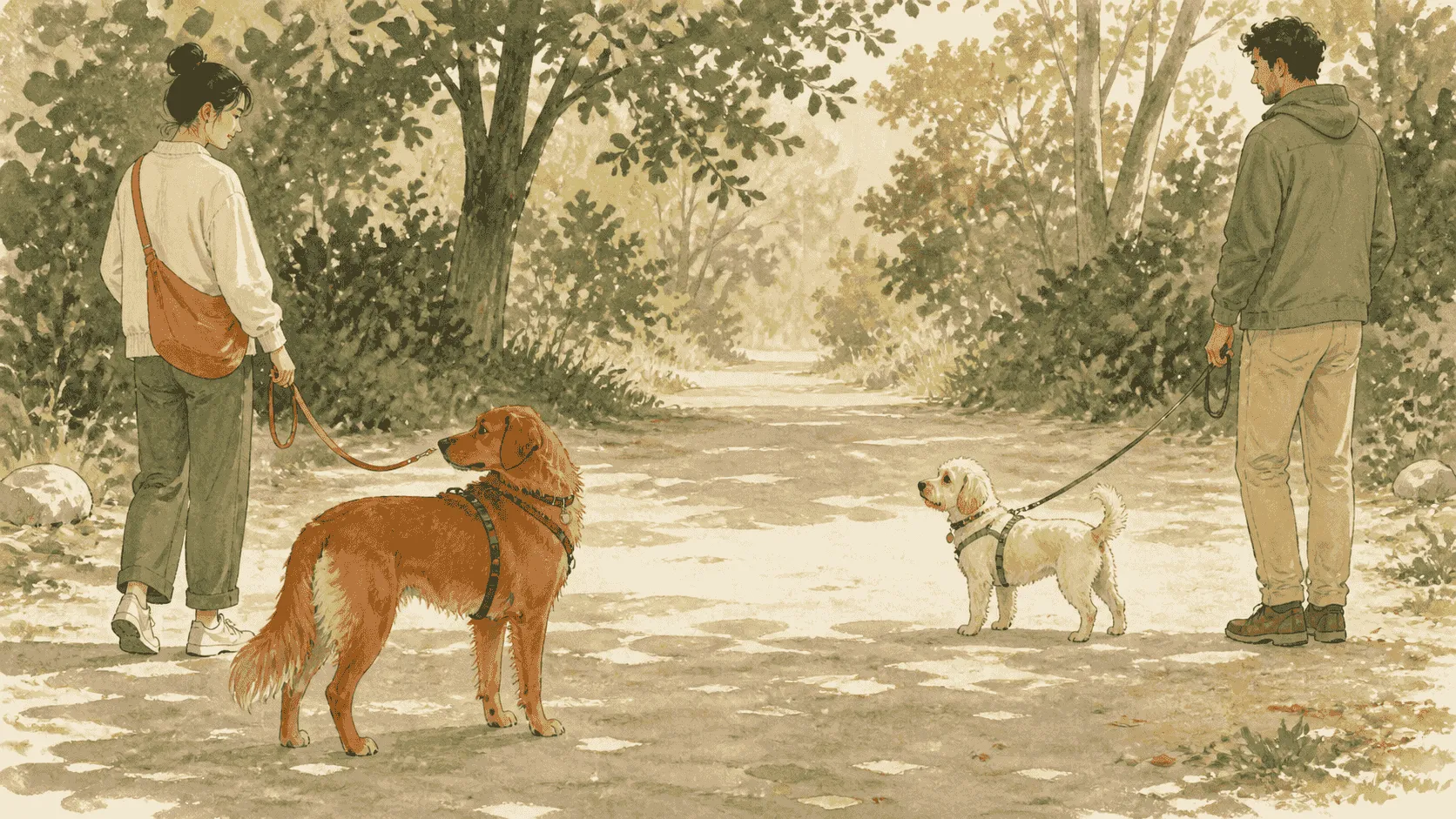
The sniff is not the first decision. The approach is. Before an unfamiliar dog comes close, ask the owner whether a greeting is appropriate. Then invite rather than pull the dogs together. An owner’s permission does not require either dog to approach, and a dog that turns away, moves away, or stays back has provided useful information.
Watch three parts of the scene:
- Choice: Can each dog approach, pause, and leave without being followed or cornered?
- Whole body: Do the posture, face, ears, mouth, tail, weight shift, and movement look loose for that individual dog?
- The sequence: Does the sniff end naturally, with both dogs able to look away or return to their handlers, or does one keep pressing while the other tries to escape?
Dogs Trust’s body-language guidance recommends reading the individual dog, the whole body, and the context. A wagging tail is one clue, not permission to touch or a guarantee that a dog wants a close greeting. The whole-body dog-language pause map gives a broader way to notice what changes when you add space.
Let a Short Greeting Have an Exit
If both dogs choose to come closer and remain comfortable, a short sniff can be enough. Keep moving rather than holding them nose-to-tail or asking for an extended face-to-face interaction. A pause gives each dog a chance to disengage, check in with a handler, or decide whether to continue.
If one dog walks away, let the greeting end. Do not follow with the leash, call the dog back into contact, or treat distance as a failed social lesson. If the bodies become tense, one dog freezes, or either dog cannot disengage, calmly create more room. Distance is an adjustment that protects choice; it does not tell you that the dogs can never share space.
For a new puppy meeting a resident dog, use a more deliberate setup than a spontaneous sidewalk hello. Dogs Trust guidance recommends space, separate handlers when possible, gradual approach, brief contact, regular breaks, and supervision during the first days and weeks. The new-puppy introduction plan covers separate resources and the pause points that a single sniff cannot answer.
When the Greeting Becomes a Space Question
A sniff can be ordinary and still belong inside a careful plan. Add distance early if one dog is pulling hard toward the other, repeatedly trying to leave, staring, barking, lunging, snapping, or becoming too excited to settle. Do not arrange a test greeting to see what happens, force contact so a dog “gets used to it,” or ask the dogs to sort out tension themselves.
The greeting routine also has limits. It is not a plan for a loose, injured, trapped, threatening, or already reactive dog. In those situations, prioritize safe separation and ask for qualified help. If the behavior is sudden, escalating, or paired with signs of pain or illness, include a veterinarian in the next step; scent cannot diagnose a health or behavior problem.
A Five-Step Sniff Check for Today
- Check the setting: Is there room, a safe route away, and an owner who agrees to the greeting?
- Invite, don’t drag: Let the dogs choose whether to approach.
- Read the whole body: Do not use a wag, stare, freeze, or sniff as a standalone translation.
- Pause and move on: Keep contact brief enough for either dog to leave.
- Record a pattern: If the same dog-to-dog moment repeatedly escalates, stop testing it and seek individual behavior guidance.
The best answer to “why do dogs sniff butts?” is therefore useful but unfinished. Scent can be part of a dog’s social information, yet one sniff does not reveal a complete emotional state or future relationship. Give the greeting room, watch what both dogs do next, and let their choice set the pace.
Sources
Petzette's claim cards for this article point to the following scientific, veterinary, or animal-welfare sources.
- Dogs Distinguished Some Emotional-Odour Pairings From One Donor: Peer-reviewed canine olfaction and behaviour experiment
Wang A, Horowitz A. Dogs (Canis familiaris) distinguish conspecific emotional chemosignals. Scientific Reports. 2026;16:11176.
- Unfamiliar-Dog Greeting: Owner Permission And Dog Choice: Established UK animal-welfare guidance
- Dogs Trust Body Language Context Guidance: Welfare organization dog body-language guidance
- Dogs Trust New Dog And Puppy Introductions: Current first-party dog-welfare behavior guidance
- Dog Tail Wag Direction And Emotional Stimuli: Peer-reviewed paper