Health Signals11 August 2026
Why Do Dogs Have Whiskers? A Grooming Decision Guide
Dog whiskers are sensory hairs, not a cosmetic extra. Learn what recent research shows and how to handle facial grooming more carefully.
TextPetzette Editorial
Read4 Min

Evidence status
Source-backed editorial
- Evidence record
- 3 claim cards linked to 1 documented source.
- Independent expert review
- Not commissioned. Petzette Editorial is responsible for the published wording.
- Source record checked
- 11 August 2026
- Scope
- General information, not an individual diagnosis or treatment plan.
If you have wondered why do dogs have whiskers while planning a first home groom, the useful answer is practical: they are sensory hairs, not a decorative extra. A brush, bath, or tidy-up can be a calm care routine, but an appearance-only trim is a good place to leave a dog’s facial whiskers alone. That is a small decision with a clearer evidence boundary than many grooming rules.
Dog Whiskers Are Not Just Ordinary Coat
The long hairs on a dog’s muzzle, cheeks, chin, and above the eyes are called vibrissae. A 2025 study in Scientific Reports examined canine vibrissal follicles with histology, electron microscopy, and nerve staining. The researchers found specialized follicle-sinus complexes with dense innervation and mechanoreceptor structures. In plain language, those hairs are connected to a different kind of sensory structure than ordinary body coat.
That does not mean a whisker tells a dog exactly what to do, or that every hair on the face has the same role. The anatomy gives a more useful starting point: treat the face as an information-gathering area, not simply the last part of a haircut.
What Can a Whisker Response Tell You?
The same study included 17 owner-recorded videos from 11 dogs. The dogs responded when mystacial or eyebrow-area vibrissae were touched; the reported responses included reflex blinking. The videos also showed some dogs moving muzzle whiskers forward while exploring objects. Together with the anatomy, that supports a close-range tactile role.
The limit matters. These were illustrative observations, not a standardized test or a before-and-after trim study. A blink, a whisker position, or a pause does not name one emotion or diagnose an eye problem. When you are unsure during handling, use a whole-body pause map: add posture, movement away, breathing, and the situation instead of turning one facial feature into a verdict.
The Home-Grooming Decision: Leave Whiskers in Place
For an appearance-only groom, ask for the facial whiskers to stay intact. Do not pull, tap, or cut them to see whether your dog notices. The study authors concluded that canine vibrissae are a functional sensory organ and argued against cosmetic shaving. The evidence does not predict exactly how a particular dog would respond to a trim, but it gives no good reason to remove useful sensory hairs for looks.
This does not turn every face-care question into a DIY rule. For the surrounding coat, begin with a calm, coat-specific grooming routine. If hair is tangled, the skin looks different, or a face or eye area needs professional attention, ask a qualified groomer or veterinarian how to handle that individual job rather than cutting around it at home.
Build a Face-Friendly Grooming Routine
Make the facial area a low-pressure part of the session:
- Set out one tool and let your dog approach without being held in place.
- Work on a small, comfortable area of surrounding coat rather than aiming to finish the whole face.
- Keep hands off the whiskers themselves, and avoid turning facial handling into a test.
- Pause if your dog stiffens, tries to leave, or the task becomes hard to assess safely.
- End while the session is still manageable, then make the next session easier rather than longer.
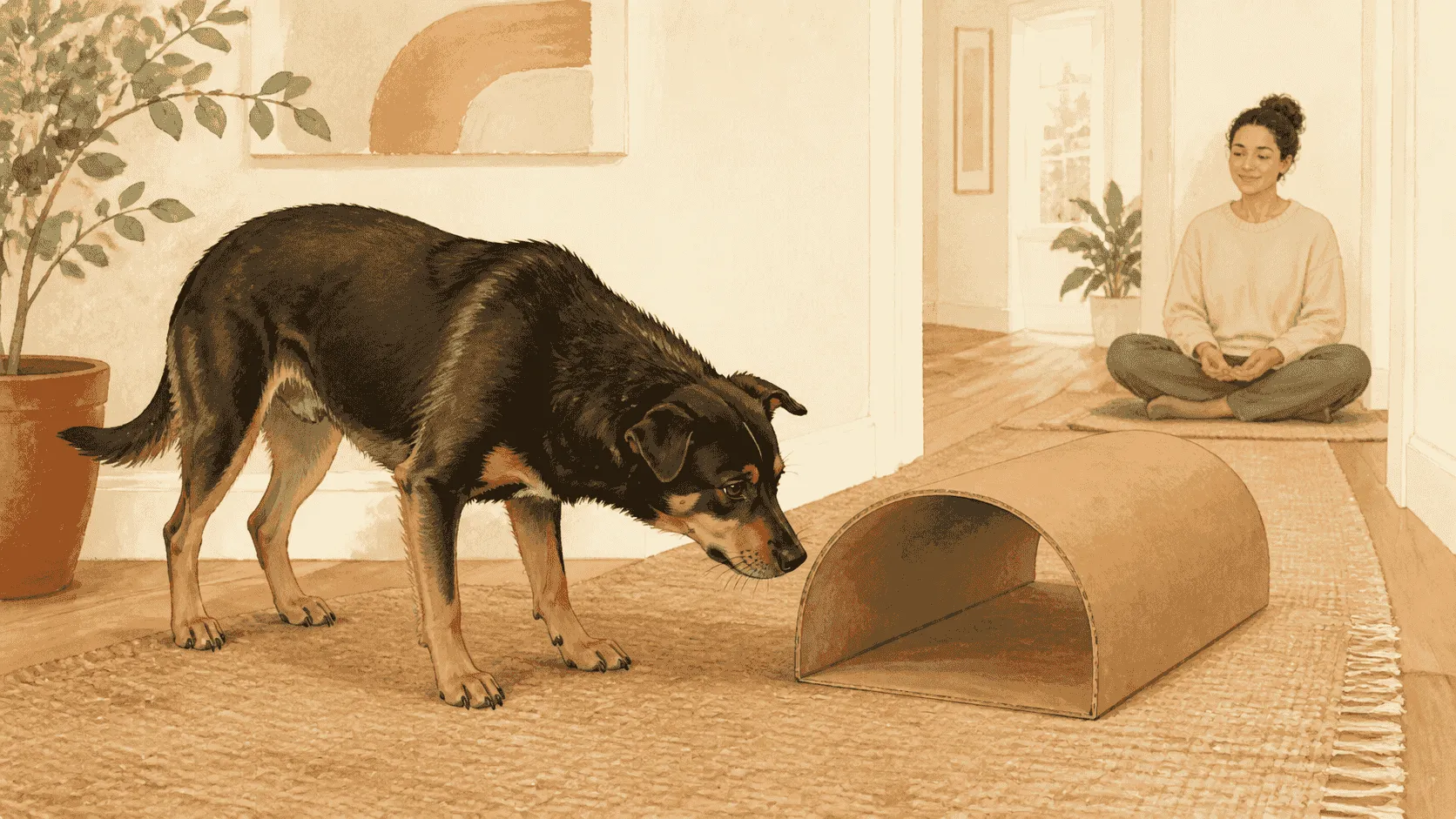
The goal is not a perfectly still dog. It is a routine that preserves choice where possible and makes it easier to notice when home grooming is no longer the right tool.
When a Veterinarian or Groomer Should Lead
Whiskers do not explain sudden squinting, persistent blinking, eye discharge, rubbing at the face, a facial injury, pain, or a new change in how your dog moves around familiar spaces. If any of those changes are sudden, severe, or continuing, contact your veterinarian. A general article cannot tell whether an eye, skin, nerve, coat, or vision concern is involved.
A qualified groomer can also help with routine coat work that is difficult to do safely at home. Tell them that you want facial whiskers left intact when the work is cosmetic. If the task has a medical or coat-care reason, let the right professional explain the safest option for your dog instead of assuming one rule fits every situation.
A Simple Check Before the Next Trim
Before you pick up a brush or book a groom, ask three questions: Is this task about appearance or a real coat-care need? Can my dog take a break or move away? Does anything about the eyes, skin, or handling concern belong with a veterinarian or qualified groomer? That check keeps the answer to why dogs have whiskers grounded: they are part of the dog’s sensory equipment, so cosmetic grooming should work around them.
Sources
Petzette's claim cards for this article point to the following scientific, veterinary, or animal-welfare sources.
- The Canine Vibrissal System As A Highly Innervated And Functional Sensory Organ: Peer-reviewed observational, anatomical, and histological study
Döring D, Müller HE, Franzmeier S, Matiasek K, Blutke A, Reese S. *The canine vibrissal system as a highly innervated and functional sensory organ.* Scientific Reports. 2025;15:9212. doi:10.1038/s41598-025-91629-1.