Behavior07 August 2026
Why Do Dogs Roll in the Grass? Start With the Spot
Why do dogs roll in the grass? Read the spot, your dog's whole body, and any change afterward before deciding whether to move on or call a veterinarian.
TextPetzette Editorial
Read4 Min
Evidence status
Source-backed editorial
- Evidence record
- 6 claim cards linked to 8 documented sources.
- Independent expert review
- Not commissioned. Petzette Editorial is responsible for the published wording.
- Source record checked
- 07 August 2026
- Scope
- General guidance. Individual animals and circumstances can differ.
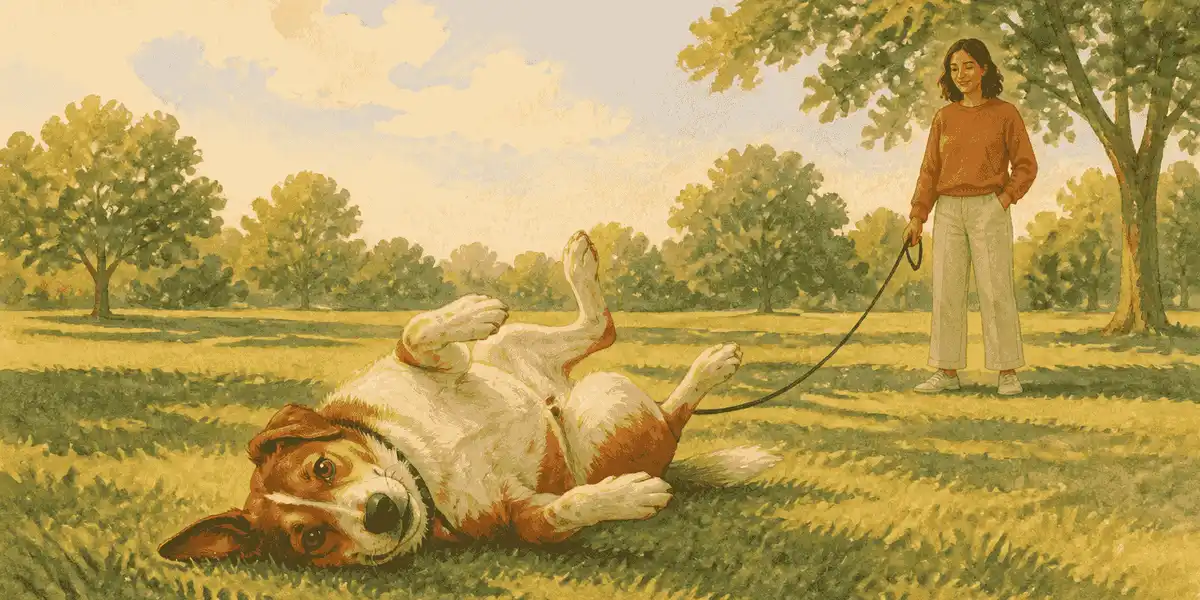
Why do dogs roll in the grass? The honest answer is that one roll cannot name its own motive. A dog may have found an interesting odor, or the location may be the part that needs your attention. Instead of deciding that your dog is happy, itchy, or trying to hide a scent, use the spot, the whole body, and what happens afterward to decide whether to let the moment pass or guide your dog on.
Why Do Dogs Roll in the Grass? Start With Context
VCA Animal Hospitals calls scent camouflage a prevailing theory for a dog rolling on a strong outdoor odor. It also makes the important limitation clear: people cannot know for sure what a dog is thinking during a roll, and other explanations are possible. The useful owner question is not “what does this one movement mean?” but “what is happening here?”
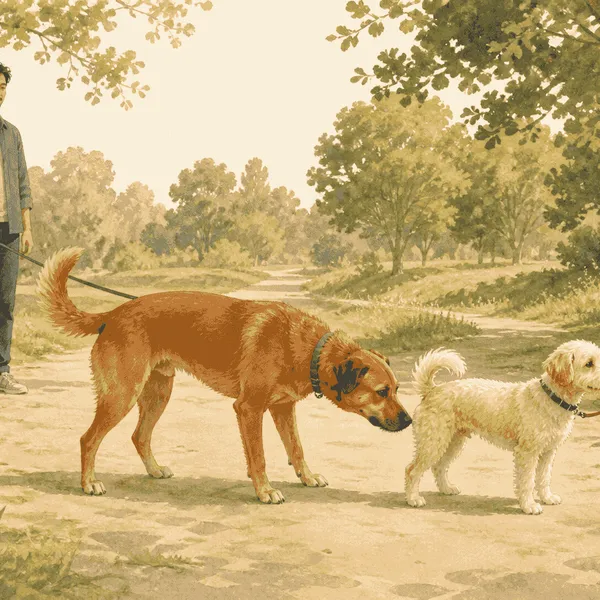
Dogs Trust gives the same broader rule for body language: read the individual dog, the whole body, and the situation. Notice whether your dog chose a particular patch after sniffing, whether the body stays loose, whether they quickly return to their ordinary walk, and whether anything changes afterward. A roll alone does not diagnose an itch, discomfort, a parasite, or an emotion.
That makes this a different decision from dogs eating grass. Eating asks about possible ingestion and illness; rolling asks whether the ground or a new physical pattern means you should interrupt, check, or simply continue the walk. For the wider context-and-response approach, use our dog body-language pause map.
Decide Whether the Ground Changes the Answer
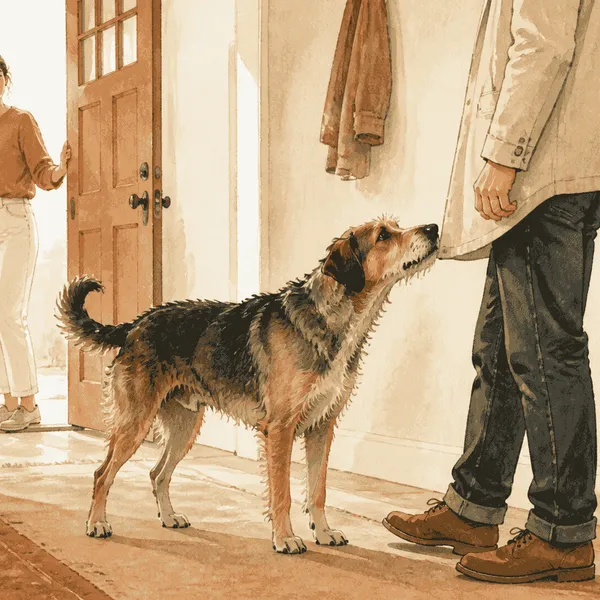
Start with the surface, not a theory about the dog. A familiar, ordinary patch is different from a spot with an unknown residue, a strong foul smell, visible feces, or a sign asking people to stay off the lawn. If you cannot identify what is there, calmly guide your dog onward rather than turning the roll into a closer investigation.
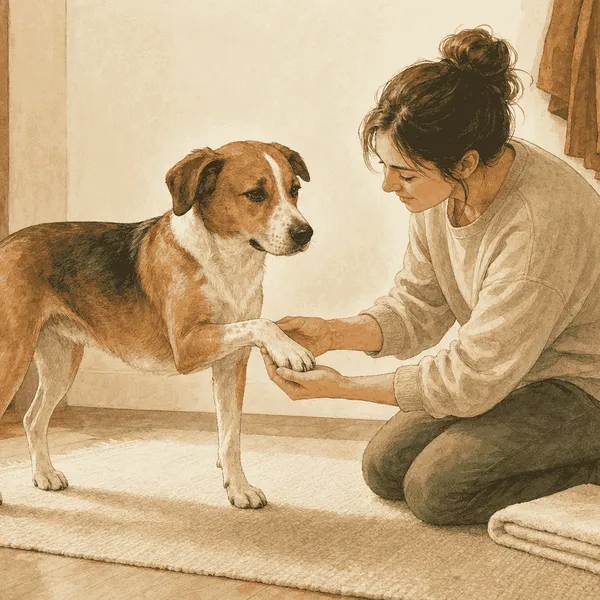
Long, dry, or seedy grass deserves a separate post-walk check. Blue Cross and PDSA guidance advises looking through fur, feet, and ears for loose grass seeds. Lift away a loose seed caught in fur, but do not probe an ear, eye, nose, or skin tract. Vigorous paw licking, toe swelling, limping, head shaking, ear pawing, sudden violent sneezing, or eye redness after long grass needs veterinary advice rather than home detective work.
The point is proportion, not a ban on every grassy pause. Blue Cross notes that on-lead walks can include safe sniffing and small choices when the handler still manages roads and unsafe things. You can leave room for a brief, known grass moment while choosing a different route when the surface itself feels uncertain.
Use a Practiced Cue When You Need to Move On
If the spot is not one you want your dog to roll in, make the next action easy and familiar. VCA suggests a trained “leave it” or “come” response for interrupting a roll before contact with something unpleasant. Dogs Trust’s recall guidance adds the part that keeps this humane: reward the return, even when it takes a moment, and build difficulty gradually rather than repeatedly calling or punishing a late arrival.
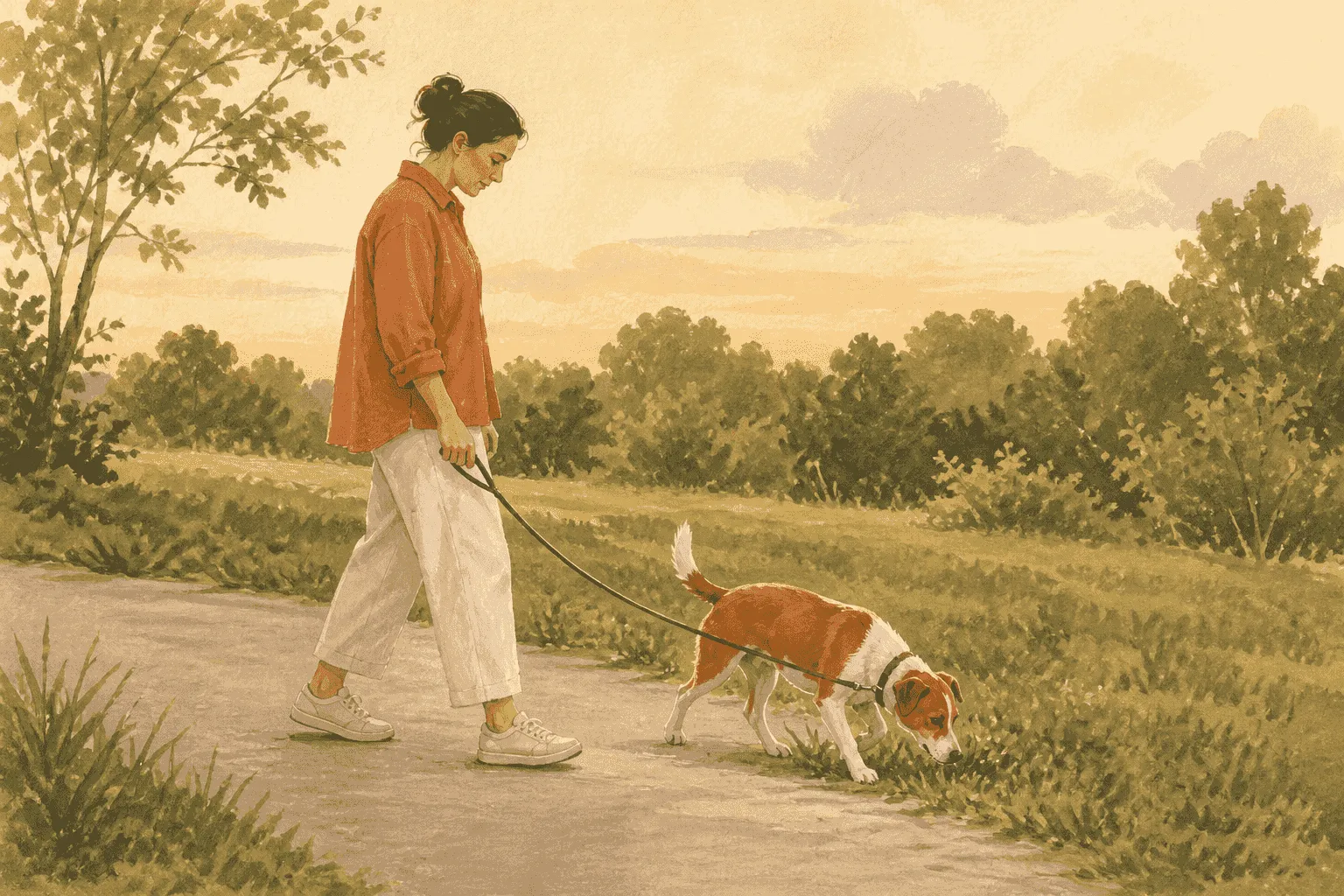
That means the cue is not a test of whether your dog cares about you more than the lawn. Practice it first in low-distraction places. On a walk, call once, move a few steps away if needed, reward the return, and then choose the next safe sniffing spot together. A harness and long line can keep uncertain practice managed without turning the moment into a tug-of-war.
When Rolling Is a Different Kind of Change
Rolling becomes a different question when it is new, repeated, hard to interrupt, or paired with a change in movement, posture, appetite, or demeanor. The American Animal Hospital Association’s 2022 pain-management guidelines note that owners can notice deviations from a dog’s usual behavior, but those deviations do not identify a cause at home.
Record what was different: the route, the exact patch, what your dog sniffed first, how long the rolling lasted, and what you noticed later. Avoid treating skin, ears, or paws based on a guess. Sudden, severe, persistent, or worsening changes, inability to bear weight, a deep wound, uncontrolled bleeding, or a suspected embedded foreign body need prompt veterinary direction. Our seasonal dog paw-care guide explains how to make a calm check without probing or squeezing.
Use a Three-Part Grass-Roll Check
When the rolling ends, make the next decision from three small observations:
- The spot: Was it a familiar, clear patch, or an unknown, foul-smelling, treated, or seedy area?
- The dog: Did the body stay loose and return to its usual walk, or did you notice repeated licking, head shaking, limping, or another new change?
- The next step: Can you continue with safe sniffing, use your practiced cue to move on, or is this a pattern to record and discuss with your veterinarian?
You do not need to solve the dog’s inner story to make a good choice. Read the place and the pattern, keep the next step calm, and let a veterinarian assess changes that do not fit your dog’s normal outdoor routine.
Sources
Petzette's claim cards for this article point to the following scientific, veterinary, or animal-welfare sources.
- VCA Guidance on Dogs Rolling in Gross Things Outdoors: Current veterinary-hospital behavior guidance
- Dogs Trust Body Language Context Guidance: Welfare organization dog body-language guidance
- Dog Nosework Positive Judgment Bias 2019: Peer-reviewed animal behaviour paper with Purdue Canine Welfare Science summary
- Blue Cross On-Lead Walks: Animal welfare charity guidance / on-lead walking enrichment and route planning
- Dogs Trust Recall Training: Animal-welfare reward-based training guidance
- Blue Cross Grass Seeds And Dogs: Veterinary-welfare seasonal hazard guidance
- AAHA Pain Management Guidelines 2022: Veterinary clinical guideline and consensus statement
- UC Davis Summer Paw Hazards 2026: Veterinary-school practical safety guidance