Gear Decisions16 August 2026
Dog Car Harness: A Safer First-Ride Plan
Use a dog car harness or another suitable restraint, then introduce travel in calm steps while avoiding heat and sickness assumptions.
TextPetzette Editorial
Read4 Min
Evidence status
Source-backed editorial
- Evidence record
- 3 claim cards linked to 3 documented sources.
- Independent expert review
- Not commissioned. Petzette Editorial is responsible for the published wording.
- Source record checked
- 16 July 2026
- Scope
- General guidance. Individual animals and circumstances can differ.
A dog car harness can be one part of a safer first ride, but the decision is broader than fastening a strap. A new dog may be meeting unfamiliar motion, sounds, and routines all at once. Start by choosing a suitable vehicle restraint, making the car familiar before it moves, and deciding how each stop will work before you leave.
The practical aim is not a product ranking or a promise that one setup suits every dog. It is a calm, repeatable plan: restrain the dog for the vehicle, build comfort in small steps, and keep heat or persistent distress from becoming an afterthought.
Start With a Vehicle Restraint, Not a Walking Assumption
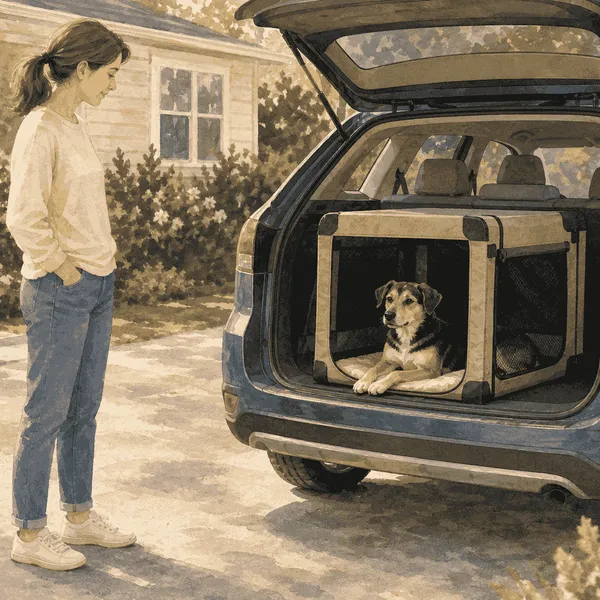
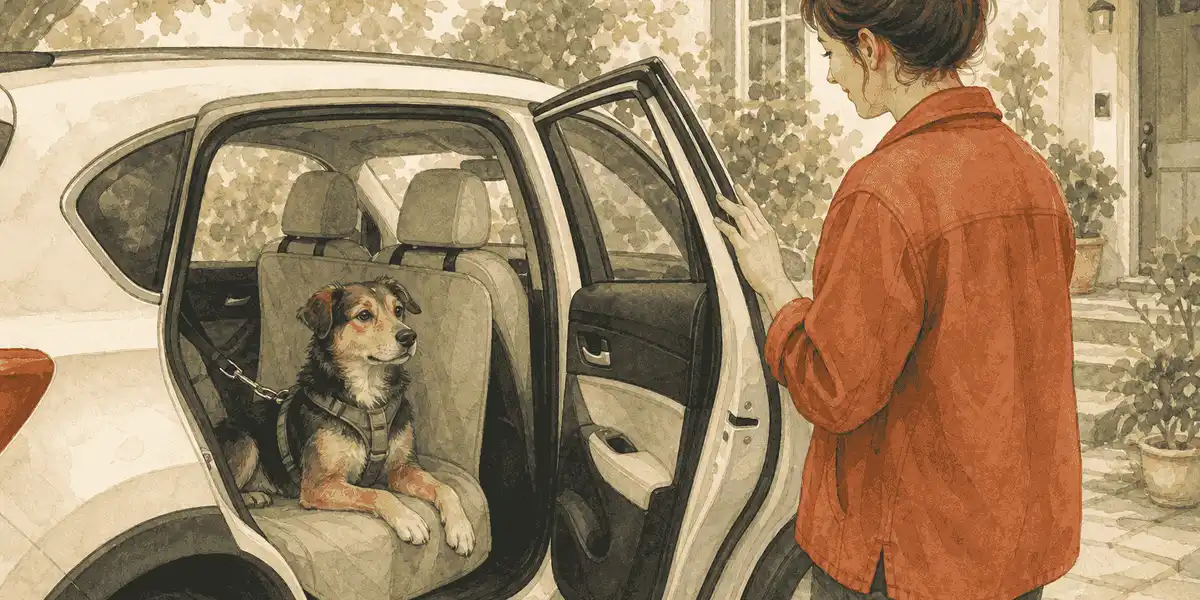
In the UK, Highway Code Rule 57 says animals in vehicles should be suitably restrained so they cannot distract the driver or injure themselves or occupants in a sudden stop. It names seat-belt harnesses, carriers, cages, and dog guards as possible approaches. That is a useful starting point, not a product test.
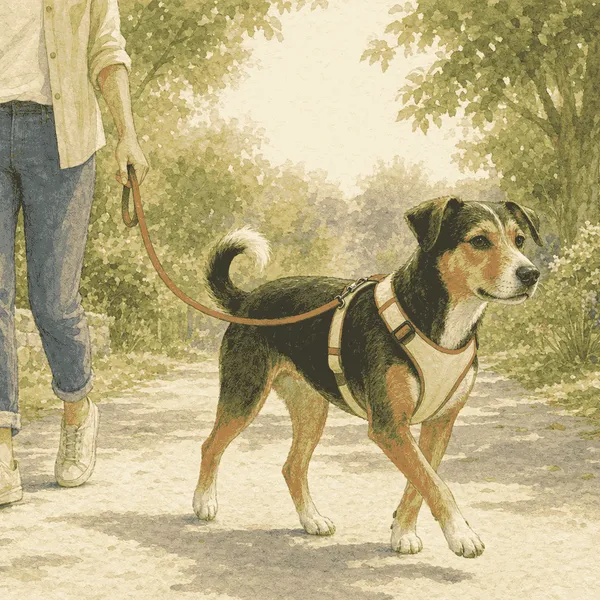
The rule does not show that a particular harness, crate, carrier, or guard is crash-tested or right for a particular dog and car. A walking harness is designed for a different job, so do not assume that an ordinary walk setup automatically answers a vehicle-restraint question. The dog harness fit guide can help with ordinary movement and contact checks; vehicle use needs its own suitable setup.
Before driving, ask a small set of questions: Does this setup keep the dog from moving into the driver’s space? Is it appropriate for this dog and this vehicle? Can you set it up calmly while parked? If a product’s intended vehicle use or fitting instructions are unclear, pause the journey plan until you can confirm them rather than improvising around the dog.
Make the First Car Lesson Happen While Parked
Dogs Trust car-travel guidance begins before the engine turns on. Let the dog approach a parked car at a comfortable distance, then explore the interior without movement. Once that feels ordinary, add the engine sound, then a short, smooth ride. Each step is a separate lesson, not a test the dog must pass on the first day.
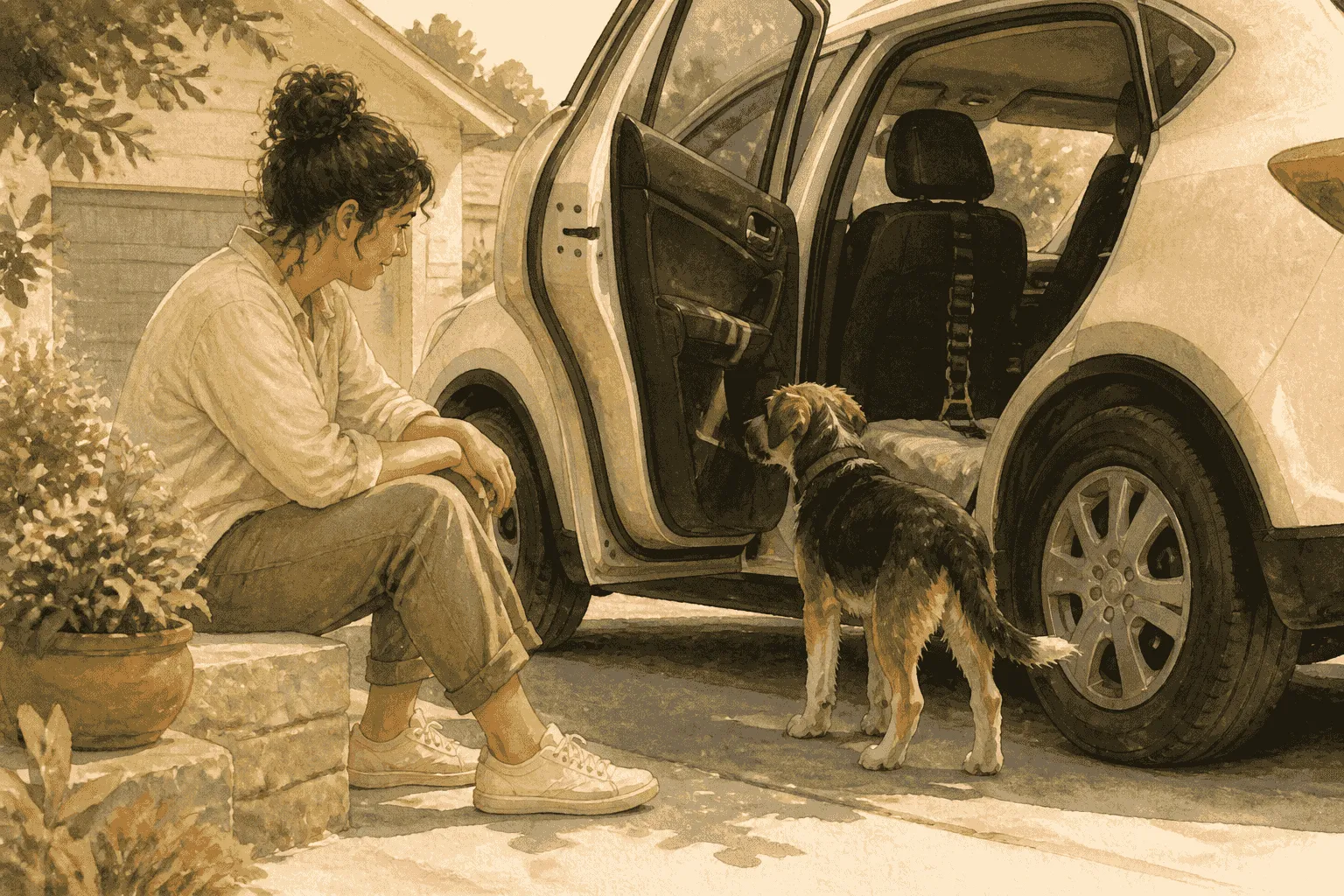
Use the restraint setup during these parked sessions so the first moving ride does not also introduce a completely new piece of equipment. Move on only when the dog remains comfortable at the current step. If the dog becomes frightened, return to an easier version rather than holding them in place or making the next ride longer.
For a puppy, this belongs beside the rest of the early routine—not instead of it. The first 30 days with a new puppy can help keep travel practice, rest, toileting, and veterinary care in proportion.
Let Comfort Set the Pace of the Journey
Start with a journey short enough to observe the dog rather than endure a difficult trip. A smooth route and a calm arrival make it easier to learn what the dog can handle next. There is no universal number of rides or minutes that turns travel into a settled habit.
Do not force a frightened dog to travel just to “get them used to it.” Repeated vomiting, severe drooling, panic, or persistent distress is not a cue to keep increasing exposure. Ask your veterinarian about physical causes or motion sickness, and seek qualified behavior support when fear is established. Training does not replace either kind of help.
Plan the Parking Stop Before the Keys Turn
The RSPCA cautions that shade and a cracked window are not cooling systems for a dog left in a warm parked car. Rather than relying on a time or temperature rule, decide before departure whether the dog stays safely at home, comes with you to a dog-friendly destination, or has another safe arrangement.
That plan matters even when the drive itself is short. A safe restraint is only one part of travel; it does not make an unattended parked car safe. For signs that need prompt action on a hot day, see this guide to early dog heatstroke signs.
A First-Ride Check Before You Leave
Use this quick review before the first trip and again as the dog grows or the routine changes:
- Set up a suitable restraint for the dog and vehicle, not just the product name.
- Practice calm entry and settling while the car is parked.
- Begin with a brief, smooth journey and keep the next step small.
- Make the parking plan before departure; shade and open windows are not a safety system.
- Stop and get veterinary or qualified behavior help for repeated sickness, panic, or persistent distress.
A calmer car routine is built from small successful repetitions, not a single long ride. The first goal is simple: give your dog a suitable setup and enough time to learn that the car can be predictable.
Sources
Petzette's claim cards for this article point to the following scientific, veterinary, or animal-welfare sources.
- GOV.UK Highway Code Rule 57: Animals In Vehicles: UK government road-safety guidance
- Dogs Trust Car-Travel Training: Animal-welfare training guidance
- RSPCA Dogs In Hot Cars Guidance: Animal-welfare safety guidance