Health Signals10 July 2026
Dog Heatstroke: Early Signs and What to Do First
Dog heatstroke can begin with signs that resemble ordinary summer discomfort. Learn the warning cluster, safe first aid, and when to call a veterinarian.
TextPetzette Editorial
Read3 Min
Evidence status
Source-backed editorial
- Evidence record
- 3 claim cards linked to 2 documented sources.
- Independent expert review
- Not commissioned. Petzette Editorial is responsible for the published wording.
- Source record checked
- 10 July 2026
- Scope
- General information, not an individual diagnosis or treatment plan.
Dog heatstroke can begin with signs that look uncomfortably ordinary: heavier panting, a dog slowing down, or a sudden search for shade. The safest response is not to diagnose heat stroke in dogs from one symptom. It is to notice when several changes gather, begin cooling promptly, and contact a veterinarian.
Heat-related illness can progress quickly, so this is one subject where waiting for certainty creates the wrong kind of delay. Here is how to recognize the early pattern and what to do first.
Early Signs of Heatstroke in Dogs Form a Pattern
Panting is normal cooling behavior in many situations. On its own, it does not confirm heatstroke. Royal Veterinary College guidance asks owners to look for progression and accompanying signs, which can include:
- panting that becomes distressed or noisy
- restlessness, pacing, or urgently seeking shade or water
- increased drooling
- red gums or tongue
- a faster heart rate
- vomiting or diarrhea
The picture becomes more urgent when a dog who was coping begins to act unlike themselves. Lethargy, confusion, weakness, collapse, or seizures are advanced emergency signs. Do not wait for those severe changes before starting first aid and calling a veterinary clinic.
Some Dogs Need a More Conservative Heat Plan
A 2020 study in Scientific Reports examined veterinary records covering more than 900,000 dogs. In that study, heat-related illness risk was associated with factors including brachycephalic skull shape, higher body weight relative to the breed-and-sex average, age over two years, and very large body size.
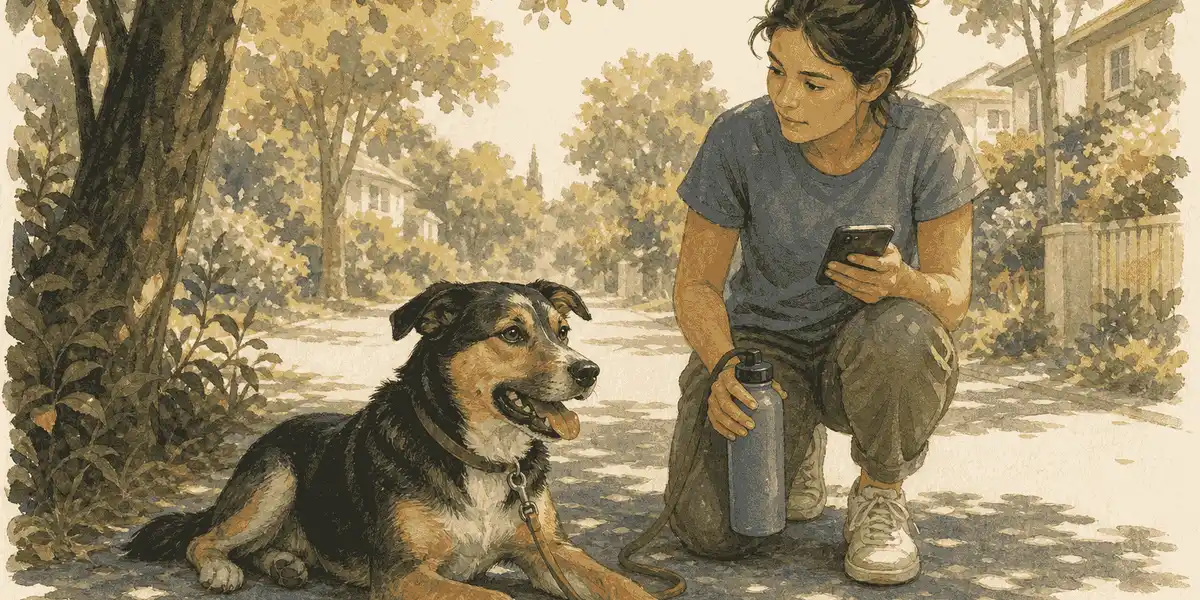
That does not mean only flat-faced, older, or heavy dogs can overheat. It means some dogs need a larger safety margin. A dog can still pull toward the park, carry a toy, or look eager at the door while needing a cooler and shorter plan.
Weather is only part of the setup. Exercise in warm conditions and time in a warm, humid, poorly ventilated place can also lead to rapid overheating. Watch the dog in front of you, not just the number on a forecast.
What to Do When You Suspect Overheating
Royal Veterinary College guidance summarizes the order as “cool first, transport second.” That means starting safe cooling while arranging veterinary help, rather than putting a hot dog straight into a warm vehicle and postponing action until arrival.
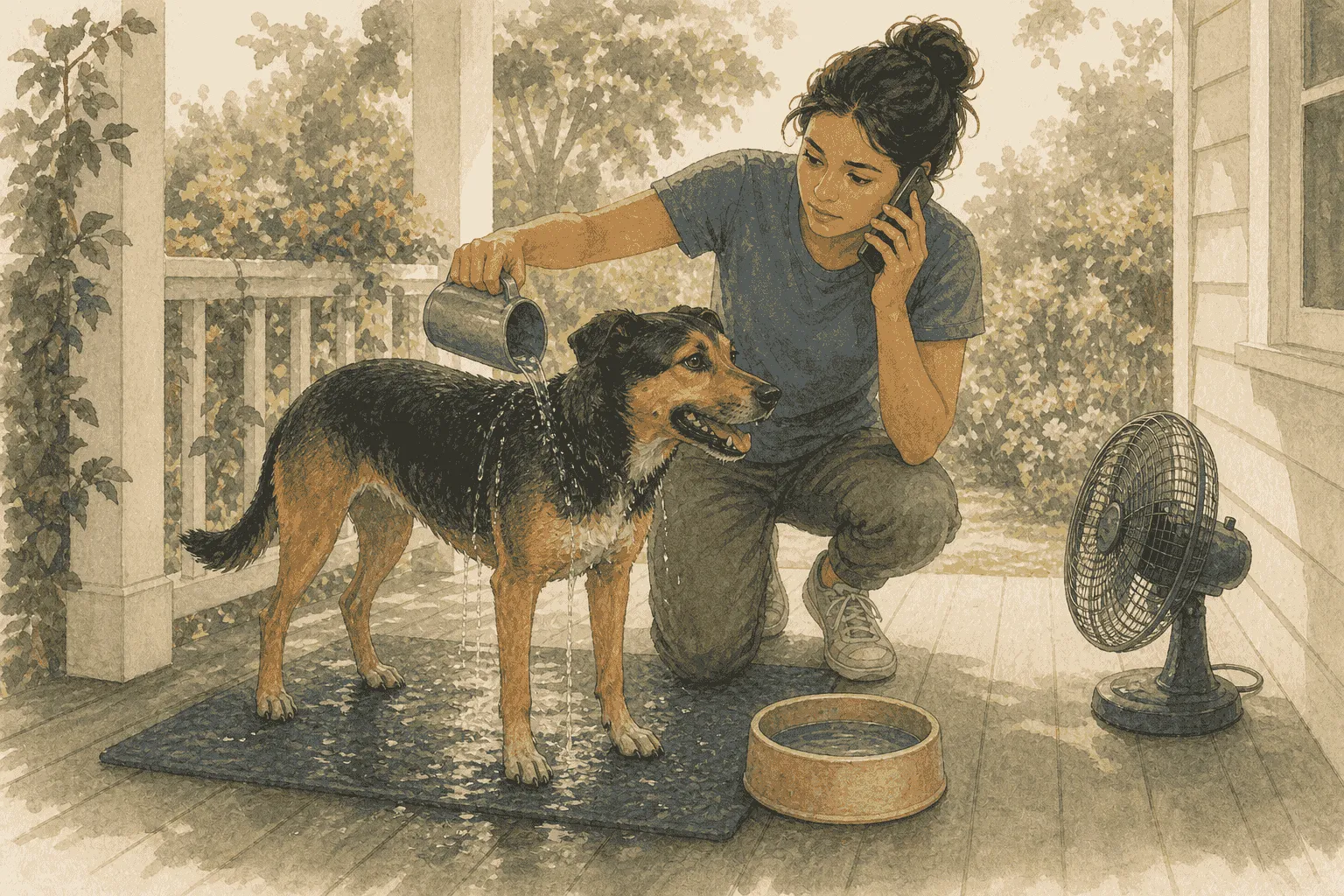
Move the dog into a cool, well-ventilated place. Begin applying water that is cooler than the dog and combine it with airflow from a breeze, fan, or air conditioning. Offer small sips of water, but do not force drinking. Call your veterinarian as soon as possible and follow their advice about transport and continued cooling.
Avoid ice-cold water. RVC guidance notes that it can reduce blood flow to the skin or trigger shivering, both of which can work against cooling. This is first aid, not a home cure: even a dog who seems to improve should be assessed unless the veterinarian advises otherwise, because more serious effects may not be immediately obvious.
Prevention Starts Before the Walk
On warm days, move exercise to cooler times, choose shaded routes, carry water, and make it easy to turn back early. Never leave a dog in a parked vehicle or hot enclosed room. For higher-risk dogs, shorten the plan before the dog shows distress.
Young dogs can be especially enthusiastic about activity, so make heat planning part of the routines in a new puppy’s first 30 days. The goal is not to make summer frightening. It is to create enough margin that the walk stays uneventful.
The Takeaway
The early signs of dog heatstroke are most useful as a cluster. Panting plus restlessness, drooling, red gums, stomach upset, or a meaningful change in movement deserves attention. Weakness, confusion, collapse, or seizures signal an advanced emergency.
If you are concerned, move to a cool place, start cooling with water and airflow, and call a veterinarian immediately. Acting on the pattern is safer than waiting for one dramatic sign.
Sources
Petzette's claim cards for this article point to the following scientific, veterinary, or animal-welfare sources.
- RVC Heatstroke Signs And First Aid: Royal Veterinary College veterinary fact file
- Heat-Related Illness Risk In Dogs: Peer-reviewed paper