Health SignalsUpdated 12 July 2026
How Often Should You Really Wash Your Dog?
How often should you wash your dog? Skip the fixed calendar and use coat, lifestyle, comfort, and skin condition to set a safer routine.
TextPetzette Editorial
Read3 Min
Evidence status
Source-backed editorial
- Evidence record
- 3 claim cards linked to 2 documented sources.
- Independent expert review
- Not commissioned. Petzette Editorial is responsible for the published wording.
- Source record checked
- 12 July 2026
- Scope
- General information, not an individual diagnosis or treatment plan.
Ask five people how often you should wash your dog and you may get five tidy calendars. The more useful answer is less numerical: there is no single bath interval that suits every dog. Coat, daily life, comfort, and skin condition all change the plan.
That can feel inconvenient when you wanted a date for the next bath. It is also freeing. You do not need to wash a clean, comfortable dog because an online countdown expired, and you do not need to ignore a genuinely muddy coat because the next date has not arrived.
Start with the dog, not a frequency chart
PDSA’s veterinary-welfare guidance treats grooming frequency as an individual question. Coat length and texture matter, but so do the season and the dog in front of you. The same principle applies to bathing: routine washing is not usually needed on one universal schedule.
A practical check begins with observable questions:
- Is there mud or another substance that actually needs to come off?
- Does this coat have a routine set by a reputable groomer?
- Is the dog comfortable with the handling, water, and drying involved?
- Has the coat or skin changed since the last bath?
Longer, denser, or curlier coats often need more hands-on maintenance than many short coats, but that does not produce a reliable weeks-by-breed chart. A dog’s age, individual coat, season, and health can all change what sensible maintenance looks like. If the coat is unfamiliar to you, ask a veterinarian or reputable groomer how to care for it safely.
Separate a muddy day from a treatment plan
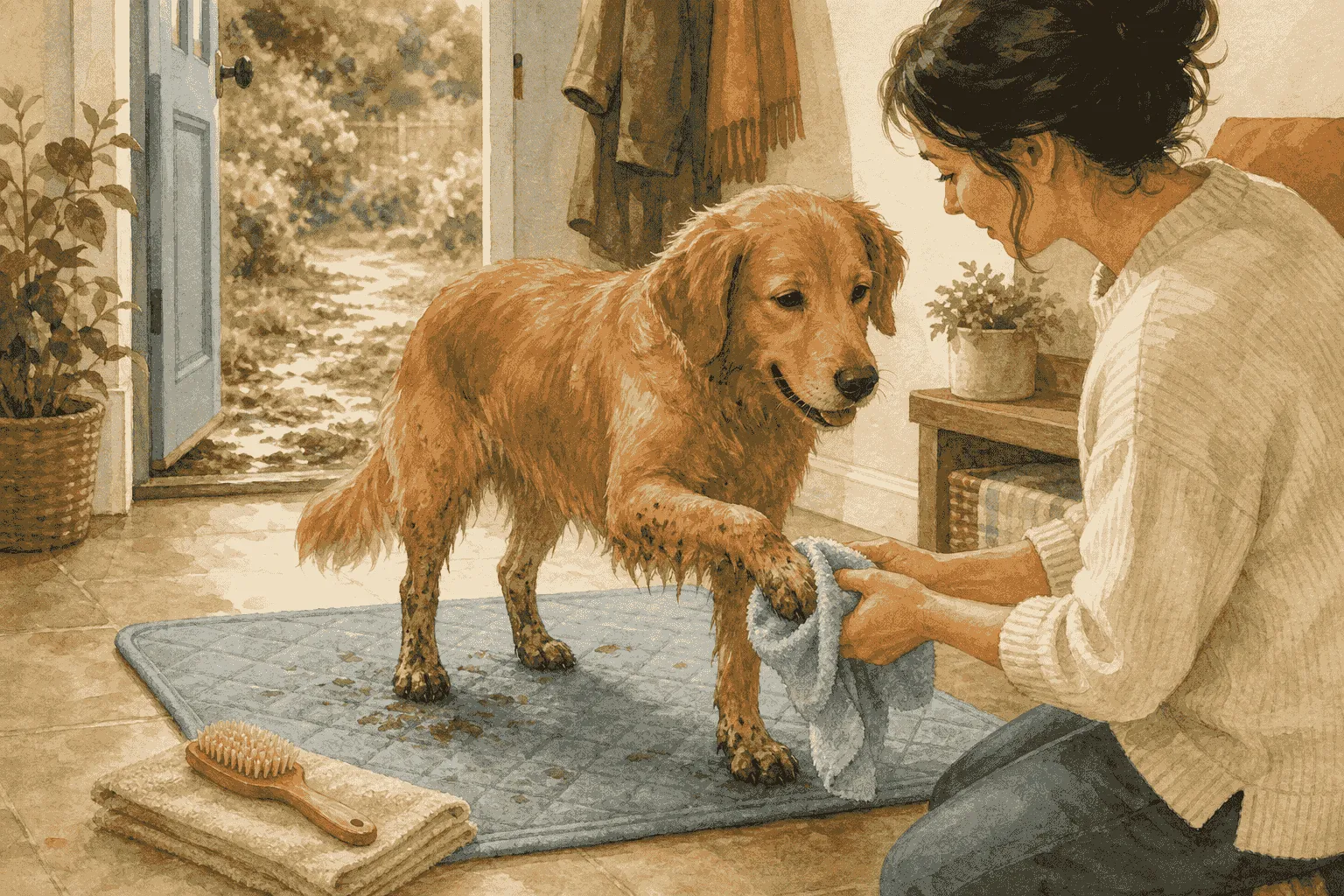
A muddy walk is a cleaning problem. Persistent itch, redness, unusual odor, hair loss, sore skin, or a suddenly different coat is a health question. Those situations should not be solved by repeatedly changing the bath schedule or experimenting with products.
Dogs with a diagnosed skin condition may have a veterinarian-directed bathing plan that looks very different from an ordinary home routine. Follow that individual plan rather than general grooming advice. A medicated shampoo, its timing, and how it is used belong inside veterinary care.
Make an ordinary bath calm and simple
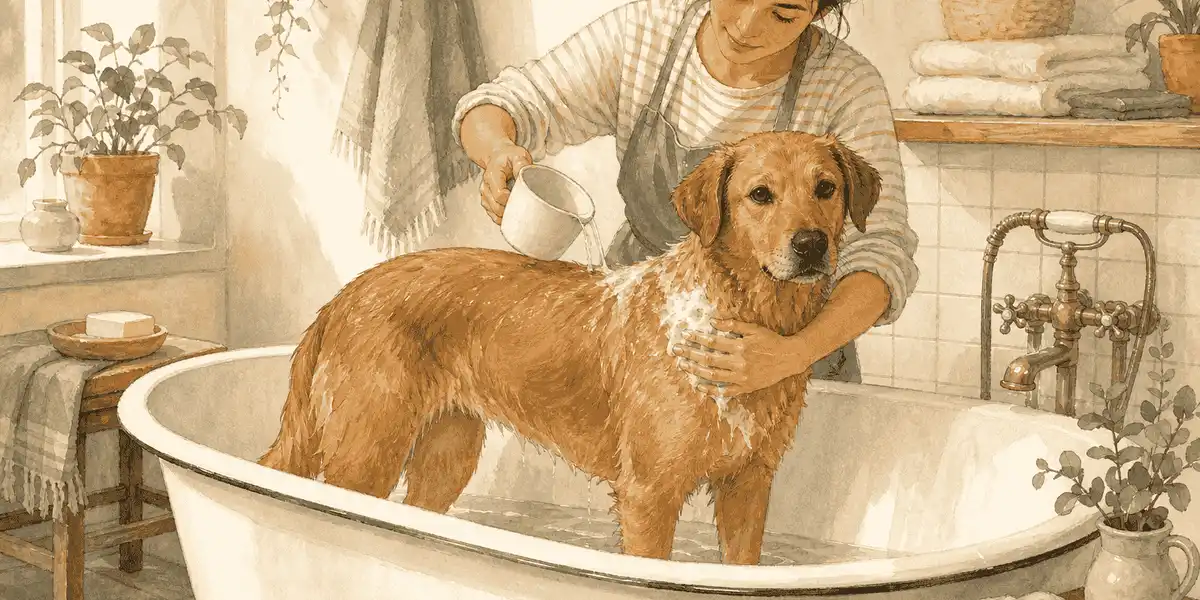
For routine home bathing, use a dog-specific shampoo rather than improvising with a human product. Keep the setup predictable, move slowly, and notice the whole dog. Pulling away, stiffening, repeated attempts to leave, or growing worry are reasons to pause and make the next session easier.
Bath time is only one part of coat care. Brushing needs vary widely by coat, and short, comfortable grooming sessions can help you notice changes without turning every check into a full wash. Our guide to a calm, coat-specific grooming routine explains how to build that rhythm without forcing a fixed calendar onto every dog.
Do not try to cut out tight mats at home or clean an itchy, painful, smelly, or unusually waxy ear as part of bath day. Both can need professional assessment, and handling a sore area can make the dog more worried.
When the calendar should stop
If bathing suddenly becomes difficult, or if you notice skin, coat, or ear changes, stop trying to find the perfect interval online. Ask your veterinarian what the change needs. Severe fear, bite risk, pain, or difficult matting also calls for qualified help rather than a longer struggle in the tub.
The best answer to “how often should you wash your dog?” is therefore a decision, not a number: wash when routine cleaning is genuinely needed, match the method to the individual coat, protect the dog’s comfort, and move health concerns to a veterinarian.
Sources
Petzette's claim cards for this article point to the following scientific, veterinary, or animal-welfare sources.
- PDSA Pet Grooming Guidance: Veterinary charity practical-care guidance
- VCA Nail Trim Stress Reduction: Veterinary hospital behavior guidance