Health Signals07 September 2026
Dog Pododermatitis: What to Notice Before the Vet Visit
What does pododermatitis mean in a dog paw? Learn what to record, why a photo cannot name the cause, and when to call your veterinarian.
TextPetzette Editorial
Read4 Min

Evidence status
Source-backed editorial
- Evidence record
- 5 claim cards linked to 5 documented sources.
- Independent expert review
- Not commissioned. Petzette Editorial is responsible for the published wording.
- Source record checked
- 07 September 2026
- Scope
- General information, not an individual diagnosis or treatment plan.
Pododermatitis in a dog paw means that skin on or around the paw is inflamed. It is a description of a presentation, not a complete explanation of what caused it. The useful first decision is to make a calm record of what changed and arrange veterinary advice when the change is persistent, painful, or affecting the walk.
What Does Pododermatitis Describe?
The peer-reviewed review Canine pododermatitis: A complex, multifactorial condition by Jangi Bajwa describes inflammation of pedal skin, including the spaces between the toes, the footpads, and the nail folds. That is a useful map for noticing a change, but the word does not identify one cause in an individual dog.
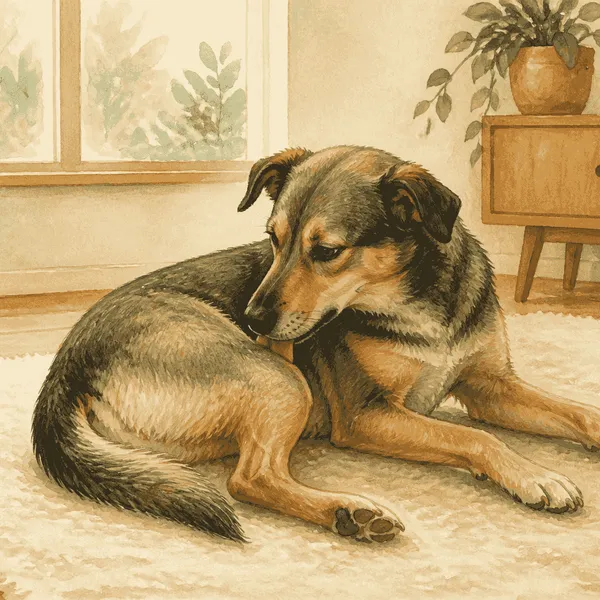
Redness, swelling, a sore-looking gap between toes, repeated licking, or a changed walk can have more than one possible explanation. A photo can preserve what the paw looked like at one moment; it cannot tell you whether the underlying issue involves infection, allergy, irritation, a foreign body, or another condition. Treat the term as a reason to gather context, not as a diagnosis to make from a screen.
If the visible change is hard, thick, or horn-like pad growth rather than inflamed skin, the question may be different. Our guide to dog paw hyperkeratosis and what to notice first explains why that description also needs veterinary context rather than home trimming.
Make a Small Paw Record
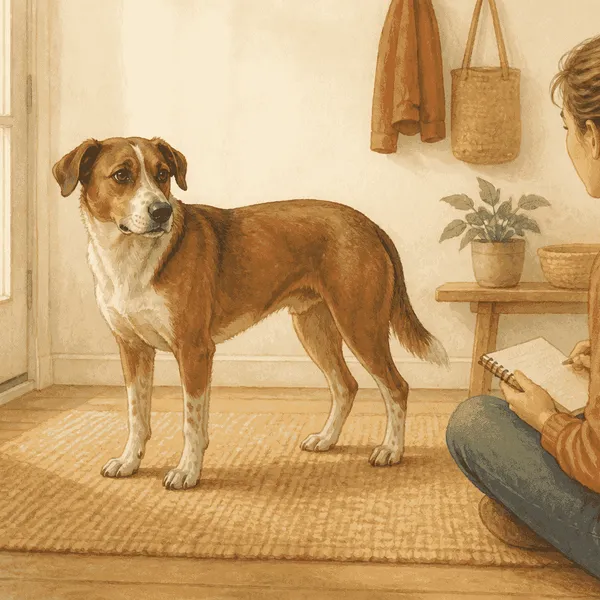
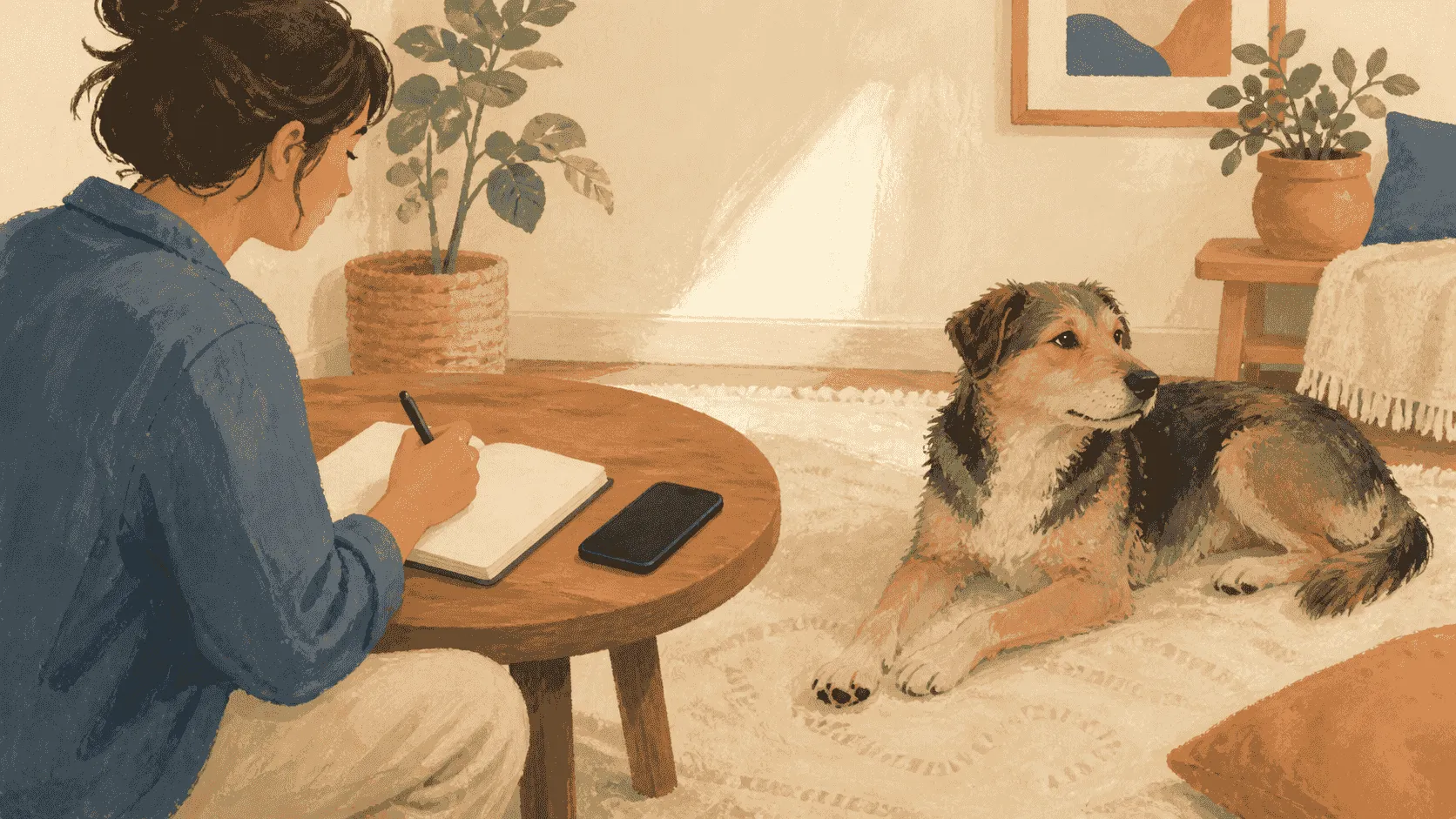
Before the appointment, write down what you can observe without squeezing, scraping, or turning the paw into a home test:
- when you first noticed the change and whether it is spreading or recurring;
- which paw and which area are involved: between toes, pad, nail fold, or more than one area;
- what you can see from a comfortable distance, such as redness, swelling, a nodule, an open area, discharge, or a change in the surface;
- whether licking, nibbling, scratching, resting, or sleep has changed; and
- whether your dog’s ordinary stance, stride, weight-bearing, or willingness to use the paw looks different.
A clear photo taken only if your dog is relaxed can help preserve the timeline. It does not need to be a close-up, and it is not worth holding a paw still if your dog is worried or painful. Note what you could not safely check. That is useful uncertainty for the veterinary team, not a missing piece you need to solve yourself.
For a broader routine that compares a dog’s ordinary walk and paw condition across seasons, see calm dog paw checks for every season. A routine baseline helps you recognize a meaningful change without repeatedly handling a sore area.
Why a Veterinary Examination Can Matter
The Bajwa review describes pododermatitis as complex and multifactorial. In plain language, several kinds of factors can contribute to inflamed paw skin, and the visible pattern may not sort them out. The MSD Veterinary Manual likewise notes that many skin diseases can look alike. Its diagnostic guidance puts the history and physical examination first, with selected tests used when they help the veterinary team assess an individual case.
That is why a useful appointment story includes the onset, location, progression, licking or scratching, pain, movement, recent environment, and anything already applied. It is also why an owner does not need to arrive with a preferred test or a confirmed label. The veterinarian can decide what the paw needs after seeing the dog and reviewing the record.
When to Contact Your Veterinarian
Contact your veterinarian when the paw change is persistent, returning, or accompanied by repeated licking, apparent pain, swelling, an open or draining area, bleeding, or a new change in the walk. A fast-worsening change, inability to bear weight, or a dog who seems significantly unwell deserves prompt veterinary direction rather than more home checking.
If your dog is comfortable and the change is small, you can still make the record and ask the practice how soon it should be assessed. The right timing depends on the dog’s overall condition and the pattern you can describe. A dog who can still walk normally is not automatically cleared, and a dramatic-looking photo does not set the urgency by itself.
What Not to Try at Home
Do not scrape, squeeze, lance, trim, or aggressively clean an inflamed paw to find the cause. Do not choose a medicated product, human medicine, supplement, soak, or home remedy from an online symptom match. The appropriate plan depends on the individual dog and the reason for the inflammation; veterinary guidance should come before treatment.
The practical answer to “what is pododermatitis in a dog paw?” is therefore limited but useful: it is a name for paw-skin inflammation, not a cause. Record the location, timeline, visible change, and effect on comfort or movement, then let a veterinarian decide what assessment is needed.
Sources
Petzette's claim cards for this article point to the following scientific, veterinary, or animal-welfare sources.
- Canine Pododermatitis: Multifactorial Paw Inflammation and Diagnostic Boundary: Peer-reviewed veterinary review plus clinician-authored, peer-reviewed veterinary-manual guidance
- Jangi Bajwa, *Canine pododermatitis: A complex, multifactorial condition,* Canadian Veterinary Journal 2023;64(5):489–492. The peer-reviewed review describes canine pododermatitis as inflammation of pedal skin, including the interdigital spaces, footpads, and nail folds, and explains that it can involve multiple primary, predisposing, perpetuating, and secondary factors.
- AAHA Pain Management Guidelines 2022: Veterinary clinical guideline and consensus statement
- UC Davis Summer Paw Hazards 2026: Veterinary-school practical safety guidance
- Merck Veterinary Manual: Itching (Pruritus) in Dogs: Clinician-authored veterinary manual, pet-owner edition
- PDSA: Itchy Skin in Dogs: Veterinary charity symptom guidance