Behavior23 July 2026
Dog Zoomies at Night: Check the Pattern, Clear the Path
Dog zoomies at night have no single known cause. Learn what to record, how to clear the running route, and when to call your veterinarian.
TextPetzette Editorial
Read3 Min
Evidence status
Source-backed editorial
- Evidence record
- 4 claim cards linked to 2 documented sources.
- Independent expert review
- Not commissioned. Petzette Editorial is responsible for the published wording.
- Source record checked
- 23 July 2026
- Scope
- General guidance. Individual animals and circumstances can differ.
Dog zoomies at night can turn a quiet room into a racetrack in seconds. The useful first decision is not whether your puppy is happy, bored, stressed, or “overtired.” It is whether this looks like a familiar short burst you can manage safely, or an unfamiliar movement pattern that needs professional help.
Veterinary guidance gives this behavior a formal name—frenetic random activity periods, or FRAPs—but the label is not an explanation. Start with the route, then read the whole dog before, during, and after the run.
Why Do Dogs Get the Zoomies?
There is no known single cause of dog zoomies. Cornell University College of Veterinary Medicine notes that FRAPs are most common in puppies and young dogs, although dogs of other ages can have them too. Reported contexts include late evening, play, overstimulating training, defecation, an exciting event, or a person’s return.
Those are contexts, not diagnoses. Evening timing does not establish that a puppy needs to be exhausted, and a post-walk or post-bath dash does not reveal one hidden motive. The same restraint applies to the question “are zoomies a sign of a happy dog?” A loose, familiar burst may look playful, but one signal does not certify an emotion or rule out a concern.
Make a Four-Part Zoomies Note
Use one short record instead of trying to solve the behavior while the dog is running:
- Before: Note the time and what was happening immediately beforehand.
- Body: Look at the whole dog, not only the tail. Was the body loose and wiggly, or did tension persist?
- Route: Record where the dog ran and which hazards were within reach.
- After: Note how the episode ended and whether that recovery matched this dog’s familiar pattern.
This is an observation tool, not a home diagnostic test. If you are already recording another repeated behavior, the same context-first principle appears in our guide to reading a barking trigger before training.
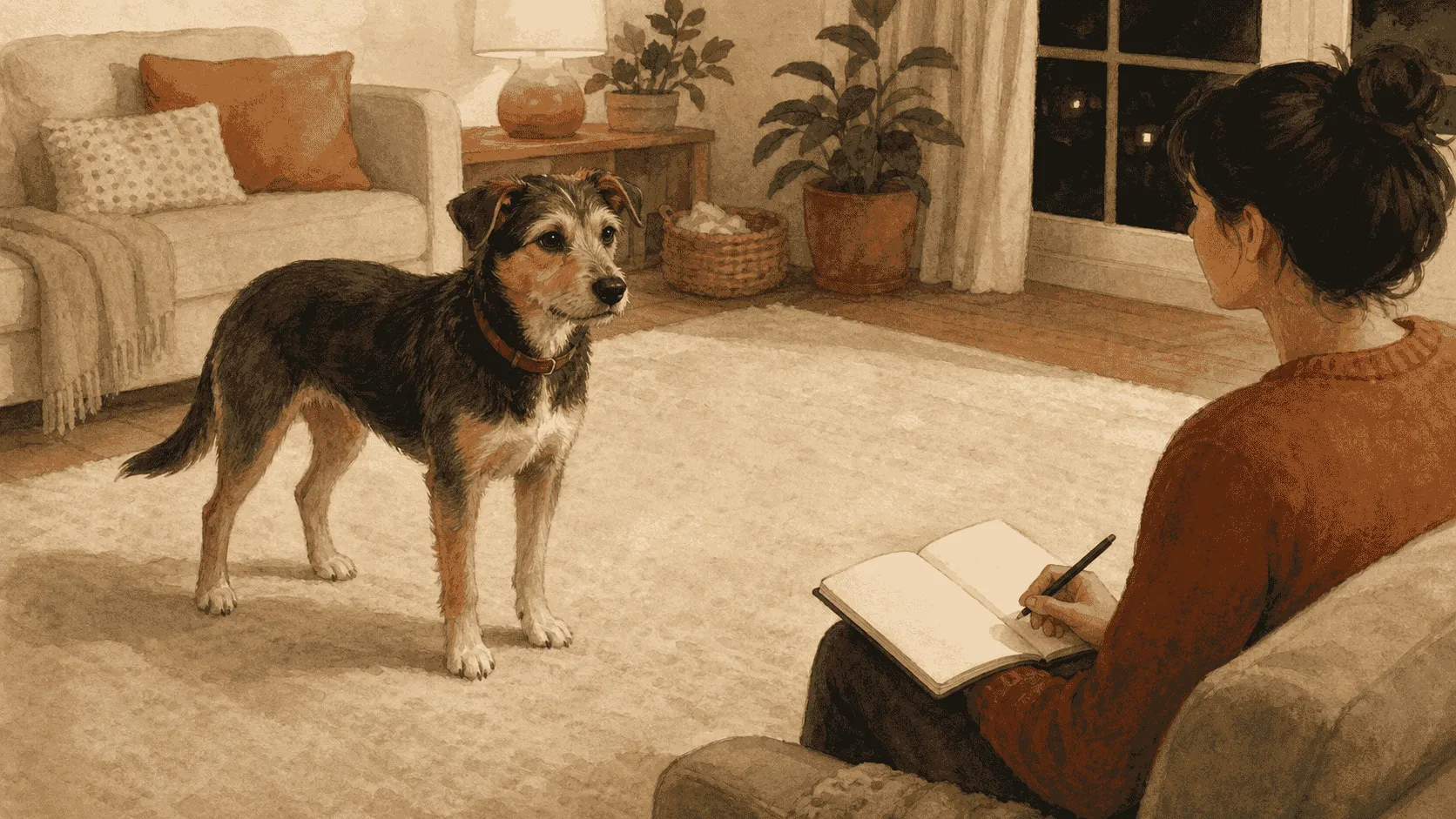
What to Do When Dog Zoomies Begin
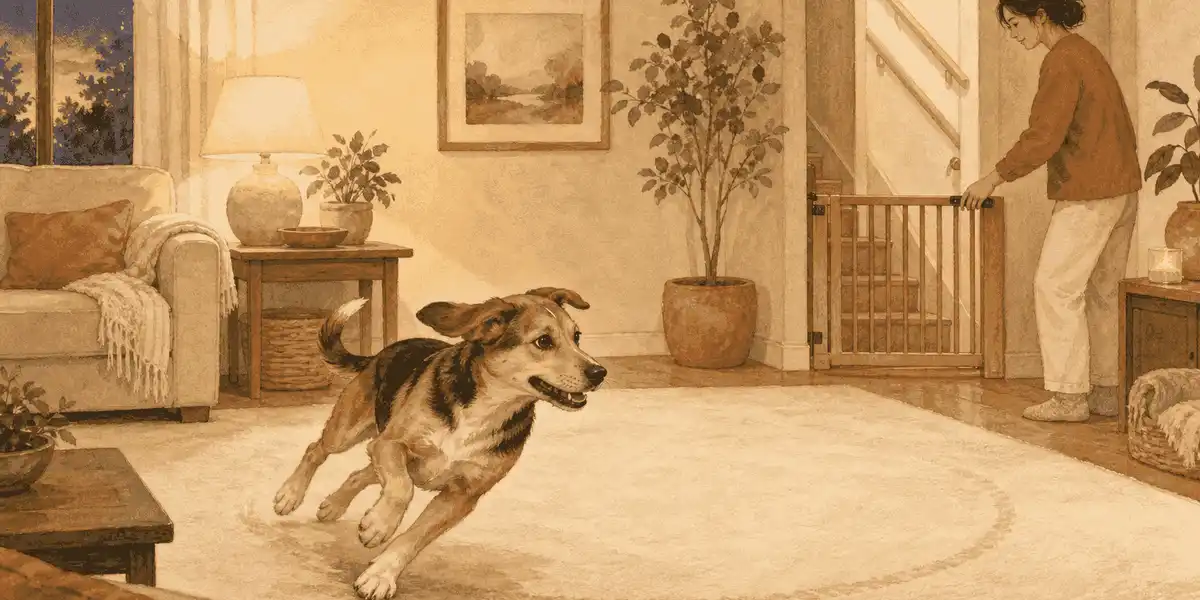
Manage the environment before trying to interpret the sprint. Cornell’s guidance recommends keeping a zooming dog enclosed and away from roads, stairs, slippery footing, holes, and obstacles.
In practical terms, close access to the street, block the stairs, and give furniture edges and people a wider margin. A rug or other stable surface can offer a clearer route than a slick floor. Do not deliberately trigger harder running to test a theory. A fenced room or yard can reduce some hazards, but it does not establish that the episode is harmless.
For a new puppy, review the whole daily setup instead of reacting to one energetic minute. The first-30-days puppy checklist can help you look at rest, routine, gentle training, and age-appropriate activity together without turning one burst into a verdict on the day.
Read the Whole Dog, Including the Stop
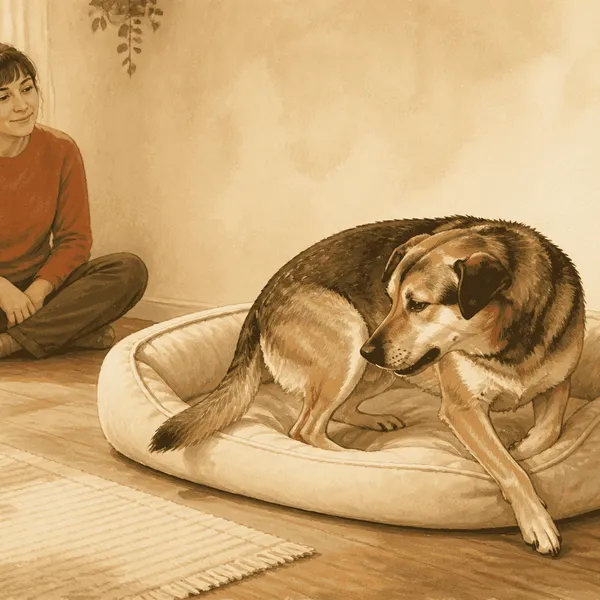
Dogs Trust advises reading the individual dog, the whole body, and the situation because one body part can mean different things in different contexts. Cornell describes a familiar loose, wiggly FRAP that settles differently from a dog who remains tense, tightly tucked, or appears painful, frightened, or anxious.
That comparison helps you decide what to do next; it does not diagnose the reason. A wag, play bow, or quick lie-down cannot prove that the dog is happy or healthy. Your dog’s own familiar pattern matters more than an online clip or a universal frequency rule.
When Not to Call It “Just Zoomies”
Contact your veterinarian when the movement is sudden, marked, unfamiliar, or paired with apparent pain, fear, anxiety, or injury. Describe what happened before, the route taken, the dog’s whole-body posture, and what happened afterward. A short video may be useful only if it can be captured without provoking another episode or compromising safety.
Keep the nighttime decision focused. If the main change is crying, inability to settle, or distress around the sleep setup rather than a brief running burst, use the separate new-puppy nighttime check and ask your veterinarian when the pattern is concerning.
Tonight, choose one safe route and one place to keep a four-part note. That gives you something more useful than a guess: a clearer environment now and a better description if the pattern changes.
Sources
Petzette's claim cards for this article point to the following scientific, veterinary, or animal-welfare sources.
- Cornell Dog Zoomies And Safety Guidance: First-party veterinary-school guidance on canine frenetic random activity periods
- Dogs Trust Body Language Context Guidance: Welfare organization dog body-language guidance