Behavior22 August 2026
Why Do Dogs Dig Holes? Build a Safer Digging Outlet
Why do dogs dig holes? Build one safe digging area, protect fences and flower beds, and watch for sudden, frantic, or escape-focused changes.
TextPetzette Editorial
Read4 Min
Evidence status
Source-backed editorial
- Evidence record
- 2 claim cards linked to 2 documented sources.
- Independent expert review
- Not commissioned. Petzette Editorial is responsible for the published wording.
- Source record checked
- 14 July 2026
- Scope
- General guidance. Individual animals and circumstances can differ.
Why do dogs dig holes? For a new owner, the safest answer is not a single motive. If a dog repeatedly chooses to dig, make the next decision practical: give digging one safe, obvious place where it earns a yes, while protecting fences and garden beds. Sudden, frantic, escape-focused, or distress-linked digging is a different pattern and needs individual assessment.
Blue Cross dog-friendly garden guidance recommends a sand pit or soil area as an outlet for dogs who like to dig. It also pairs that idea with daily boundary checks for dogs who dig or try to escape. That evidence supports a simple plan, not a diagnosis: create a legal hole, then keep the rest of the garden secure.
Why Do Dogs Dig? Start With the Whole Situation
Digging itself does not tell you why it happened. Avoid translating every hole into boredom, anxiety, defiance, or breed destiny; Blue Cross specifically cautions against those shortcuts. Watch the individual dog and the moment: where the digging starts, what was nearby, whether the dog can disengage, and whether this is familiar or newly intense.
Dogs Trust guidance makes the same broader point for behavior: read the whole body, the situation, and the dog’s baseline. A single posture or burst of pawing cannot diagnose stress, fear, aggression, or pain. The dog body-language pause map is the wider reference for deciding when to lower pressure and give space.
Build One Dog Digging Area
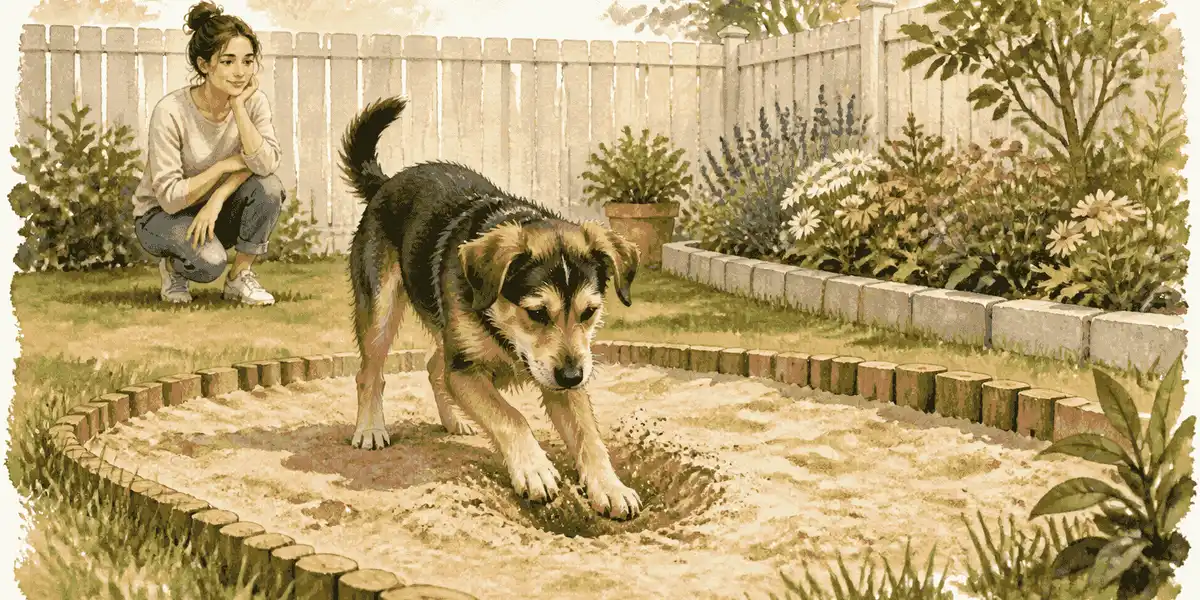
Choose a sand or soil area that is visually and physically distinct from fence lines, protected beds, and any place you need to keep intact. The important boundary is not decorative; it makes the yes-space obvious and prevents the dog from rehearsing digging beside a fence.
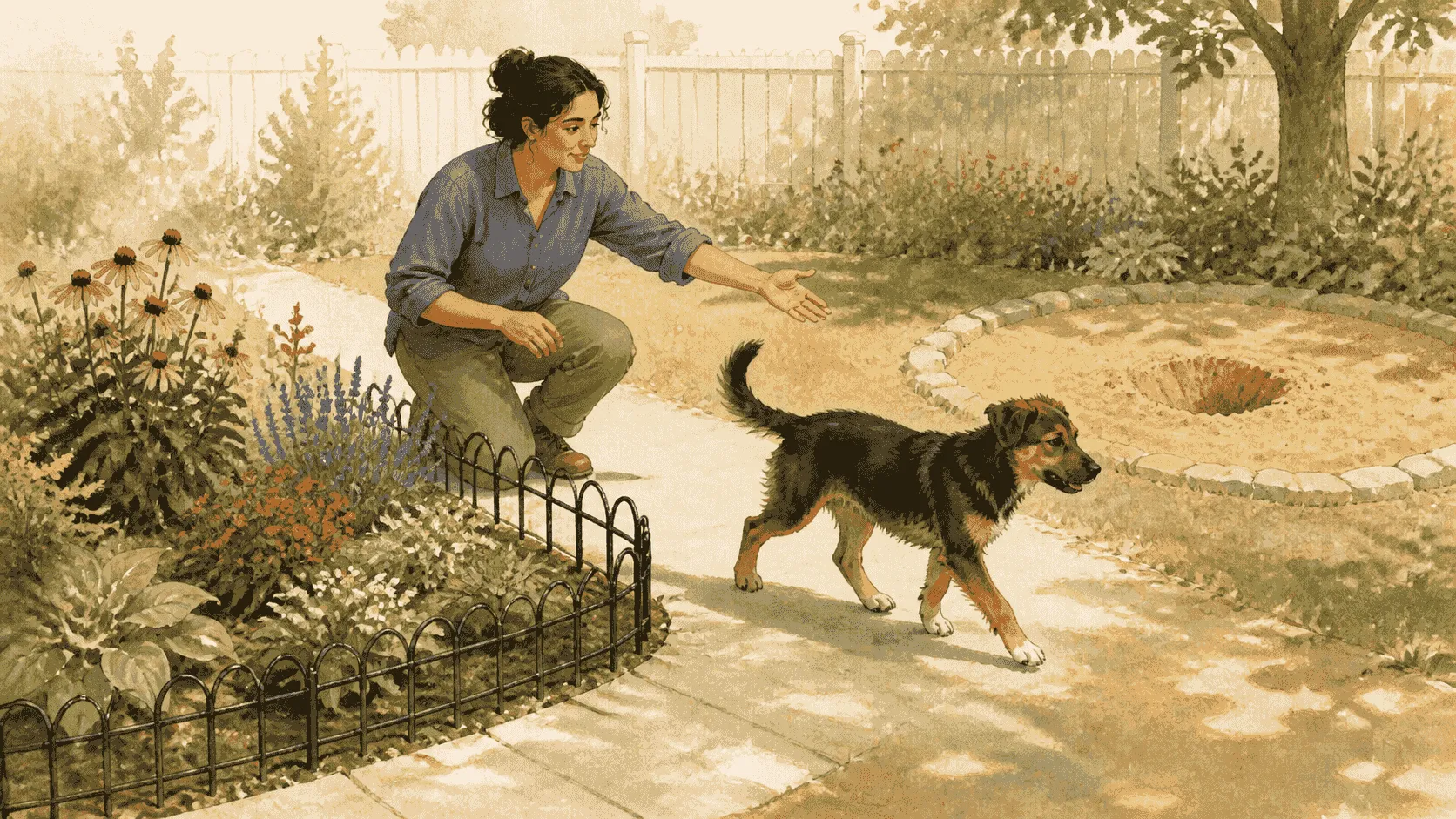
If you are setting up a new home, start before the first hole: decide where digging is allowed, protect the rest, and inspect the perimeter. For a puppy, fold that decision into the first 30-day puppy checklist, which covers the wider home routine. If the dog has already chosen a flower bed, calmly guide the next digging opportunity to the approved area; reward its use there. The goal is not to punish interest in digging, but to make the safe option easy to find. Blue Cross’s guidance supports the outlet-and-boundary pairing; it does not claim that a sand pit replaces walks, play, or other enrichment.
Keep the Outlet Separate From Other Hazards
A dig zone should not become a permission slip for chewing plants, reaching treated soil, or tunneling under a fence. Keep protected beds and unsafe boundaries out of the dog’s route, and check the fence daily when escape is part of the pattern. Do not let the dog dig beside the fence and then assume the hole is harmless because it is “theirs.”
This is also why a garden solution should sit inside a wider menu of activities. A safe dog-toy and enrichment guide can help you offer sniffing, searching, chewing, and shared play without asking the digging area to solve every need. The source boundary is clear: the outlet supports digging; it is not a universal fix.
When Dog Digging Needs a Closer Look
Change the plan when the behavior changes. Sudden or frantic digging, repeated attempts to escape, digging that looks linked with distress, or a pattern that is escalating deserves individual assessment. Note the place, time, what happened just before, the whole-body picture, and what happened after you added distance or made the next step easier. A short video can help only if you can record without cornering or provoking the dog.
Ask your veterinarian about a sudden or concerning behavior change, especially if it appears alongside a physical change. For persistent escape attempts, panic, injury risk, or behavior that you cannot safely interrupt, seek qualified behavior support too. Do not run a digging experiment beside a fence, and do not treat a hole as proof of a hidden diagnosis.
Your Next Step: Make One Legal Hole
Today, choose one safe sand or soil area. Walk the garden boundary, protect the flower beds, and make the approved zone the easiest place for your dog to use. Then watch what happens over several ordinary opportunities: does the dog choose the zone, keep searching elsewhere, or dig with more urgency than before?
That record gives you a better decision than guessing at the motive. Familiar digging that shifts to a safe outlet can stay a manageable enrichment choice. A new, frantic, escape-focused, distress-linked, or escalating pattern is a reason to pause the home plan and speak with a veterinarian or qualified behavior professional.
Sources
Petzette's claim cards for this article point to the following scientific, veterinary, or animal-welfare sources.
- Blue Cross Dog-Friendly Garden Dig Pit: Welfare and behavior guidance
- Dogs Trust Body Language Context Guidance: Welfare organization dog body-language guidance