Behavior01 August 2026
Why Do Dogs Sleep So Much? Check Rest Against Routine
Why do dogs sleep so much? Compare rest with your dog's usual routine, protect quiet choices, and know which changes need a veterinarian.
TextPetzette Editorial
Read4 Min
Evidence status
Source-backed editorial
- Evidence record
- 5 claim cards linked to 5 documented sources.
- Independent expert review
- Not commissioned. Petzette Editorial is responsible for the published wording.
- Source record checked
- 18 July 2026
- Scope
- General guidance. Individual animals and circumstances can differ.
Why do dogs sleep so much? The useful first-year question is not whether your dog matches a universal hour target. It is whether rest fits this dog’s emerging routine, whether the dog wakes and participates in ordinary life, and whether the pattern has changed. Start with the calendar and the whole dog—not one long nap.
This matters when a dog is new to your home because you may not have a reliable baseline yet. Give the pattern time to become visible while keeping sudden or concerning changes inside a veterinarian’s care.
Why Do Dogs Sleep So Much? First Check the Calendar
Dogs Trust places rest and sleep alongside food, toileting, walks, play, training, and social time in a useful routine. That makes rest part of the day rather than leftover time after every activity is finished.
Look at the sequence around sleep. Did your dog settle after a walk, meal, training session, visitor, or busy period? When the dog wakes naturally, do familiar activities resume? A newly adopted dog may show a different pattern as the household becomes predictable, but a settling story cannot be proved from sleep alone.
If you are still arranging that wider routine, the first 30 days with a new dog guide covers meals, toileting, walks, quiet time, and gradual adjustment together.
Build a Four-Point Rest Baseline
For three ordinary days, record four short observations rather than trying to total every minute asleep:
- Before rest: Note the activity and setting immediately before the dog settled.
- Rest choice: Record where the dog chose to lie and whether people or other animals interrupted.
- Wake-up: Notice whether the dog rose comfortably without being prompted.
- Participation: Note eating, drinking, toileting, movement, play, grooming, or social contact after waking.
This is a pattern check, not a home diagnosis. Dogs Trust advises reading the individual dog, the whole body, and the situation because one action can carry different meanings in different contexts. The broader guide to reading dog behavior in context owns that series-level principle.
Do not repeatedly wake the dog to test responsiveness or use one energetic moment as proof that nothing is wrong. A brief record is useful because it shows change across ordinary moments without manufacturing them.
Make One Resting Place Truly Off-Duty
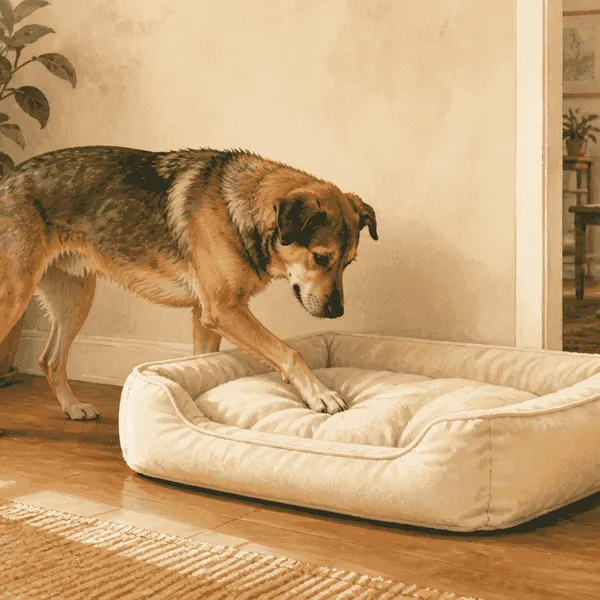
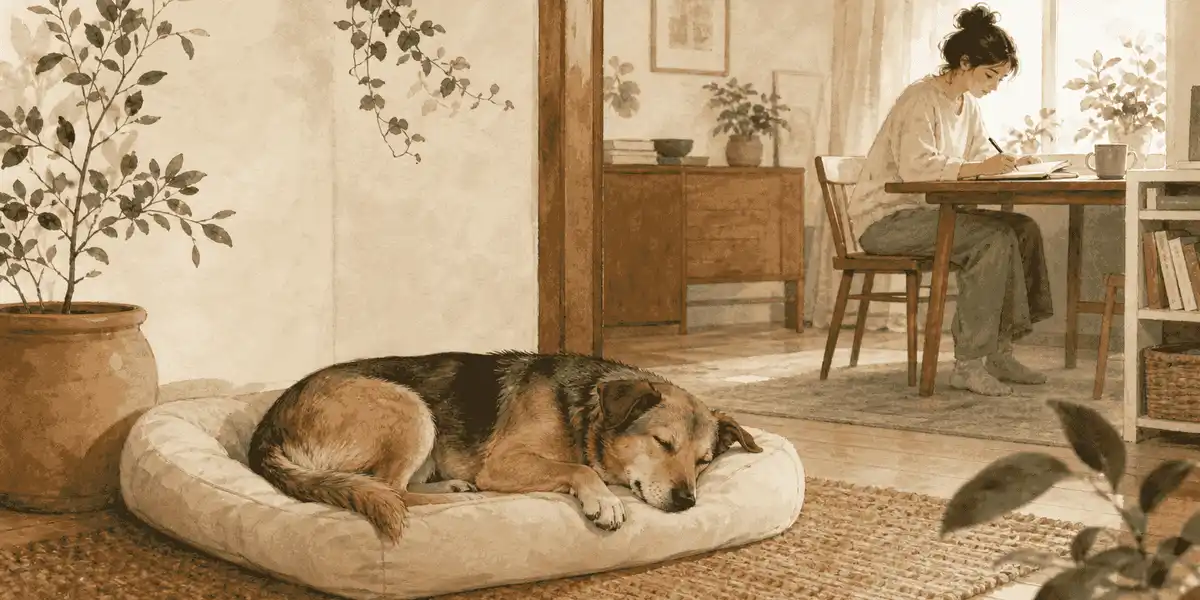
A bed supports rest only when the setup works for this dog. Dogs Trust recommends a comfortable, lower-traffic space that the dog can enter and leave freely. Family members and visitors should leave the dog alone while it is in use; the space should never become punishment.
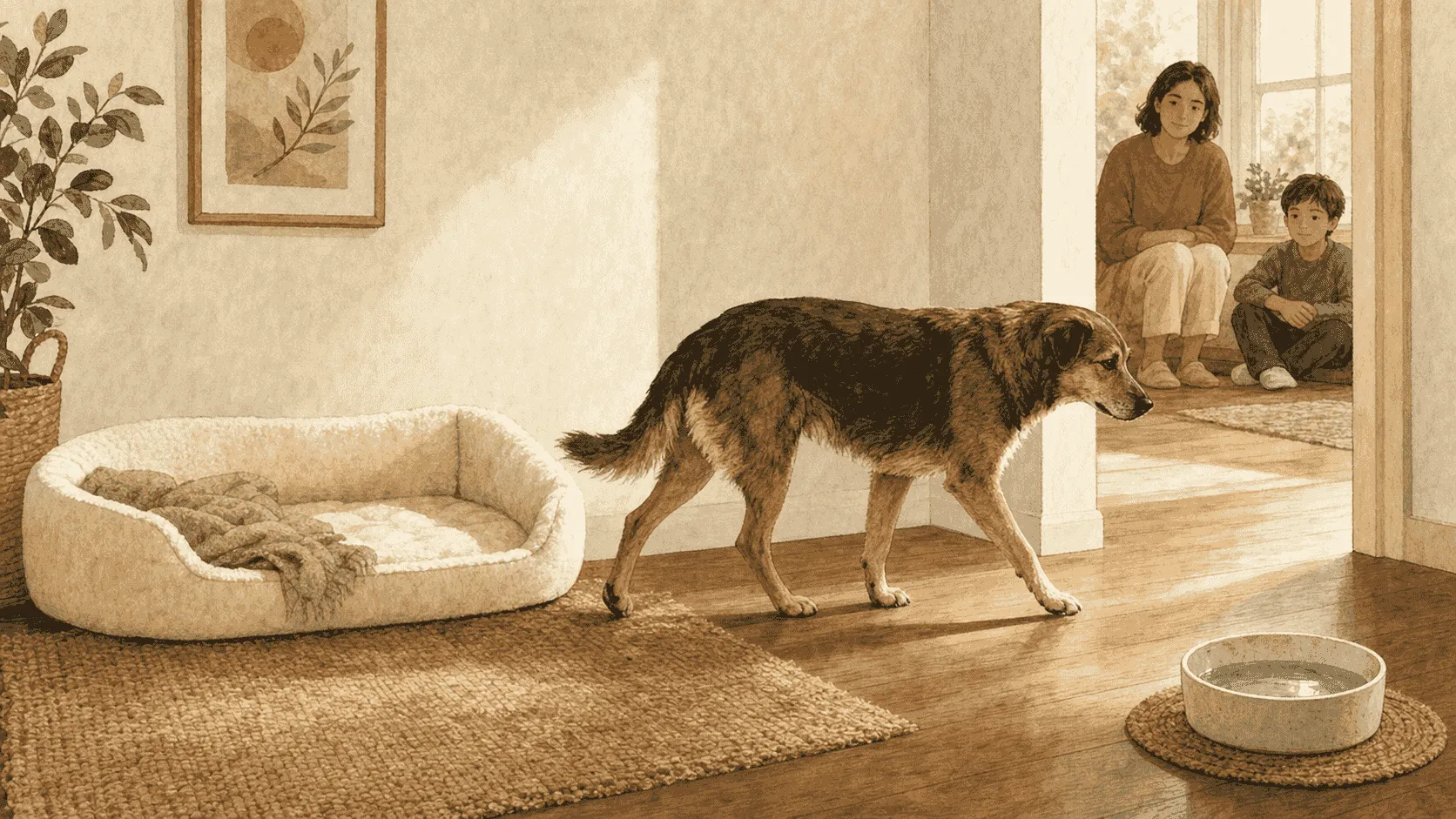
Check the route as well as the cushion. The dog-bed setup guide explains how access, resting posture, household traffic, and a do-not-disturb rule turn a product label into an observable fit test.
More exercise is not a substitute for this quiet part of the schedule. Dogs Trust guidance specifically treats rest as one anchor within a balanced routine, not something a dog must earn by becoming exhausted.
Do Not Turn Sleep Into a Training Hack
A 2017 study in Scientific Reports connected sleep physiology and later performance in a small dog-learning experiment. But its follow-up compared sleep, walking, play, and unrelated learning and did not produce a simple immediate advantage for sleep.
That research does not prescribe a nap length, a bedtime-training schedule, sleep restriction, or a product. Let a dog rest after activity when it chooses, but do not manipulate sleep in hopes of guaranteeing memory or faster training.
Separate Ordinary Rest From a New Change
Compare today’s pattern with this dog’s routine, not another dog’s highlight reel. Contact your veterinarian about a sudden sleep disruption, inability to settle, breathing change, signs of pain, or another concerning behavior or physical change. If a dog is difficult to wake, seems acutely unwell, or you think the situation may be urgent, seek prompt professional direction rather than completing a log first.
For a senior dog, a short video of an ordinary natural movement—getting up, turning, walking, or settling—can give the veterinary team context that may not appear in the clinic. AAHA’s 2023 senior-care guideline supports home photos and videos as communication aids. Do not stage a difficult movement or treat a clip as a diagnosis.
Your Next Useful Check
Today, protect one freely chosen, undisturbed rest place and record four points around one natural sleep period: before rest, rest choice, wake-up, and participation. If the sequence looks familiar, keep building the baseline. If it is newly different or accompanied by another concerning change, call your veterinarian with the timeline instead of trying to explain the sleep at home.
Sources
Petzette's claim cards for this article point to the following scientific, veterinary, or animal-welfare sources.
- Dogs Trust Predictable Routine And Rest: Animal-welfare routine guidance
- Dogs Trust Safe Space For Dogs: Animal-welfare home-environment guidance
- Dogs Trust Body Language Context Guidance: Welfare organization dog body-language guidance
- Dog Sleep And Learning Results Did Not Support A Simple Nap Prescription: Peer-reviewed canine EEG and behavioural experiments
Kis A, Szakadát S, Gácsi M, et al. The interrelated effect of sleep and learning in dogs (Canis familiaris); an EEG and behavioural study. Scientific Reports. 2017;7:41873.
- AAHA Senior Care Guidelines 2023: Veterinary practice guideline