Behavior11 August 2026
Why Do Dogs Tilt Their Heads? Read the Moment, Not the Movement
Why do dogs tilt their heads? Use context, whole-body cues, and a health boundary to decide whether to observe, pause, or call your veterinarian.
TextPetzette Editorial
Read4 Min
Evidence status
Source-backed editorial
- Evidence record
- 3 claim cards linked to 4 documented sources.
- Independent expert review
- Not commissioned. Petzette Editorial is responsible for the published wording.
- Source record checked
- 16 July 2026
- Scope
- General guidance. Individual animals and circumstances can differ.
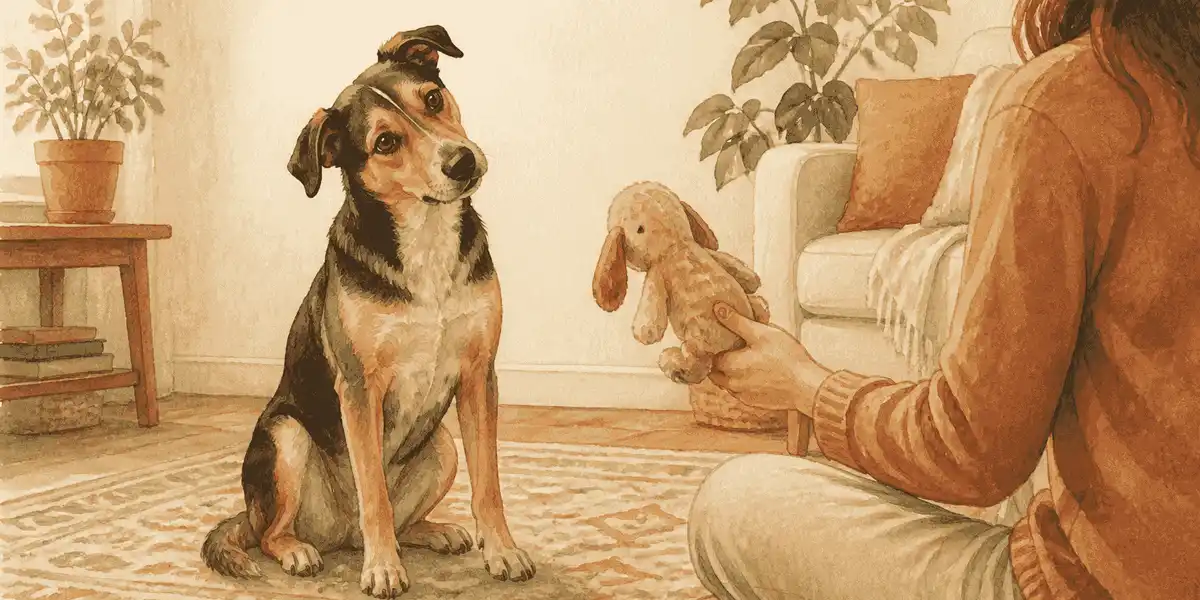
Why do dogs tilt their heads? A brief tilt can be an attention clue in the moment, but it does not come with one fixed translation. The useful owner decision is to notice what happened just before it, read the rest of the dog, and treat a new physical change differently from a familiar, fleeting response.
That distinction leaves room for the charming moment without making it a diagnosis, a personality test, or a reason to ignore a change that needs veterinary attention.
What a Head-Tilt Study Actually Found
A 2022 exploratory study in Animal Cognition observed 40 dogs during trained toy-name tasks. The group included 33 typical dogs and seven “gifted word learner” dogs that had learned object labels. Frequent tilts appeared mainly among the small word-learning group: in the first experiment, those dogs tilted during 43 percent of trials, compared with 2 percent for the typical dogs.
That is interesting evidence about one very specific setup. Hearing a meaningful, familiar toy name may have been part of the moment for those dogs. It does not tell us that every dog who tilts their head understands a word, is especially intelligent, or has one emotion in mind.
The study authors described the work as exploratory, and the small group matters. A dog who angles their head when you say “ball,” a dog who notices a new sound, and a dog who holds their head differently while walking are not automatically answering the same question.
Read the Moment Before You Name the Meaning
Dogs Trust body-language guidance recommends looking at the individual dog, the whole body, and the situation. That is a calmer starting point than trying to decode ears alone.
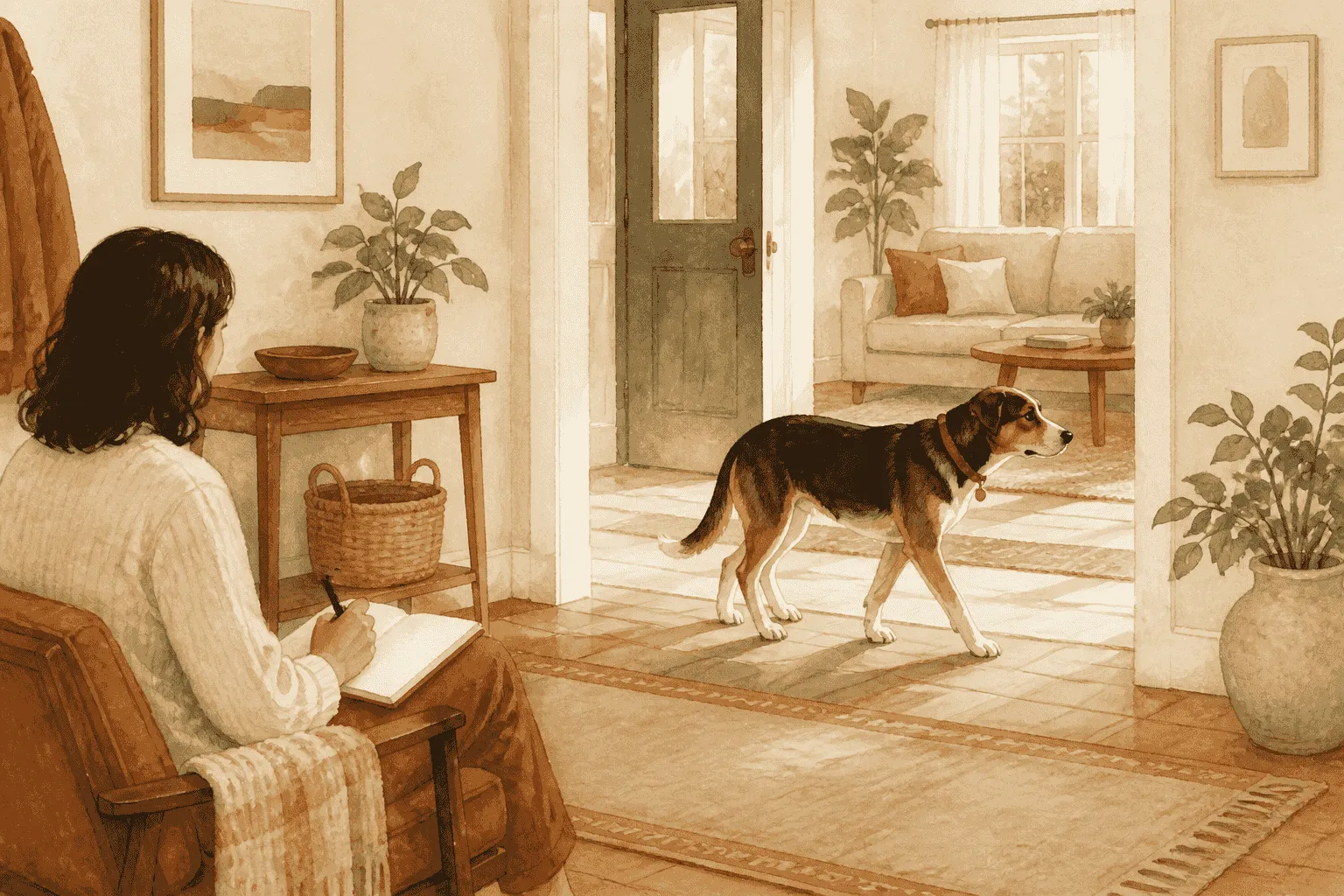
When you notice a brief tilt, make a quick three-part note:
- What changed? A familiar toy name, a sound, a visitor, a hand moving, or another event can shape the moment.
- What is the rest of the body doing? Notice posture, movement, facial tension, tail, ears, approach or retreat, and whether the dog can move freely.
- What happens next? Does the dog return to ordinary movement, investigate by choice, seek space, or keep holding an unusual position?
This is observation, not a quiz with a hidden right answer. Ear shape, coat, body type, and an individual dog’s usual style can all change what a single feature looks like. If you want a broader way to decide whether to reduce pressure, use the dog body-language pause map rather than treating a head tilt as a complete story.
Let Attention Stay Voluntary
If your dog seems comfortable and the tilt appears around a familiar, low-pressure moment, you do not need to turn it into a test. Say the toy name once, let the dog choose whether to look or move closer, and keep the scene easy to leave. Repeating a cue more loudly, leaning over the dog, or holding an object in place to get another tilt can make the next response harder to read.
The same approach helps when a sound seems to catch your dog’s attention. Give them a little space to orient, then watch what they choose next. A dog may investigate, look back at you, or walk away; those options contain more useful information than a forced performance. Our guide to a dog checking in when something feels uncertain explains how calm pacing and room to choose can help in that kind of moment.
A New Physical Tilt Is a Different Question
Do not use a cognition study to explain away a head position that seems new, persistent, or physical. The head-tilt evidence card is explicit: a new persistent tilt, imbalance, or illness sign belongs with a veterinarian, not a behavior interpretation.
Record what you can observe without trying to test the dog: when you first noticed it, whether the head position is held or brief, what was happening beforehand, and any other change in ordinary movement or comfort. A short, calm video can sometimes help a veterinary team if it can be captured without following, cornering, or provoking the dog.
If the change comes with head shaking, scratching, odor, discharge, redness, swelling, or sensitivity around an ear, those are separate observations to pass on. They do not identify the cause on their own; the dog ear-sign record and next-step guide explains why an examination matters before any treatment choice.
Use the Tilt as a Prompt to Look Wider
The next time your dog tips their head at a word or sound, enjoy the moment and widen the frame. What happened? What is the whole body doing? What changed afterward?
That habit respects the limited but interesting study finding while protecting against a too-simple translation. A brief, familiar tilt may be one clue that your dog is attending to the scene. A sudden, persistent, or concerning physical change calls for your veterinarian instead of more guessing.
Sources
Petzette's claim cards for this article point to the following scientific, veterinary, or animal-welfare sources.
- Dog Head-Tilt Exploratory Study: Peer-reviewed canine cognition short communication
Sommese A, Miklósi Á, Pogány Á, Temesi A, Dror S, Fugazza C. An exploratory analysis of head-tilting in dogs. Animal Cognition. 2022;25:701-705.
- Dogs Trust Body Language Context Guidance: Welfare organization dog body-language guidance
- AAHA Allergic Skin Disease And Otitis Guidelines 2023: Peer-reviewed veterinary clinical guideline
Miller J, Simpson A, Bloom P, et al. 2023 AAHA Management of Allergic Skin Diseases in Dogs and Cats Guidelines. Journal of the American Animal Hospital Association. 2023;59(6):255-284.
- Merck Veterinary Manual Otitis Externa: Peer-reviewed veterinary clinical reference